
Like a lot of people, I was mightily impressed by the stirring performance from the cast of Ragtime on the Tony Awards.
But by evening’s end — and it was a long, frantic, loud, insanely wild evening at Radio City Music Hall — and Ragtime had collected a batch of awards, I couldn’t help but notice one name was never mentioned. It’s the man who wrote the now-classic novel that forms the basis of the musical.
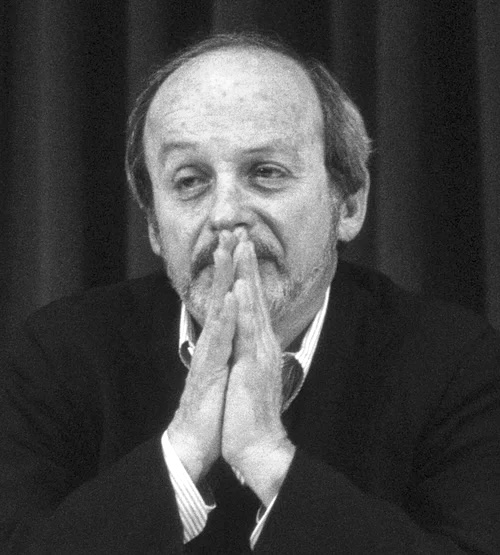
I’m speaking, of course, of E.L. Doctorow.
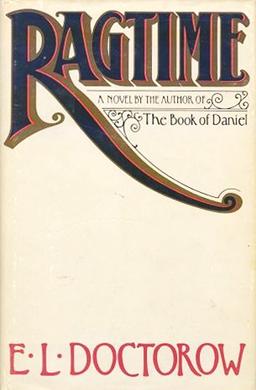
Anyone who saw that opening number Sunday night saw a breathtakingly good summation of the book’s opening paragraphs. The musical’s authors — Terence McNally, Stephen Flaherty and Lynn Ahrens — did a remarkable job of capturing the tone and thrust of the book, which begins much like the musical:
In 1902 Father built a house at the crest of the Broadview Avenue hill in New Rochelle, New York. It was a three-story brown shingle with dormers, bay windows and a screened porch. Striped awnings shaded the windows. The family took possession of this stout manse on a sunny day in June and it seemed for some years thereafter that all their days would be warm and fair. The best part of Father’s income was derived from the manufacture of flags and buntings and other accoutrements of patriotism, including fireworks. Patriotism was a reliable sentiment in the early 1900’s. Teddy Roosevelt was President. The population customarily gathered in great numbers either out of doors for parades, public concerts, fish fries, political picnics, social outings, or indoors in meeting halls, vaudeville theatres, operas, ballrooms. There seemed to be no entertainment that did not involve great swarms of people. Trains and steamers and trolleys moved them from one place to another. That was the style, that was the way people lived. Women were stouter then. They visited the fleet carrying white parasols. Everyone wore white in summer. Tennis racquets were hefty and the racquet faces elliptical. There was a lot of sexual fainting. There were no Negroes. There were no immigrants. On Sunday afternoon, after dinner, Father and Mother went upstairs and closed the bedroom door. Grandfather fell asleep on the divan in the parlor. The Little Boy in the sailor blouse sat on the screened porch and waved away the flies. Down at the bottom of the hill Mother’s Younger Brother boarded the streetcar and rode to the end of the line. He was a lonely, withdrawn young man with blond moustaches, and was thought to be having difficulty finding himself. The end of the line was an empty field of tall marsh grasses. The air was salt. Mother’s Younger Brother in his white linen suit and boater rolled his trousers and walked barefoot in the salt marshes. Sea birds started and flew up. This was the time in our history when Winslow Homer was doing his painting. A certain light was still available along the Eastern seaboard. Homer painted the light.
I remember reading the book when I was in high school. I was mesmerized. It brought a distant time alive with memorable images that melded history, celebrity, journalism and pure fanciful fiction.
The book was a bestseller in the mid-70s. It won the National Book Critics Circle Award for fiction in 1975, and the American Academy and Institute of Arts and Letters Award the following year. The good people at Wikipedia note:
Since its release, Ragtime has been cited as one of the best English-language novels, ranking number 86 among Modern Library’s 100 Best Novels. In 1998, Time magazine included Ragtime in its unranked list of the 100 Best English-Language Novels from 1923 to 2005.
Reviewing the less-than-satisfying movie version directed by Milos Forman, Pauline Kael wrote of the source material:
[It was] an extravaganza about the cardboard cutouts in our minds – figures from the movies, newsreels, the popular press, dreams and history, all tossed together…Doctorow played virtuoso games with this mixture – games that depended on the reader’s having roughly the same store of imagery in his head that the author did.
As for the musical version: Doctorow himself reportedly approved. He saw it when it first opened in Los Angeles in 1997 and a columnist from Variety was there:
At Sunday night’s never-to-be forgotten opening night in Century City, Doctorow told me he was thrilled with the fact the musicalized version “caught the spirit” of his book and “broke the book open — a remarkable inversion technique.” On the other hand, he said, in the 1981 “Ragtime” movie Milos Forman “misread my text.”
Yet, somehow, the significant achievements of the musical have overshadowed the man who brought it all alive in the first place — the writer who found a way to gather together Houdini, Evelyn Nesbit, a struggling immigrant and his daughter, a Black piano player and a middle class family in New Rochelle. With breathtaking imagination and audacity, Doctorow managed to craft a story about American class and identity at the dawn of the last century. It resonates today even more than it did when it was first published more than 50 years ago.
For that, we can be grateful — and we can be grateful this new revival of the musical is helping make that happen.
Doctorow died in 2015, at the age of 84. I imagine he would be delighted that his story had found a new audience, for a new generation.
Nobody else thought to say this Sunday, but I will: thank you, E.L. Doctorow.