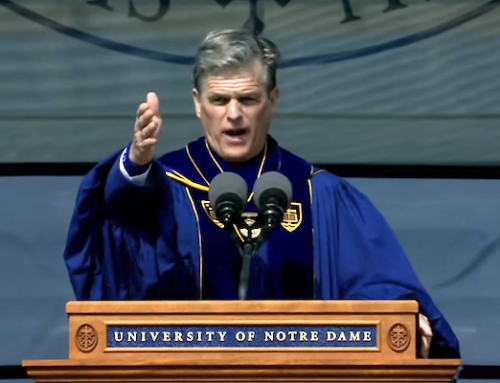
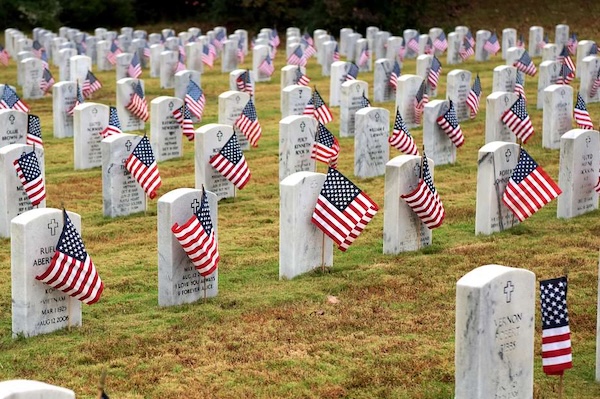
A grateful h/t to Heather Cox Richardson, who posted this beautiful tribute from 1868, when then-Congressman James Garfield spoke at Arlington National Cemetery for the first Decoration Day (what we now know as Memorial Day).
Garfield paid tribute to the men who gave their lives during the Civil War — but he also made a rather remarkable comparison, connecting Arlington to Rome and St. Peter:
What other spot so fitting for their last resting place as this under the shadow of the Capitol saved by their valor? Here, where the grim edge of battle joined; here, where all the hope and fear and agony of their country centered; here let them rest, asleep on the Nation’s heart, entombed in the Nation’s love!
The view from this spot bears some resemblance to that which greets the eye at Rome. In sight of the Capitoline Hill, up and across the Tiber, and overlooking the city, is a hill, not rugged or lofty, but known as the Vatican Mount. At the beginning of the Christian Era, an Imperial circus stood on its summit. There, gladiator slaves died for the sport of Rome; and wild beasts fought with wilder men. In that arena, a Gallilean fisherman gave up his life a sacrifice for his faith. No human life was ever so nobly avenged. On that spot was reared the proudest Christian temple ever built by human hands. For its adornment, the rich offerings of every clime and kingdom have been contributed. And now, after eighteen centuries, the hearts of two hundred million people turn towards it with reverence when they worship God. As the traveler descends the Appenines, he sees the dome of St. Peter rising above the desolate Campaigns and the dead city, long before the seven hills and ruined palaces appear to his view. The fame of the dead fisherman has outlived the glory of the Eternal City. A noble life, crowned with heroic death rises above and outlives the pride and pomp and glory of the mightiest empire of the earth.
Seen from the western slope of our Capitol, in direction, distance, and appearance, this spot is not unlike the Vatican Mount; though the river that flows at our feet is larger than a hundred Tibers. Seven years ago, this was the home of one who lifted his sword against the life of his country, and who became the great Imperator of the rebellion. The soil beneath our feet was watered by the tears of slaves, in whose hearts the sight of yonder proud Capitol awakened no pride and inspired no hope. The face of the goddess that crowns it was turned towards the sea and not towards them. But, thanks be to God, this arena of rebellion and slavery is a scene of violence and crime no longer! This will be forever the sacred mountain of our Capital. Here is our temple; its pavement is the sepulcher of heroic hearts; its dome, the bending heaven; its altar candles, the watching stars.
Hither our children’s children shall come to pay their tribute of grateful homage. For this are we met to-day. By the happy suggestion of a great society, assemblies like this are gathering at this hour in every State in the Union. Thousands of soldiers are to-day turning aside in the march of life to visit the silent encampments of dead comrades who once fought by their side. From many thousand homes, whose light was put out when a soldier fell, there go forth to-day to join these solemn processions loving kindred and friends, from whose heart the shadow of grief will never be lifted till the light of the eternal world dawns upon them. And here are children, little children, to whom the war left no father but the Father above. By the most sacred right, theirs is the chief place to-day. They come with garlands to crown their victor fathers. I will delay the coronation no longer.
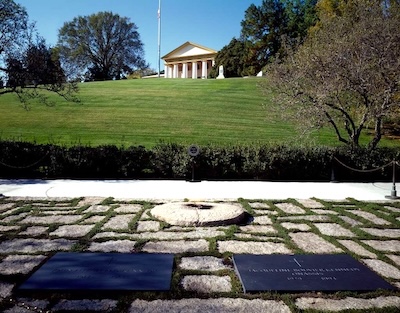
Eternal rest grant unto them, O Lord, and let perpetual light shine upon them …