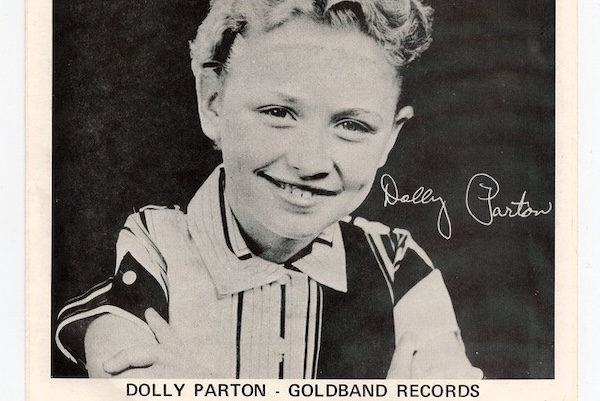
We’ve been inundated with Dolly Parton tributes the last few days, with many talking about her deep and very public faith.
Attention must be paid.
I think she spoke to the best of us, and reminded us again and again of things we Christians know are part of following The Way: compassion, mercy, generosity, charity, loving God and neighbor. Here’s the thing: she did it with unabashed joy. We all feel it now and have to confess: The world is poorer without her in it.
This essay from Clemente Lisi in Religion Unplugged captures an important part of her appeal:
Parton’s Christianity was rooted in the evangelical culture of her Appalachian childhood, but she rarely presented herself as a model of doctrinal perfection.
Instead, she emphasized love, humility, forgiveness and service.
In interviews, she repeatedly returned to the Bible and its command to love one’s neighbor. She once told Vogue magazine: “I really do ask God every single day to let me do something, say something, be something that matters to somebody else. To make somebody feel good. To let people see a spark of love. God is love, that’s the Scripture.”
Those words are important because it helps explain the distinctive character of Parton’s charity. “The Queen of Country,” as she was popularly known, did not usually approach philanthropy as an exercise in moral superiority. She approached it as chance to be useful.
It was this humility that helped fuel the Parton mythology. It was part of the logic of her giving: The attention was supposed to go to the person who needed help, not the person writing the check…
…Parton’s religious identity also helps explain her unusual ability to appeal across cultural boundaries. She was unmistakably Christian and spoke openly about God, Jesus and prayer. Nonetheless, she was also wary of judgment and repeatedly emphasized acceptance and kindness. She could be embraced by conservative Christians while also maintaining relationships with audiences who did not share her faith.
Parton did not believe that Christianity required her to become less welcoming. Instead, she treated faith as a reason to enlarge the circle of people deserving compassion. Fellow country music star Reba McEntire captured the religious dimension of that legacy in her farewell: “Thank you, Lord, for Dolly.”
The Diocese of Knoxville this week posted a statement about her on their website:
Dolly was born and raised in the foothills of the Great Smoky Mountains. She first sang in a small Pentecostal church, long before the world knew her name. She never hid her faith. It showed up in the hymns she recorded across six decades, in how openly she talked about God, and in the millions of free books her Imagination Library has placed in children’s hands.
As Catholics, we entrust her to the mercy of Almighty God. We pray that Jesus, who is the resurrection and the life, will receive her into His eternal kingdom. We also pray for her family, friends, colleagues, and all who grieve her loss. May the Holy Spirit bring them consolation in this time of sorrow.
East Tennessee knew Dolly Parton as more than a world-famous star. We knew her as one of our own. She was shaped by these hills and these churches. Her life shows what can grow from faith, perseverance, imagination, and love for one’s neighbors — even from humble beginnings.
“I am very sorry to hear of her passing, and I am praying for those who are mourning her loss,” said Bishop Mark Beckman. “She made a wonderful contribution to our world and our community, and she will be greatly missed.”
Peggy Noonan offered this clear-eyed assessment in The Wall Street Journal:
She never seemed shallow. The shallow can never quite be tender, only sentimental. “Coat of Many Colors,” to pick one song, is tender about people who have nothing and make do. I have always wondered if, while it was based on the truths of Dolly’s childhood, it might also have been inspired by Edna St. Vincent Millay’s, “The Ballad of the Harp Weaver,” a kind of magical-realism poem about the power of familial love. For artists, inspiration comes in many ways and I trace it there because Parton was widely read and had good taste. When Marie Claire magazine asked her to survey her reading shelf, she picked up John Steinbeck’s “The Grapes of Wrath.” She said she loved it, had read it three times, and identified with “the hard work and the poor people and the struggles and the times.”
Show business isn’t prissy, it’s fleshy, earthy. We think of stars as an elevated species shining in heaven, but they’re in the most physical and earthbound of businesses, and it involves wigs, corsets, sweat, an itch on your nose when you’re doing the close-up, the fly that flew into your mouth as you sang and you had to swallow it. Dolly always sort of signaled her love of the mess of it, and it didn’t bring her down to earth in your eyes, it elevated her even more. Because people who enjoy the earthiness of life are the most elegant.
She was a believing Christian and spoke often and believably of prayer, and of her prayers. The day she died her longtime friend Kathie Lee Gifford said on Fox News, “She loved people because she knew God did.” If you think there really is a God, and he really made you and everyone else, then you have to infer that you should be exactly as charitable toward others as you hope God, the day you die, will be to you. That kind of thought will soften your edges. Dolly wasn’t hard-edged.
In her philanthropy she wasn’t abstract but particular and concrete. This was out of keeping with the philanthropic style of the turn of the century, in which big money from Silicon Valley and the great banks went to things like targeted microloans for struggling female entrepreneurs far away. That wasn’t bad, but it could have been Camden, N.J. Dolly’s way was simpler. If a child was preliterate she sent books, if floods destroyed towns she gave cash. She paid sharpest attention to those in her ken, broadly defined as America, where she had the truest sense of need and sharpest eye for what would help. She had been poor in this country, and so she knew the poor existed.
Msgr. Arthur Holquin reacted to the news of her death the way a lot of us did, with tears. He wrote on Facebook:
I must admit something that will surprise those who know me. When the news of Dolly Parton’s death broke across every bulletin yesterday afternoon, I found myself, quite unexpectedly, in tears. I do not even care for country music. I could not have named you three of her songs before yesterday. And yet something in the sheer, unadorned goodness of that woman reached across every barrier of taste and genre and stopped me cold. I was not alone. It was the lead story on the national news last night, and in the hours since, an outpouring of love and grief has swept across this country the likes of which I have not seen in some time — not for a politician, not for a titan of industry, but for a singer from a one-room cabin in the Smoky Mountains who spent eight decades giving away what she had.
He concluded:
I do not want to make more of this than it is. I am not interested in canonizing anyone, and Dolly Parton herself would likely have waved off any attempt to do so with a laugh. What I want, simply, is to recognize a good and generous soul — a woman marked by kindness, by openness, by a total absence of judgment toward anyone who crossed her path, and by a voice that was, I have no other word for it, a gift from God, given back to the world a thousand times over in the giving.
Dolly Parton reminded us of what we are capable of, and made it seem effortless. ‘Tis a gift.
Thank God for it, and for her.
As the Diocese of Knoxville concluded:
May God grant her eternal rest. May perpetual light shine upon her. And may all who mourn find comfort in the words of Christ, “Blessed are those who mourn, for they shall be comforted.”