
You can read the entire document here. Some initial news coverage below.
First, as Katie Prejean McGrady noted, this appears to be the first encyclical launched with a trailer. You can check it out below.
Vatican News announced it this way:
“Humanity, created by God in all its grandeur, is today facing a pivotal choice: either to construct a new Tower of Babel or to build the city in which God and humanity dwell together.”
The opening words of Pope Leo XIV’s first encyclical, Magnifica humanitas: On Safeguarding the Human Person in the Time of Artificial Intelligence, summarize its underlying reasons and purpose.
Published on Monday, May 25, the Pope signed the encyclical on May 15, the 135th anniversary of the promulgation of Pope Leo XIII’s Rerum novarum.
Pope Leo XIV has taken up the legacy of his predecessor, writing a social encyclical which addresses one of the principal challenges of the contemporary age: artificial intelligence.
Divided into five chapters, Magnifica humanitas has an underlying premise: technology is not “a force antagonistic to humanity”, nor is it “inherently evil”. However, “technology is never neutral, because it takes on the characteristics of those who devise, finance, regulate, and use it.
Therefore, Pope Leo XIV appeals for people to build “for the common good” and to “remain human,” following a courageous mentality of shared responsibility and communion, so that the world “will come to recognize the human heart as the place where God desires to dwell”.
OSV News’ Michael Heinlein writes:
The text provides answers to questions pertaining to the “new things” of our modern age following in the footsteps of Pope Leo XIII’s treatment of the advancements in technology, industry and economics at the turn of the 19th century, which birthed modern Catholic social doctrine. But “Magnifica Humanitas” also reveals some aspects of who Pope Leo is, how he governs, and what he brings to the Petrine office. Reading between the lines, the encyclical can be seen also as a roundup of what has been learned about Pope Leo so far and sheds perspective on what might lie ahead.
A particular word that Pope Leo repeats, as he frequently has even since his first address to the world as the newly elected 266th Successor of Peter, can serve as a key to these latent aspects of “Magnifica Humanitas.” In fact, “to disarm,” Pope Leo says in the encyclical, is an expression “close to my heart”. Closer, perhaps, than it might appear at first glance?
Katie Prejean McGrady sums it up this way on her Substack:
It is well worth reading in full, becuase it is a wonderfully written, deeply thoughtful, clearly prayed through text that I think will stand the test of time. Leo’s first encyclical shows us his heart, and invites us to consider what is happening in this current age and how each of us is uniquely grand, dignified, valuable, and loved.
She offers 10 takeaways on the encyclical and concludes:
We are not without hope in the age of AI. In fact, we should never be without hope when facing change. Because it is precisely in the face of change that God shows the strength of his arm, and the scattering of the proud, as he casts down the mighty, lifts up the lowly, fills the hungry with good things, and sends the rich away empty-handed. This is what Mary proclaims, what she prays, when faced with a challenge and a wild change in her life. She “bursts into a hymn of praise and joy. Her soul magnifies the Lord and her spirit rejoices in God her Savior, because he chose a young, poor, and humble girl for his plan of salvation.” (MH 243). In the age of AI, we must do the same. Just like Mary, we can see God’s invisible work in history and among mankind and ultimately direct our gaze to His Face.
NCR had this take:
With the most authoritative document yet of his still-young pontificate, Pope Leo XIV directed the Catholic Church’s moral gaze toward the frantic pace of technological development that threatens human solidarity. With AI as its entry point, Leo used his first encyclical, Magnifica Humanitas (“Magnificent Humanity”), on safeguarding the human person in the time of artificial intelligence, to articulate the church’s position on a wide range of contemporary crises, including war, modern slavery, wealth inequality, the erosion of democracy and the devaluing of human capacities.
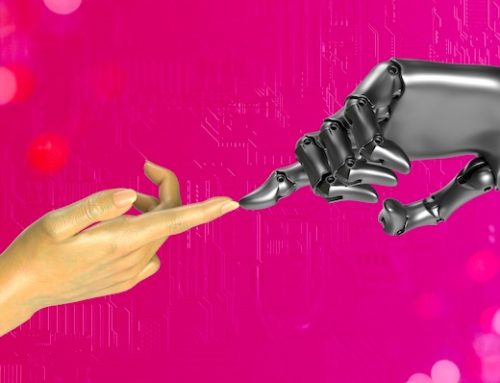
Leo takes aim not at a particular type of AI, but instead explores the effects of technologies that “merely imitate certain functions of human intelligence” and draws a distinction between human beings and machines.
“So-called artificial intelligences do not undergo experiences, do not possess a body, do not feel joy or pain, do not mature through relationships and do not know from within what love, work, friendship or responsibility mean,” Leo writes.
The encyclical, among the most authoritative forms of papal teaching, was presented at the Vatican on May 25 during an event featuring testimony from the pope himself, prominent cardinals and theologians, and a co-founder of the AI company Anthropic, Christopher Olah, who leads its interpretability team.
The document is the fruit of 10 years of dialogue on ethics between the Vatican and the tech industry, a source engaged in the church’s outreach to the tech industry but not authorized to speak publicly on the encyclical said ahead of its release. Tech leaders “were interested in wisdom from the church” regarding “how best to serve humanity,” the source said. “We are trying to engage all these companies with the wisdom of the church and the wisdom of anybody of goodwill.”
In the encyclical, Leo said AI must be freed from an “armed” logic of competition driven by the pursuit of geopolitical and commercial dominance.
“To disarm does not mean rejecting technology, but preventing it from dominating humanity,” he wrote.
EWTN’s news agency noted:
According to Pope Leo, the central question — safeguarding our humanity — is something everyone should have a role in answering.
He invokes one of his spiritual guides, St. Augustine of Hippo, quoting from “De Civitate Dei” (“The City of God”): “‘Two loves have built two cities: the earthly city, the love of self even to the contempt of God; the heavenly city, the love of God even to the contempt of self.’ As throughout history, these two loves continue to contend for dominance in our hearts today.”
The encyclical’s 245 paragraphs are broken down into an introduction and five chapters, with the first two dedicated to an explanation of the development of the Church’s Social Doctrine from Pope Leo XIII to today, the main principles of that doctrine, and how they can be applied to the current technological age.
Chapter three introduces “the technocratic paradigm” of artificial intelligence and the imbalance of digital power.
Chapter four turns to the importance of safeguarding truth, democracy, work, education, and human freedom in the age of AI, while the fifth chapter is dedicated to an analysis of the normalization of war, the fight for power, and how everyone has a responsibility to help build a civilization of love through the cultivation of peace and justice.
Throughout the encyclical, Leo draws on the image of construction to ask how humanity will respond to the new technological age. Humanity, he says, must choose between building the Tower of Babel (Genesis 11:1-9) and building a city where God and humanity can dwell together, as Nehemiah gathered together people to rebuild the walls of Jerusalem after the Babylonian exile (Nehemiah 2-6).
“In light of these two images, the Holy Spirit challenges us today regarding our relationship with technology and the ongoing digital revolution,” he writes. “Technology has the power to heal, connect, educate and protect our common home; but it can also divide, exclude and generate new forms of injustice.”
Pope Leo XIV draws on quotations from prominent 19th and 20th-century thinkers, both Catholic and Jewish, including St. John Paul II, Victor Frankl, Hannah Arendt, J.R.R. Tolkien, Giorgio La Pira, and Fr. Romano Guardini, to argue that while technology is not a solution in itself to humanity’s problems, nor is it inherently evil.
“In practice, however, technology is never neutral, because it takes on the characteristics of those who devise it, finance it, regulate it and use it,” he writes.