On Aug. 28, Bishop Michael Olson announced the establishment of St. Matthew Ayariga Parish in Arlington as a personal parish for the Ghanaian Catholic community in North Texas.
St. Matthew Ayariga Parish is the first Ghanaian National Catholic parish in the United States, and the first Catholic parish anywhere in the world to be established under the patronage of St. Matthew Ayariga, the Ghanaian Catholic migrant whose courageous profession of faith in Jesus Christ led to his martyrdom in Libya in 2015.
Since 2007, the Ghanaian Catholic community in North Texas has celebrated Mass weekly at St. Joseph Church in Arlington in the Twi language. Bishop Olson observed, “The development of this community has flourished so that a full parish is now required to meet the spiritual needs of this vibrant Catholic and immigrant community.”
The Diocese of Fort Worth and the Archdiocese of Kumasi, Ghana, have a longstanding collaboration, and the Archdiocese has provided Ghanaian priests to help shepherd this community.
Related: Vatican formally recognizes 21 Coptic martyrs of Libya
Bishop Olson expressed “profound gratitude to Almighty God” and great joy when he announced the new parish, which reflects the universality and diversity of the Catholic Church.
He wrote, “St. Matthew Ayariga Parish will also mark an important chapter in the growing presence and contribution of Ghanaian Catholics within the Diocese of Fort Worth and within the Catholic Church in the United States. The Catholic faith is truly universal. The establishment of this parish recognizes the gifts of faith, family, culture, devotion, and service that Ghanaian Catholics bring to the life of our local Church and wider community while establishing a parish whose doors and mission are open to all of God’s people.”
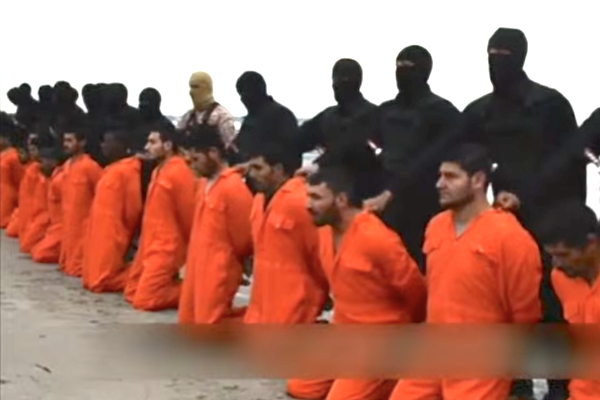
Matthew Ayariga, a Ghanaian, was working as a migrant in Libya when he was abducted by ISIS with twenty of his coworkers, who were Egyptian Coptic Orthodox Christians. The 21 captives were led to the shores of the Mediterranean Sea. His captors offered Matthew an opportunity to be released when they asked him if he was a Christian.
“His response in the face of certain death was heroic,” said Bishop Olson. “The words attributed to Matthew at that moment when he was asked about his faith have borne witness to Christ throughout the world: ‘Their God is my God.’ He professed publicly his faith in Christ, and he was beheaded on February 15, 2015, with his Christian companions,” which ISIS recorded on video.
The Pillar had a post some time back about Matthew Ayariga, whose background and story remain largely a mystery:
Matthew Ayariga is one of only 21 people officially recognized as 21st-century martyrs by both the Coptic Orthodox Church and the Catholic Church.
But he has a further distinction: He is the only one among the 21 who was not a Coptic Orthodox Christian. He may not have been a Catholic either.
Ayariga was beheaded along with 20 construction worker colleagues by Islamic State militants on a beach in Libya in February 2015. They were canonized together as martyrs days later by Coptic Orthodox Pope Tawadros II.
This Thursday, Pope Francis announced that, with Tawadros II’s consent, the 21 martyrs would “be included in the Roman Martyrology as a sign of the spiritual communion uniting our two Churches.”
But while Ayariga’s death as a martyr will be remembered liturgically for centuries to come by both Coptic Orthodox and Catholic believers, what do we actually know about the man’s life?
When was Matthew Ayariga born? What was his hometown? What religious community did he belong to? Such simple questions do not appear to have clear-cut answers.
Most sources agree that Ayariga was from Ghana, though shortly after his death there was speculation that he might be from Chad, which borders Libya.
In contrast with the other 20 martyrs, no date of birth or birthplace is listed for Ayariga. Perhaps he was born in the 1980s or early 1990s, like the majority of his colleagues. That would mean he was in his 20s or 30s when he was killed.
Many accounts suggest that he was raised as a Christian. That would not be surprising if he was from Ghana, where around 71% of the population is Christian, mainly belonging to Pentecostal churches and other Protestant communities. Some believe that Ayariga was a Catholic, which is possible, though Catholics account only for around 13% of Ghana’s population.
But nothing seems to be known of Ayariga’s early years. When he came of working age, he presumably decided to leave his homeland and earn a living as a migrant worker.
By early 2015, he had found his way to the Libyan port town of Sirte, having fallen in at some point with a group of Coptic Orthodox construction workers from various villages in Egypt…
…In a March 2019 article published by First Things, the German author Martin Mosebach reflected on Ayariga’s spiritual journey.
Mosebach, the author of “The 21: A Journey into the Land of Coptic Martyrs,” noted that the Roman Martyrology includes the feast of the martyrs Felix and Adauctus, celebrated Aug. 30. As Felix was being taken to his execution in 303 A.D., Adauctus saw him and was moved to make his own proclamation of the Christian faith. The two men were then put to death together. Mosebach suggested that Ayariga was the Adauctus among the 21 martyrs in Libya.
The Islamic State initially believed that he wasn’t a Christian and planned to release him, Mosebach said. But Ayariga insisted that he was.
“Had Matthew survived and expressed a desire to be accepted as a Copt, he would have had to undergo baptism again,” Mosebach wrote. “Like many Orthodox churches, the Coptic Church doesn’t recognize baptisms performed by other churches.”
“So is Matthew simply an unbaptized person who somehow became a saint? Not at all. By his willingness to die alongside his Coptic companions, he received baptism on the Libyan seaside. His own blood took the place of both the holy water and the priest’s christening in the sacrament.”