
From Reuters:
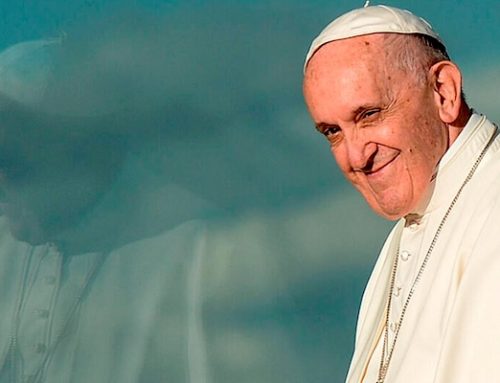
Pope Francis, the first Latin American leader of the Roman Catholic Church, has died, the Vatican said in a video statement on Monday, ending an often turbulent reign marked by division and tension as he sought to overhaul the hidebound institution.
He was 88, and had recently survived a serious bout of double pneumonia.
“Dear brothers and sisters, it is with profound sadness I must announce the death of our Holy Father Francis,” Cardinal Kevin Farrell announced on the Vatican’s TV channel.
“At 7:35 this morning the Bishop of Rome, Francis, returned to the house of the Father.”
Jorge Mario Bergoglio was elected pope on March 13, 2013, surprising many Church watchers who had seen the Argentine cleric, known for his concern for the poor, as an outsider.
He sought to project simplicity into the grand role and never took possession of the ornate papal apartments in the Apostolic Palace used by his predecessors, saying he preferred to live in a community setting for his “psychological health”.
From Vatican News:
The Pope was admitted to the Agostino Gemelli Polyclinic Hospital on Friday, February 14, 2025, after suffering from a bout of bronchitis for several days.
Pope Francis’ clinical situation gradually worsened, and his doctors diagnosed bilateral pneumonia on Tuesday, February 18.
After 38 days in hospital, the late Pope returned to his Vatican residence at the Casa Santa Marta to continue his recovery.
In 1957, in his early 20s, Jorge Mario Bergoglio underwent surgery in his native Argentina to remove a portion of his lung that had been affected by a severe respiratory infection.
As he aged, Pope Francis frequently suffered bouts of respiratory illnesses, even cancelling a planned visit to the United Arab Emirates in November 2023 due to influenza and lung inflammation.
In April 2024, the late Pope Francis approved an updated edition of the liturgical book for papal funeral rites, which will guide the funeral Mass which has yet to be announced.
The second edition of the Ordo Exsequiarum Romani Pontificis introduces several new elements, including how the Pope’s mortal remains are to be handled after death.
The ascertainment of death takes place in the chapel, rather than in the room where he died, and his body is immediately placed inside the coffin.
According to Archbishop Diego Ravelli, Master of Apostolic Ceremonies, the late Pope Francis had requested that the funeral rites be simplified and focused on expressing the faith of the Church in the Risen Body of Christ.
“The renewed rite,” said Archbishop Ravelli, “seeks to emphasise even more that the funeral of the Roman Pontiff is that of a pastor and disciple of Christ and not of a powerful person of this world.”
From The New York Times:
The absence of Francis, a humble champion of the poor, creates a vacuum in the leadership of more than one billion Catholics, and leaves cardinals with a critical decision: whether to choose a new pope who will follow his welcoming, global approach or to restore the more doctrinaire path of his predecessors.
After early missteps, Francis made considerable strides in addressing the church’s sexual abuse crisis and tackled its murky financial culture. His remarkable global stature early in his pontificate — when liberal leaders around the world likewise emphasized climate change, migrants’ rights and income equality — gave way to a populist period when he sometimes seemed a solitary voice. But he never changed his approach.
Francis believed that the church’s future depended on going to the margins to embrace the faithful in the modern world rather than offering a cloister away from it. The coming days will determine how deep his support truly runs…
…The cardinals who will choose Pope Francis’ successor face a critical decision: Will they follow his path toward a more welcoming, global and collegial church or restore the more doctrinaire, traditional approach of his predecessors?
That will be the subject of intense debate among the cardinals, and Francis leaves behind a complicated legacy for them to argue over.
Early hopes that a “Francis effect” would bring the faithful back to the pews mostly failed to materialize as church attendance continued to fall in the secularized West even as it grew in the global South.
Although Francis made considerable strides in addressing the church’s sexual abuse crisis and tackled its murky financial culture, the path he put the church on for the future will be the most contentious issue.
His willingness to debate major theological issues such as divorce, the possibility of married priests, acceptance of same-sex couples and an increased role for women thrilled liberal Catholics after more than three decades of conservative papacies. Yet many complained that Francis only set in motion a process that a less reform-minded successor could scratch out, while others accused him of diluting church doctrine.
Read the full obit in The New York Times (gift article) here.
Developing story. More to come.
Eternal rest grant unto him, O Lord, and let perpetual light shine upon him…