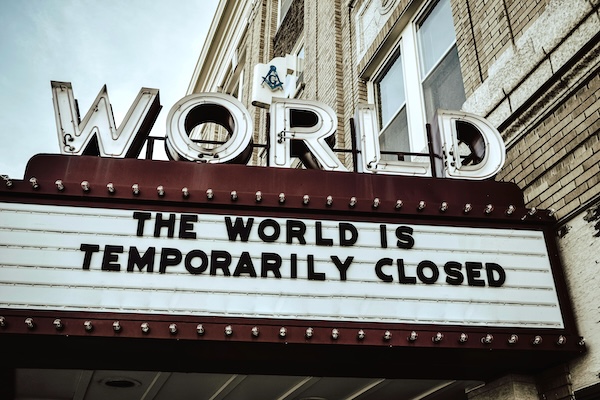
As the world marks the five-year anniversary of the pandemic — and everything that came with it — Ann Rodgers at Angelus News finds some surprising lessons:
For his July 23, 2020, ordination as coadjutor bishop of the Diocese of Peoria, Bishop Louis Tylka entered a sparsely filled cathedral, with “X” taped on pews where masked clergy and guests could sit 6-feet apart during the COVID-19 pandemic.
Pope Francis had appointed him that May, when lockdown rules barred then-Father Tylka from traveling to Peoria from his parish in the Archdiocese of Chicago.
“I had to sneak into Chicago and make a video to be the announcement,” he said.
From Peoria to the Archdiocese of Los Angeles to the U.S. bishops’ headquarters in Washington, D.C., the Church experienced disruption — and new ways to share God’s mercy. Restrictions varied by state, county, and diocese as pastoral leaders improvised new forms of ministry. Online Mass went from innovative to ubiquitous, parishes offered drive-by confession and virtual prayer groups.
Bishop Tylka supported such ministries, but spiritual scars remain. Pandemic polarization left “lasting skepticism about institutions and people in authority,” he said.
He believes the Church offers the way back — if people will walk it.
“Our Church, through the sacraments — particularly reconciliation and the Eucharist — is a bridge that people can use to bring healing,” he said. “You can lead somebody to a bridge and say, ‘This is how you cross the river.’ But they still have to be willing to step on the bridge and walk across.”
Among other things, she finds that Mass attendance has largely rebounded; that people have developed a renewed appreciation for home blessings; and that online parish giving has soared.
And in the Archdiocese of Los Angeles, there’s this:
At St. John the Baptist Parish in Baldwin Park, whose 10,000 families make it the largest bilingual parish in the archdiocese, ministry “has changed dramatically since the COVID pandemic,” said Father Ismael Robles, the pastor.
“People came back to church with a greater zeal and dedication to service and ministry,” reported Robles. His parish now has more ministries, higher Sunday Mass attendance, and “significantly increased” Sunday Mass collection numbers compared to pre-COVID.
After the initial total lockdown, the parish had gradually reopened under archdiocesan guidance. But as parishioners begged to know why they couldn’t gather for Mass with masks when restaurants were serving large numbers of unmasked people, Robles decided to resume all ministries on their previous schedules.
Parishioners responded joyfully, with 500 attending weekly classes in the Spiritual Exercises of St. Ignatius.