
“We are pilgrims on a journey, we are travelers on the road…”
With those words from Richard Gillard’s hymn burning in my heart, I’m processing the last 10 days. But while it’s still fresh in my mind, I thought I’d share a few pointers from our pilgrimage that took us in the footsteps of St. Paul.
First, if you’ve ever thought of taking this particular trip, don’t even hesitate. Just do it.
You will be inspired, humbled and, really, transformed. I decided to lead this trip after our scheduled pilgrimage to the Holy Land had to be scrapped because of Gaza. I was disappointed at first when our plans changed. Now, I’m profoundly grateful. This trip helped me to see my faith and my history with new eyes. Every Christian should do it. It’s just that simple.
Before digging in, you can read my On Pilgrimage blog posts, in the order they were posted, to get a sense of what we did and how we did it. The links are below:
- Great beginnings in Greece
- Climb every mountain
- Holy Greece, ancient ruins, and arriving at last in Athens
- Setting sail, marking an anniversary, fighting the crowds in Santorini
- With Mary, John and Prochorus
- In Corinth
- So long, farewell
Now, some impressions, all of which can be summed up in two simple words: be prepared.
Be prepared to walk. There’s so much to see, and most of it is reached on your feet. Not only that, a lot of what you are walking on is slippery — the Greeks weren’t shy about using marble to pave their pathways and roads. So bring shoes with a good grip. It can get treacherous. On top of that, the paths are often steep and, for some reason, devoid of railings. You need to keep an eye out for unexpected drops and steps, and many of the ancient stairways have steps that are LARGE (like 8 or 12 inches). Trudging up to the Parthenon on our last day, while dealing with all of that, we encountered, weirdly, an accordion player, cranking out polka music, oompa-oompa-oompa. “Oh look,” I said to someone, as we paused to catch our breath. “They’ve added an accordion to enhance the experience.”
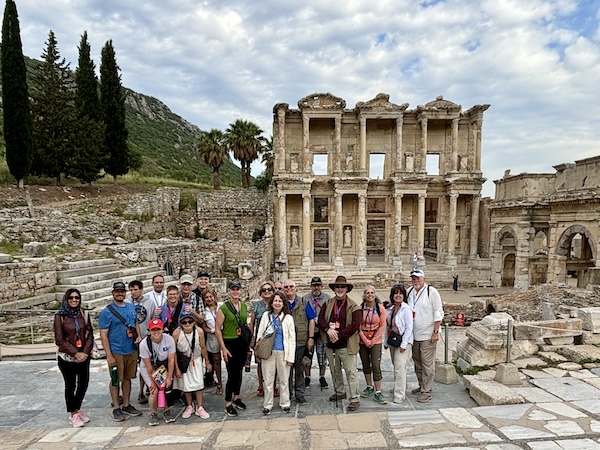
Be prepared for crowds. A lot of this is just a matter of luck. We were either lucky or incredibly blessed, or both. Our savvy and strategic tour guides managed to get us to many of our sites very early, often at the moment they opened, so we beat the many buses that were following us. Ephesus is a good example. We literally had the archeological site to ourselves — something our tour manager said she had never seen before. (In the picture below, walkers take note: the marble and stone street. Sloping, of course.)

One of our guides told me that April and October are the best times to go — the weather is great and the crowds minimal. But as we were hiking up to see the Parthenon, she told me that last summer, a walk that took us 20 minutes to reach the half-way point could take other pilgrims over an hour, in blazing heat. (100 is not uncommon in the summer months.)
Be prepared to be flexible. A couple of times, our guide suggested rearranging our itinerary so we could hit some spots ahead of the crowds. I never questioned her judgement and always said, “You know where to go and when. I’ll trust your decision.” It paid off very well. We still saw everything we needed to, but with a lot fewer people clogging the sidewalks with backpacks and selfie-sticks.
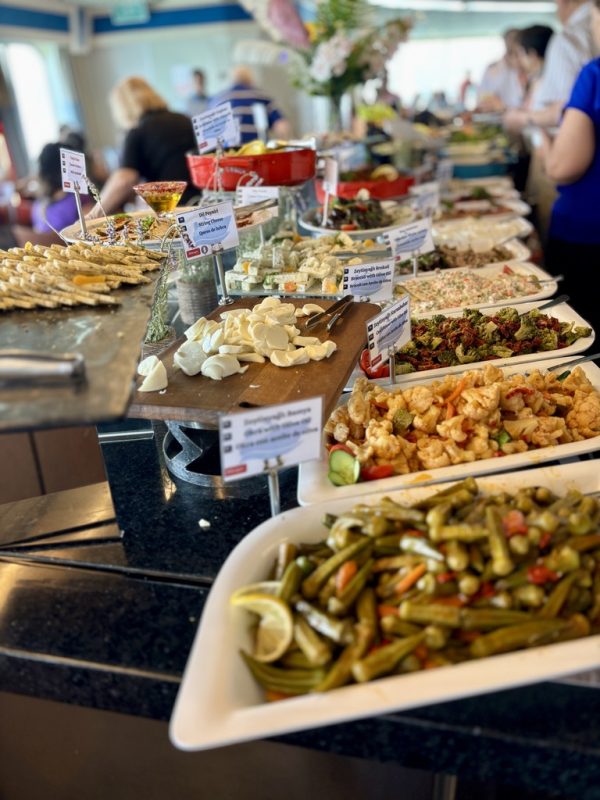
Be prepared to be adventurous. We tried a lot of new and interesting Greek foods on this trip, and relished spices and seasonings that you may not find back home. Give it a shot. I got a kick out of our cruise ship, where the daily buffet always featured one corner that I referred to as the “IHOP section.” Instead of exotic hummus, cheese, yogurt or vegetables wrapped in grape leaves for breakfast, you could feast on pancakes, bacon and various types of eggs. That same corner also had more predictable fare for other meals — lasagna or pizza, instead of herring or dates.
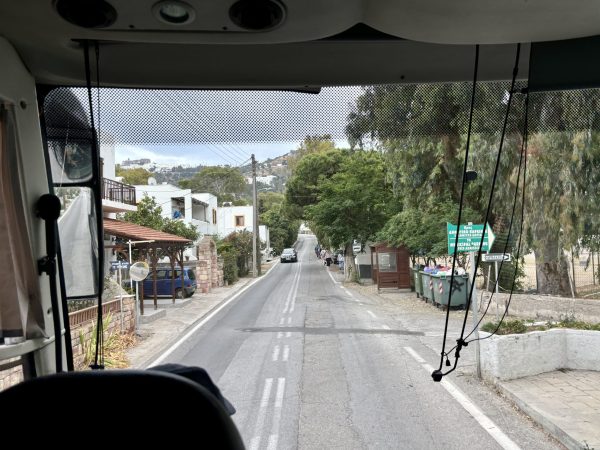
Be prepared to be busy and to spend a lot of time on the bus. The daily schedules can be long and intense. We were often up and out the door by 7:30 in the morning, sometimes earlier. This particular tour means spending hours on the road, on a big chartered bus. But our guides were very good at breaking up the trip into shorter segments. A three-hour bus ride was usually split in half, for a 20-minute bathroom-and-espresso break at a comfortable rest area along the way.
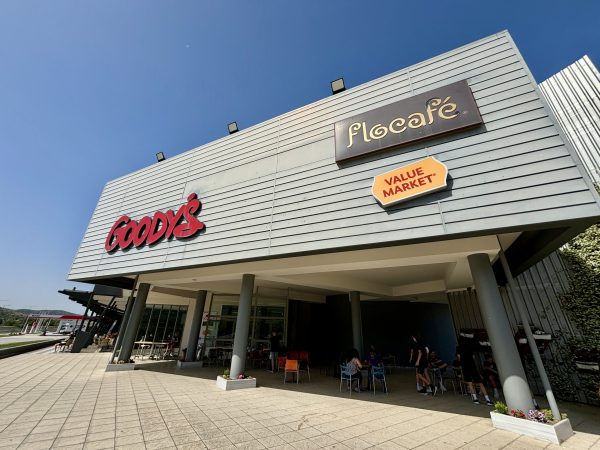
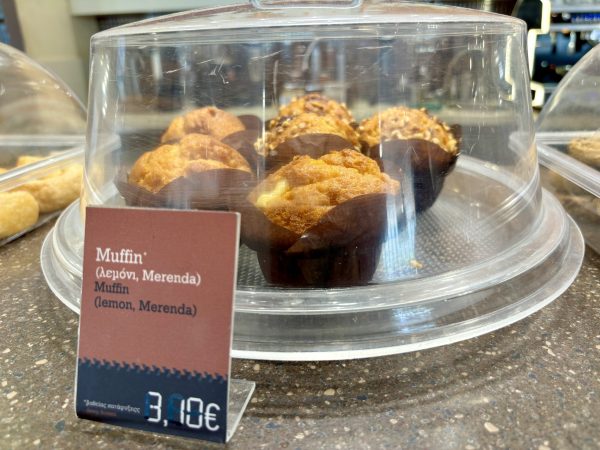
The guide often peppered these stretches with bits of Greek history and mythology and notes about the geography we were passing through. Otherwise, it was a good time to nap.
Be prepared to have Mass in some unusual places. Our first night, groggy after 20+ hours of travel, we celebrated Mass at 9 pm in a hotel meeting room. After that, among other places, we celebrated it in a disco (on the ship), outdoors using a boulder as an altar (in Corinth) and in an amphitheater with a tiny table for our altar and stunning mountains as a backdrop. Again: be prepared to be flexible. Priests take note: Father Jeremy brought a backpack with wheels that carried his Mass kit — chalice, patten, hosts, vestments, altar linens, cruets and books. (Our guide provided the wine.)

Last year, when we went to the Holy Land, I invested in a very light nylon packable backpack by Zomake (($17 on Amazon,) which was perfect for carrying my alb, stole, iPad, water bottle and occasional small souvenirs. I highly recommend it! As for the liturgy, we mostly used the Mass for the day, occasionally picking something from St. Paul for the first reading — St. James, you’ll remember, was the author during this cycle. We sometimes celebrated Mass in the morning, sometimes in the afternoon at a site, and a couple of times we had it in the evening. Once, it was so late when we finally got to our next hotel, we elected to forgo the Mass for that day. People were exhausted; nobody complained. (Someone had even asked, “Is there any way we can have Mass on the bus?”) Meantime, Father Jeremy and I alternated preaching duties — he did two days, then I did two days — and that worked nicely.
Be prepared to be modest. Very modest. One of the monasteries we visited had a strict rule for women: they had to wear a skirt. Even if they were already wearing pants. No shorts. No bare shoulders. A skirt was mandatory just to get in. My wife bought a large scarf in our hotel gift shop for about $12 and wrapped it around her waist. to wear over her khaki slacks. That did the trick. They also offered free skirts at the monastery entrance if anyone was completely skirt-less.

If you were visiting the more tourist-y areas, and not religious sites, you could get by with shorts and flip-flops.
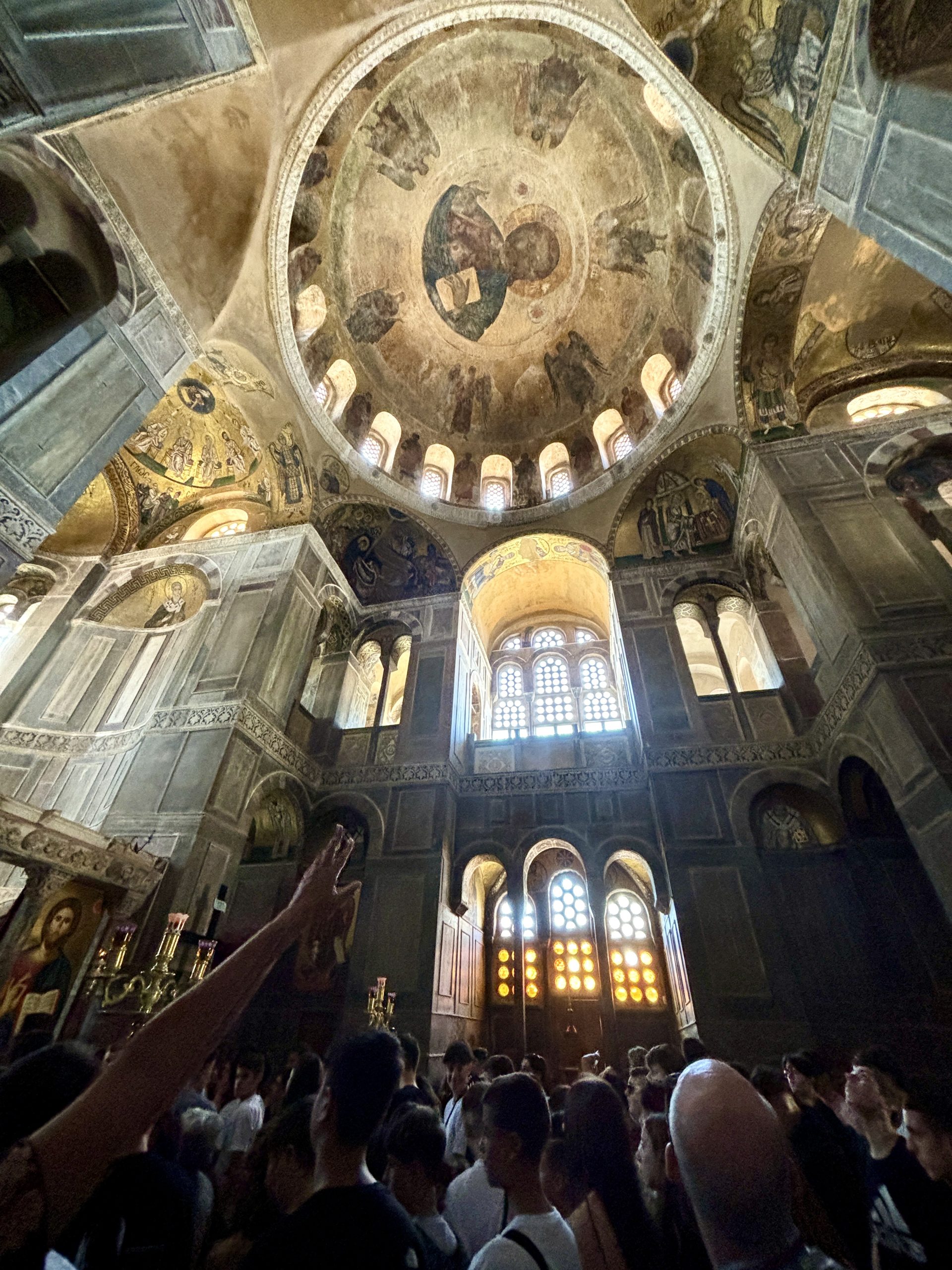
Be prepared to encounter the rich heritage of the Orthodox Church. You don’t find many Catholics in Greece, so you won’t find many Catholic shrines or churches. But our Orthodox siblings have a history all their own, and some iconography that is downright stunning. We almost overdosed on frescoes.
A visit to a local Byzantine workshop was fascinating. Lots of folks in our group bought up small icons for souvenirs. (They ran from $20 to $60, with larger ones a little more.)

Which reminds me: while many places accept dollars, most prefer Euros. We brought about 500 Euros with us, mostly in smaller denominations. Credit cards are good, too. And every hotel has an ATM that will give you a decent exchange rate.
Be prepared for sunshine. Pack sunscreen and a hat. Drink water when you can. (Your bus may have some in a cooler on board.) Bring light clothes that shed sweat. Seek shade when you can. Pace yourself.
Finally, be prepared to be changed. I mentioned this in my final homily, the day before we left. The pilgrims departing Greece should feel different from the pilgrims who arrived. We’ve been given a glimpse of the very beginnings of our church and walked the streets where saints made history (and made converts). If you’re the journaling type, pack a small notebook and a pen and find time to scribble ideas, inspirations, insights, questions, prayers. Take tons of pictures. (Thank you, Steve Jobs, for making point-and-shoot cameras and rolls of film obsolete). Pay attention to the landscape (which, honestly, isn’t hard — it will take your breath away). Realize that warriors and kings, saints and missionaries, saw those same hills and scaled those same mountains. My favorite two stops were Ephesus and Patmos, and I know I’ll be revisiting them often in my prayers and in my dreams. Prepare to reimagine, to hope, to remember, and to be eternally grateful, because thousands of years ago a bold man with a high forehead and indomitable faith dared to cross the sea and proclaim to unbelieving Greeks the Good News of Jesus Christ. The rest is history, yours and mine.
It’s a wonder, all of it.
If you want to know more, contact my friends at Select International Tours to learn how you can take a pilgrimage like this. You can thank me later.
Also, I’m going to be leading another group of pilgrims to Italy next February for the Holy Year. Come along with us! Read all about it!