Defending the unborn at the beginning of life is just the beginning. If we want to call ourselves “pro-life,” we need to stand for all life, to give every life a chance.
This weekend, we mark Respect Life Sunday, and the beginning of Respect Life Month.
But I have to wonder: do we understand what that really means? We’ve heard that phrase, “Respect Life” so often. The fact is, we should not just “respect” life. It deserves so much more than that.
We should be in awe of life! Honor it. Give thanks to God for it. Welcome it. Embrace it — especially when it is new, when it is vulnerable, when it is crying out to be held.
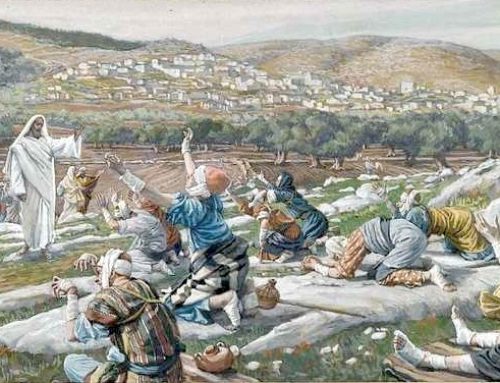
Jesus shows us how in today’s gospel: “Let the children come to me; do not prevent them, for the kingdom of God belongs to such as these.”
The other day I came across a quote from Rabbi Abraham Heschel. He was a towering spiritual leader in the 20th century. In the early 1960s, he marched for civil rights in the deep south, locking arms with Martin Luther King, Jr. Rabbi Heschel was also present for some of the sessions of Vatican II. He influenced much of the Church’s modern teaching on our relationship to “our elder brothers and sisters in faith,” the Jewish people.
This is what Rabbi Heschel had to say about life.
“Our goal,” he said, “should be to live life in radical amazement… get up in the morning and look at the world in a way that takes nothing for granted. Everything is phenomenal; everything is incredible; never treat life casually.”
“Never treat life casually. Live with radical amazement.”
I would argue that is part of what it means to “Respect Life.” We should be continually amazed.
One of the psalms tells us:
“Truly you have formed my inmost being;
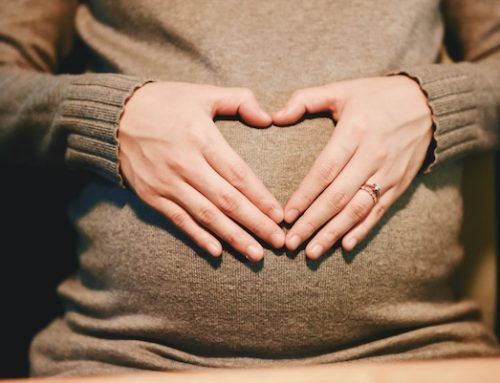
you knit me in my mother’s womb.
wonderful are your works.”
How easily and often we forget: Every one of us is wonderfully made! Every one of us is made in the image and likeness of God. Even the smallest, the weakest among us. Especially the smallest and weakest.
This is why every one of us needs to understand what is at stake next month.
You may have heard there is an election coming up. Abortion is on the ballot. Life is on the ballot.
Attention must be paid.
Several years ago, speaking to a group of physicians, Pope Francis put it this way:
“Every child who … is condemned unjustly to being aborted, bears the face of Jesus Christ, bears the face of the Lord, who even before he was born, and then just after birth, experienced the world’s rejection.”
Think of what is being done to Jesus every time an unborn child is tossed aside, discarded, snuffed out. It’s not a rare occurrence. By one count, in 2023, here in Florida alone, a new life ended in abortion 84,000 times.
All of which brings me to one item on the ballot here in Florida: Amendment 4.
In a recent letter, the eight bishops of Florida described Amendment 4 as “extremely grave.” This amendment would allow for unborn life to be ended for any reason up to viability — roughly up to the sixth month of pregnancy.
But that’s just the beginning. As Miami’s Archbishop Thomas Wenski put it:
“Even those who do not agree with the Church teaching that human life begins at conception should find reasons to oppose this amendment.”
Among other things, it would allow any healthcare provider, not just a doctor, to approve late-term abortions. Counselors at a clinic could authorize the procedure, deciding who lives and who dies.
It would also eliminate parental consent. This would make abortion the only medical procedure in Florida for which parents would have no say.
In a world that increasingly wants us to make life disposable, expendable, we need to take this moment and say “No.” It isn’t. God knit us in the womb. We are wonderfully made — every one of us.
In 2012, following a trip to the Middle East, Pope Benedict reflected on the troubles that have afflicted that part of the world — tragically, we see them still unfolding today. He spoke in particular about the urgent need to protect and value life.
It all begins, he said, with the ultimate affirmation of life, the Incarnation, when God became man. “It is because of Jesus,” he wrote, “that Christians are sensitive to the dignity of the human person. God wants life, not death.”
“God wants life.”
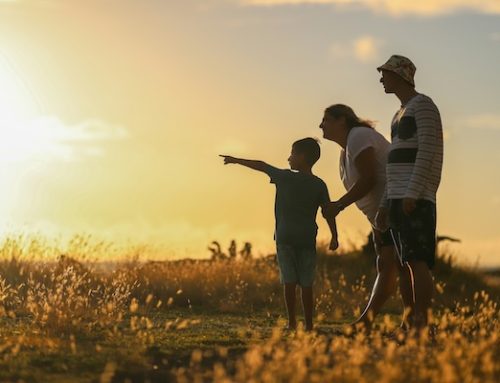
Defending the unborn at the beginning of life is where it begins. But that’s just the beginning. If we want to call ourselves “pro-life,” we need to stand for all life, to give every life a chance.
That means voting for life on the ballot in November. But there is so much more we need to do.
That means supporting mothers in crisis, who feel they have nowhere to turn.
That means caring for the elderly and people at the end of life.
It means giving shelter to the refugee, standing up for the abused, battling bigotry and racism in every form.
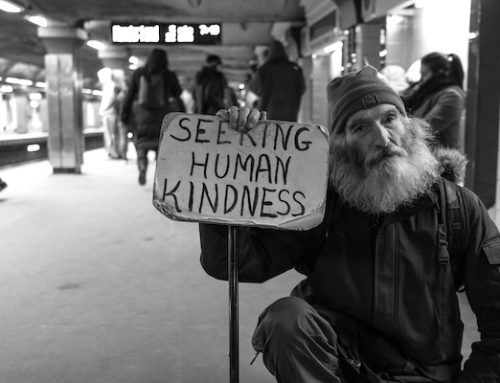
It means helping to feed those who are hungry — remembering that there are many kinds of hunger in our world. Hunger for food, yes. But there are those who hunger for justice and peace. Those who hunger for dignity and self-respect. So many simply hunger for love and to be reminded that they are loved by the God who willed them into being.
Standing for all of that is what it means to be “pro-life.”
Consider the reading today from Genesis. When we look into the eyes of another, no matter what their circumstances, we should see what the first man saw when God brought a new life to him: here is another one like me. Here is a life that is unique and blessed, created by the One who created us all.
Confronted with this beautiful reality, we cannot help but feel “radical amazement.”
Because every life bears the thumbprints of the Creator.
Every life is a miracle.
Remember that this weekend. Remember it on November 5th. We should remember this every day of our lives and engrave it in our hearts.
By God’s grace, every life is a miracle.