
Has it really been a week?
Our journey goes on. We began our 8th day in Italy with an early morning hike across town to pass through another Holy Door, at the Basilica of Santa Maria Maggiore.
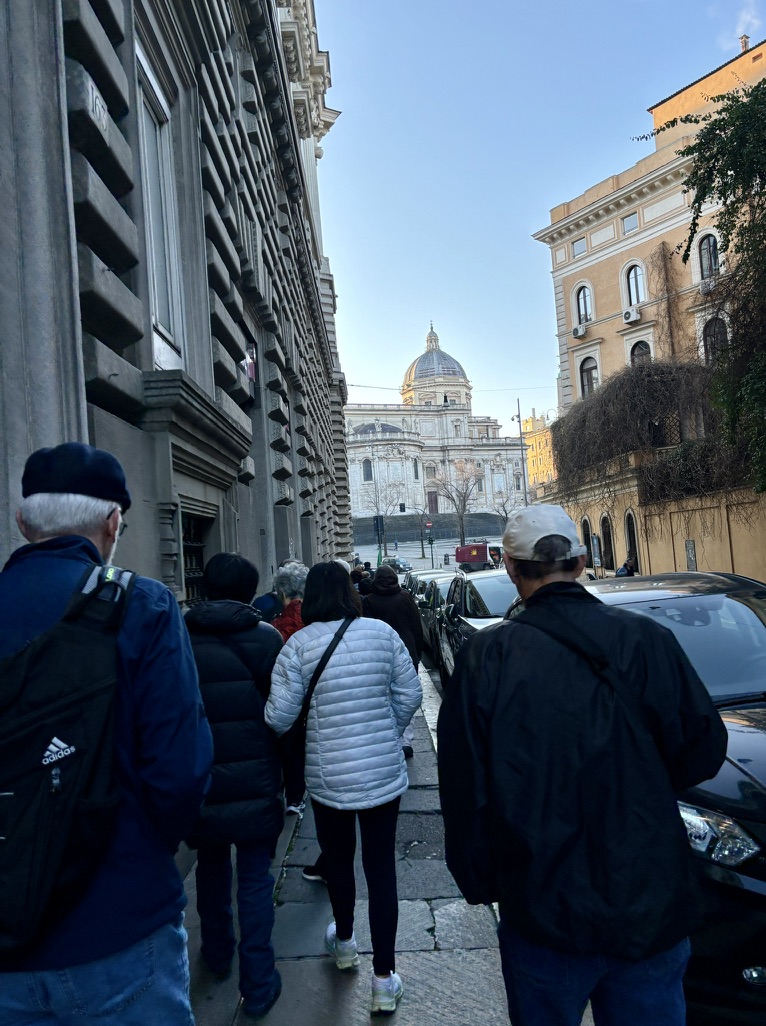
This is one of Pope Francis’s favorite churches — he’s chosen it for his future resting place — and it’s a church he visits often, before and after he’s made trips around the world.
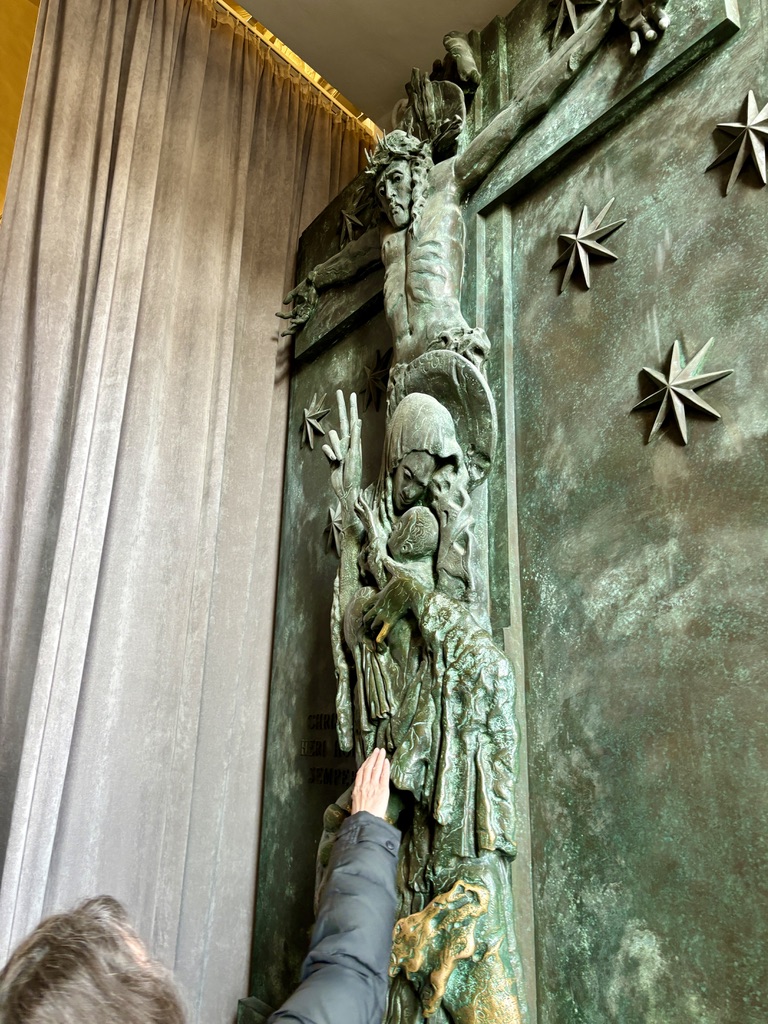
It is one of the four major basilicas in Rome, so we lined up to pass through its Holy Door. Our guide noted: it’s the only Holy Door located on the left side of the entrance, because it is a church devoted to the Blessed Mother, whose altar is almost always on the left side.
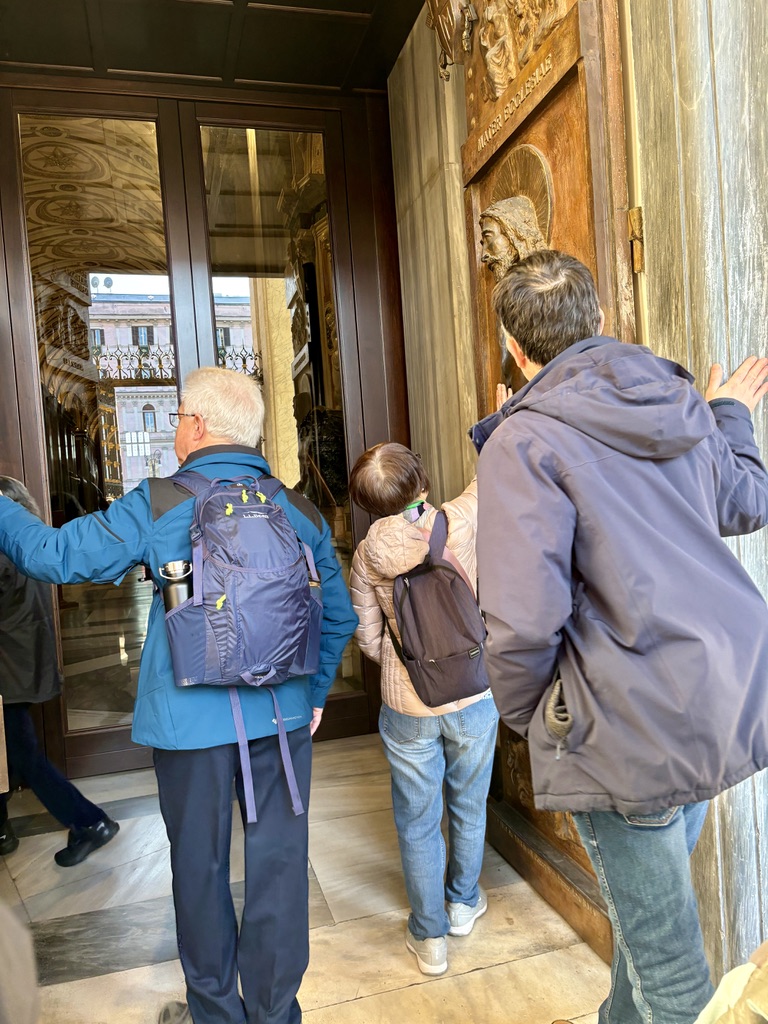
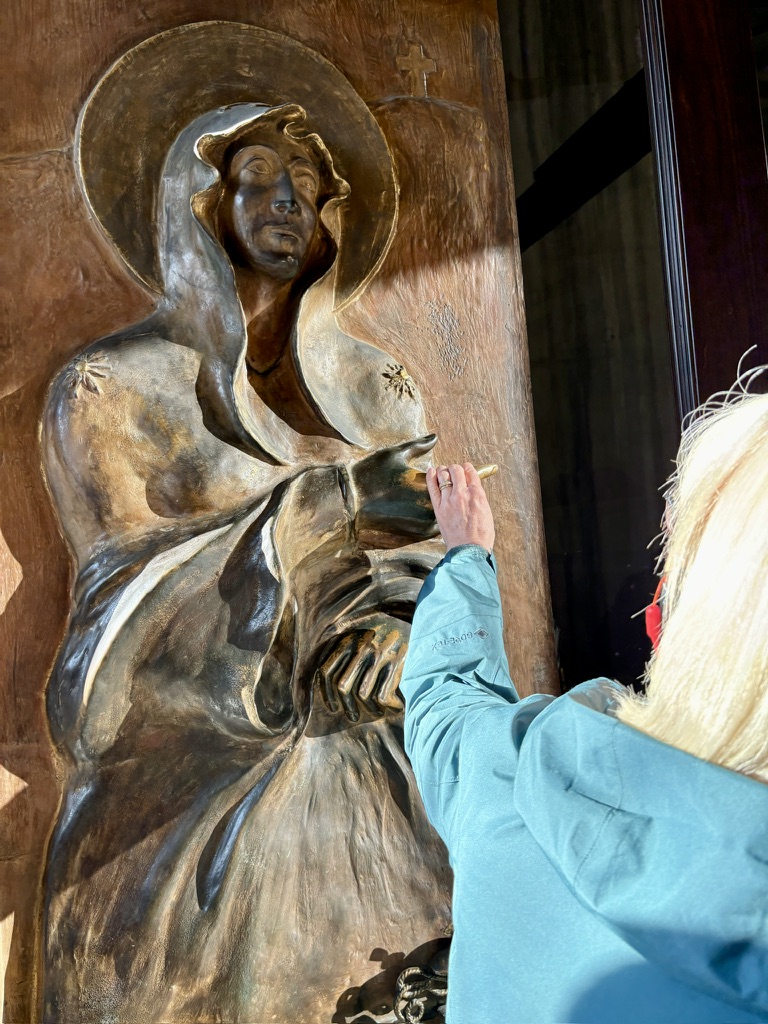
It’s a door that also features Mary welcoming the faithful inside — and pointing, actually, to her son on the other door.
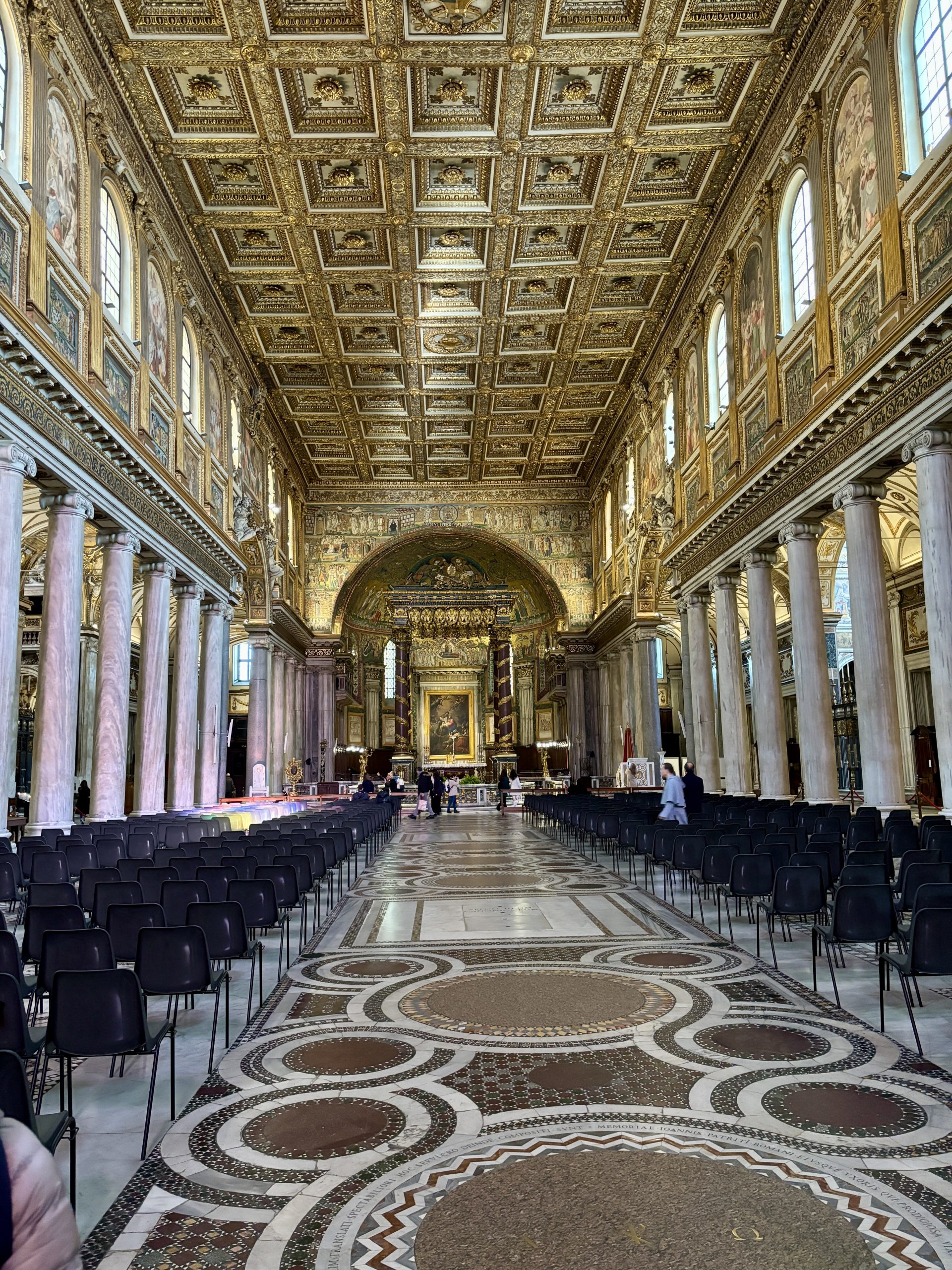
Here, we were directed to a beautiful side chapel for our daily Mass, once again celebrated ad orientem.

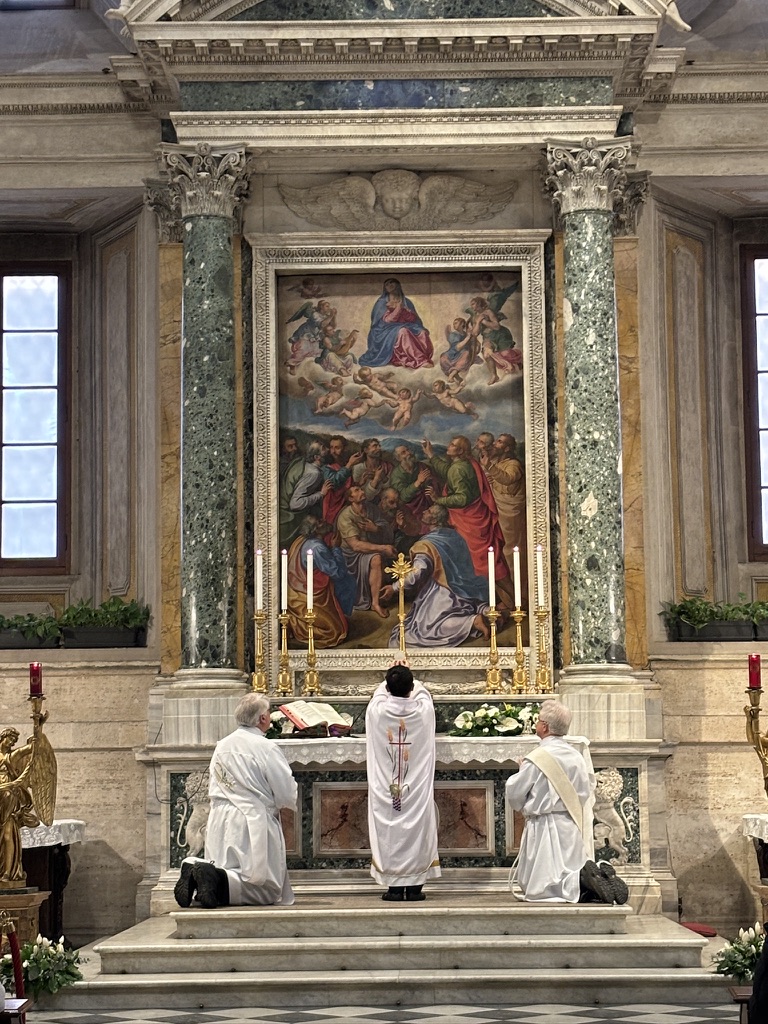
Deacons Tom Collier and Mike Friske served, and Tom preached.

After, we took in some of the stunning artwork of the basilica.

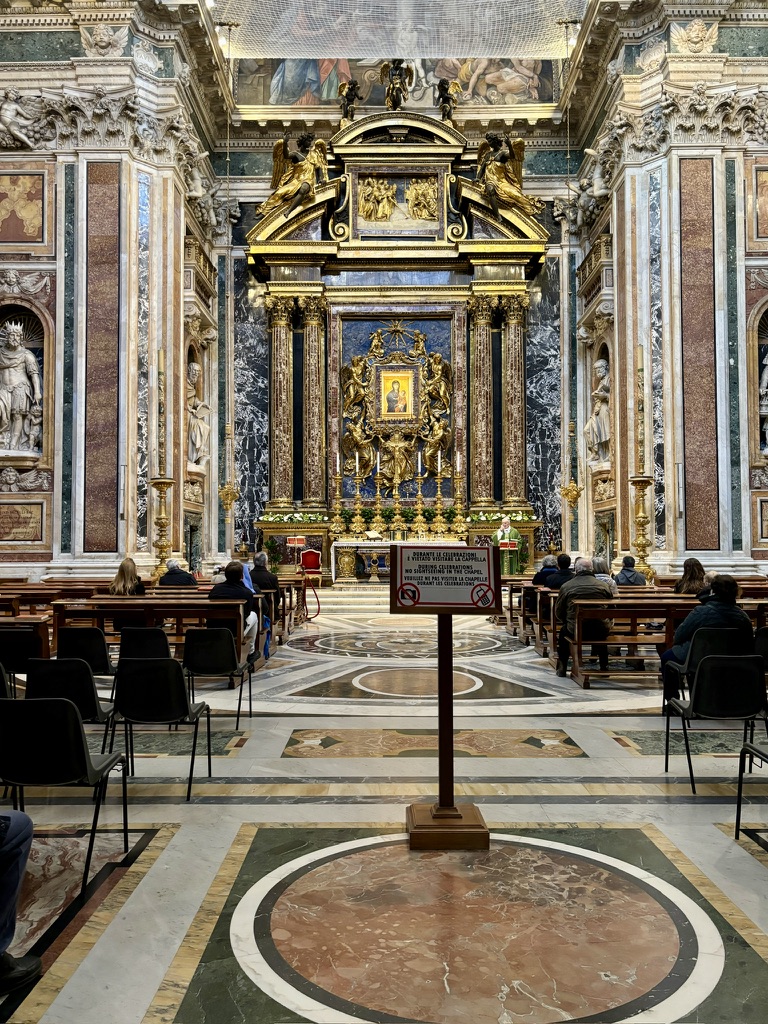
Among the famous treasures in this church: Christ’s crib, humble wood now encased in gold and glass.

We also saw the chapel where Pope Francis will one day be buried. It already contains two other popes. This is also where he comes to pray before and after each of his trips.
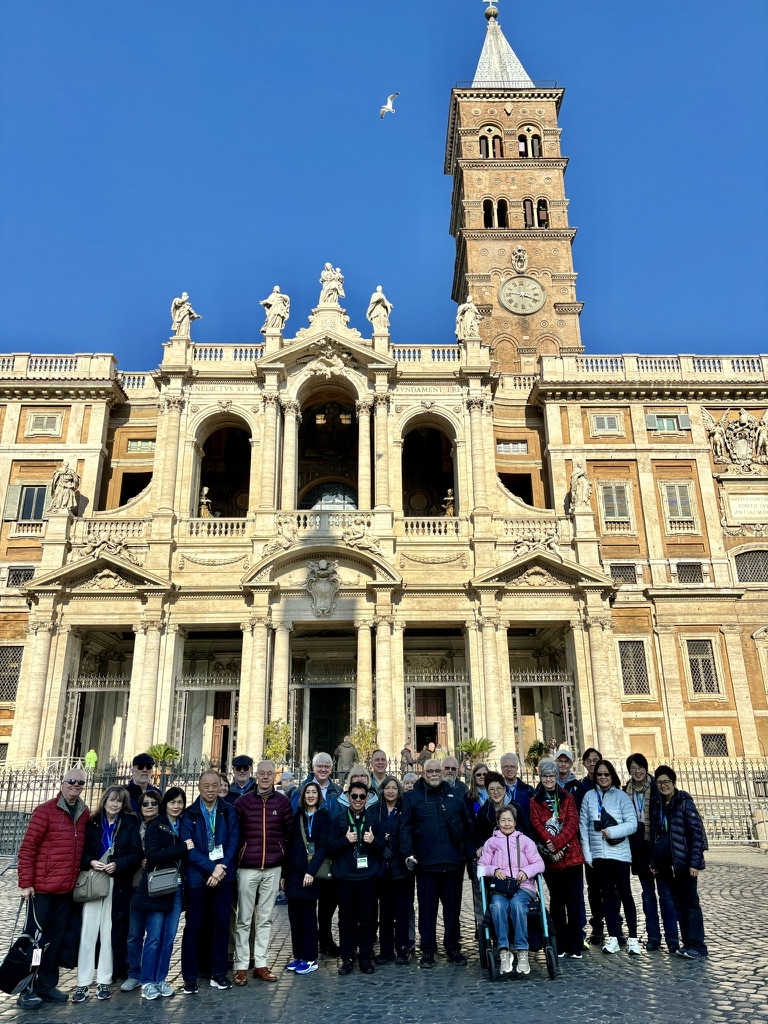
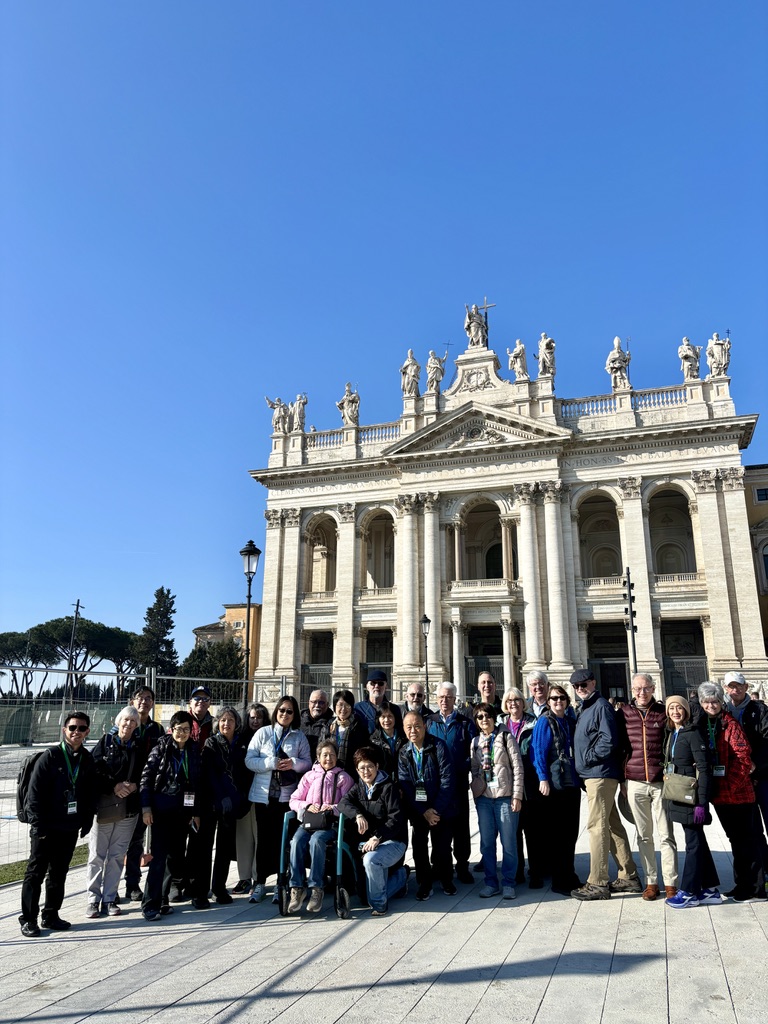
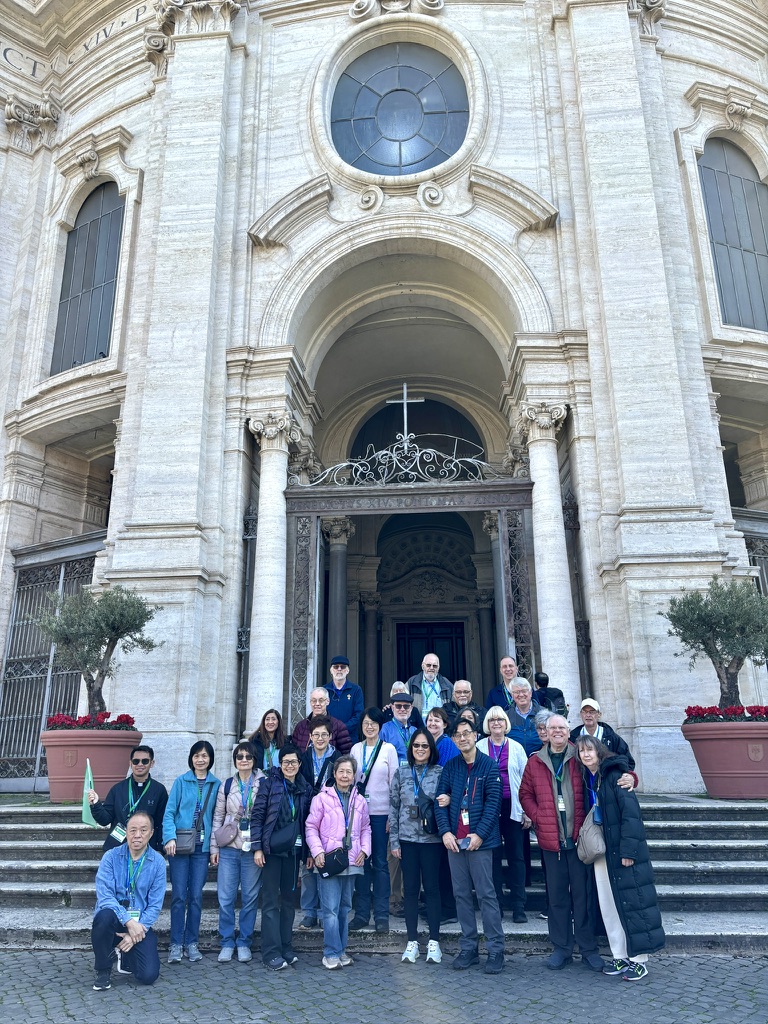
Group photo!
Then, it was on to our final basilica: St. John Lateran, the cathedral for the bishop of Rome.

It actually has an incredibly long formal name: Major Papal, Patriarchal and Roman Archbasilica, Cathedral of the Most Holy Saviour and Saints John the Baptist and the Evangelist in Lateran, Mother and Head of All Churches in Rome and in the World.
Try putting that on the cover of a Sunday bulletin.
Wikipedia points out that it is the only archbasilica in the world:
The church is the oldest and highest ranking of the four major papal basilicas as well as one of the Seven Pilgrim Churches of Rome. Founded in 324, it is the oldest public church in the city of Rome, and the oldest basilica of the Western world. It houses the cathedra of the Roman bishop, and has the title of ecumenical mother church of the Catholic faithful.
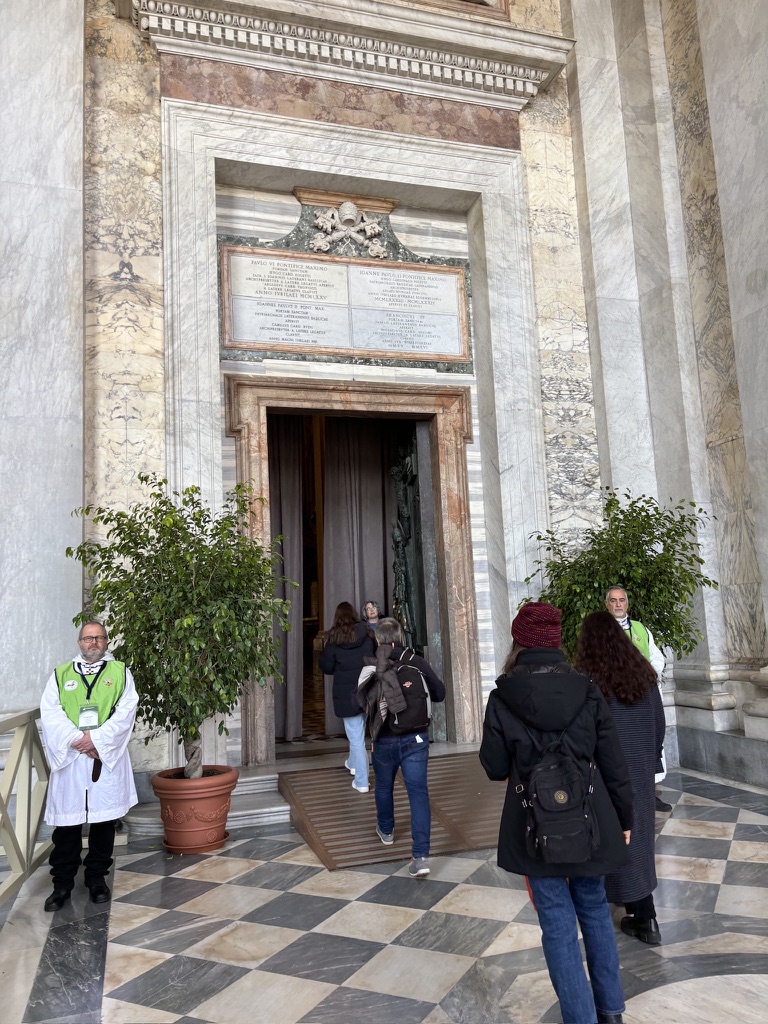
We set to work passing through the Holy Door. (Those folks in green vests are Jubilee volunteers. They were everywhere.)
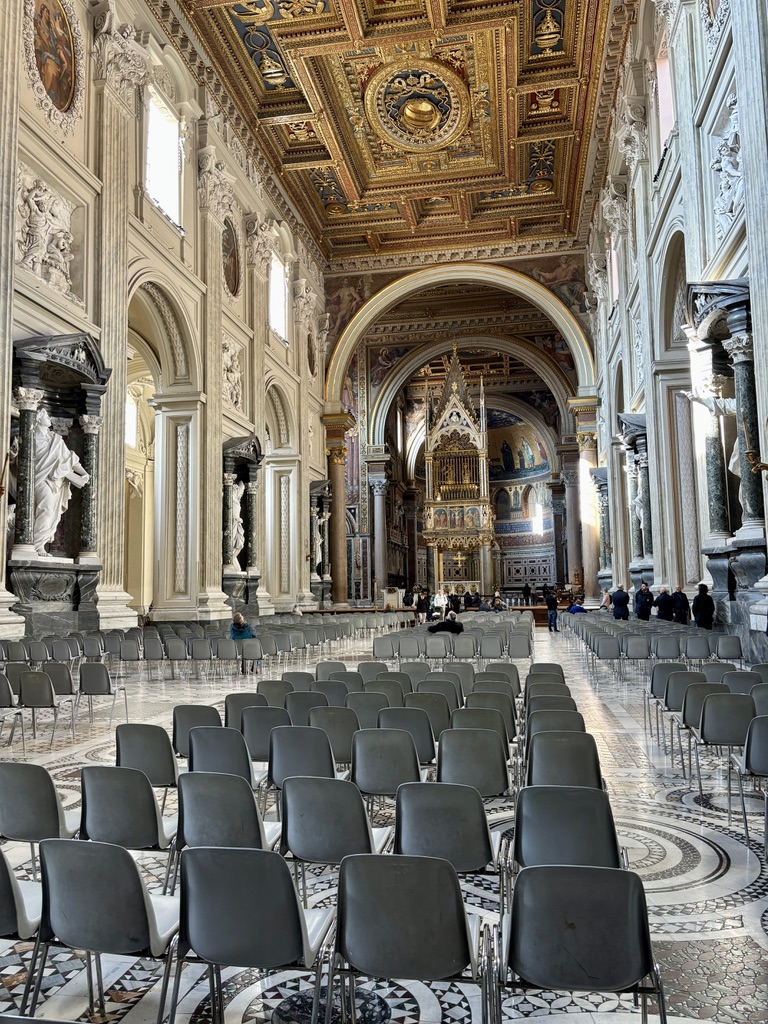
A dramatic feature of the church: statues of the apostles lined up on either side. I was struck by this depiction of St. Bartholomew, who was reportedly martyred by being skinned alive — and carries around his skin.

The basilica contains relics of the heads of St. Peter and St. Paul, high above the main altar.
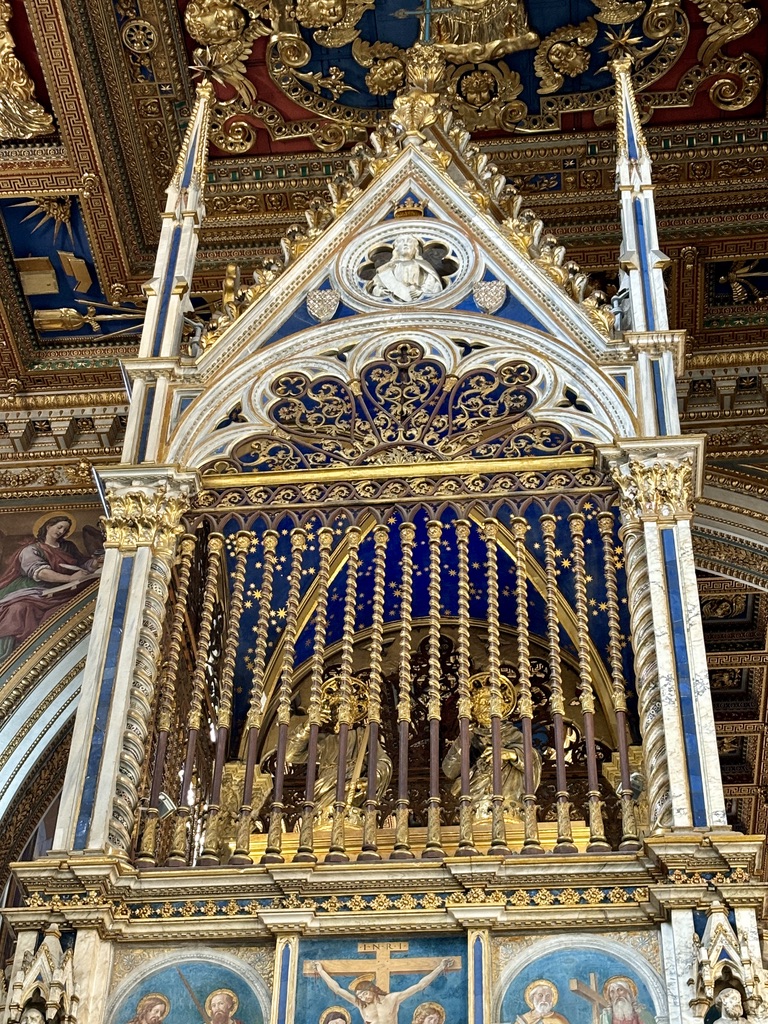
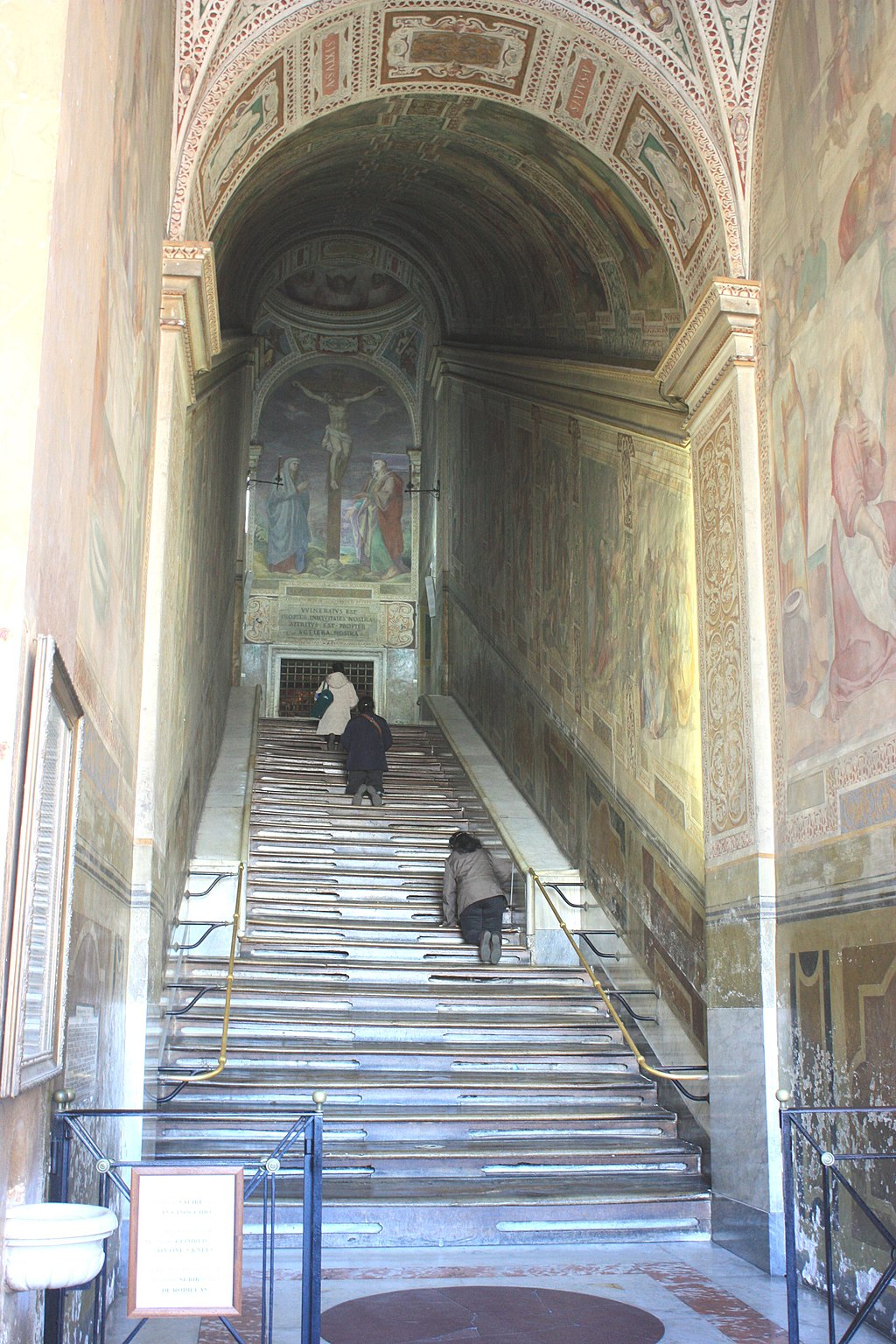
From there, we walked a couple blocks to climb the Holy Stairs, or Scala Sancta — discovered by St. Helena, who brought them back to Rome:
According to Catholic Church tradition, the Holy Stairs were the steps leading up to the praetorium of Pontius Pilate in Jerusalem on which Jesus Christ stepped on his way to trial during his Passion. In the Middle Ages they were known as Scala Pilati (“the Stairs of Pilate”).
You can climb them on your knees. My wife and I opted to walk. The building containing the stairs doesn’t permit photography, but here’s a good glimpse from Wikipedia, by / Creative Commons
After this, it was back to the bus, for a short ride to another site that has a strong connection to St. Helena: the Basilica of the Holy Cross in Jerusalem.
It stands on the place that was once St. Helena’s home and serves today as the most astonishing biblical storage vault in the world.
Climb the stairs and you find a chapel packed with relics: a finger of St. Thomas, a nail and splinters of wood from the True Cross and more.

A side room contains a life-sized copy of the Shroud of Turin and, in a small alcove, a dramatic and shocking recreation of the crucifixion, concluding from the Shroud just what Christ looked like in his last moments of earthly life.


Here’s a piece EWTN did on the relics a few years back.
That pretty much concluded our touring for the day. After this, we split up. The non-deacons and wives headed back to the hotel or opted to do some shopping. Our group of deacons went to lunch, then on to St. Gregory VII church for our first big event of the Jubilee of Deacons, described as “Catechesis and Testimony.”
I’d visited St. Greg’s during my last trip in 2016 — and I have to say, it’s unlike any other church you might visit in Rome. No extravagant, brilliantly sculpted marble statues here. No frescoes of angels or relics under glass.
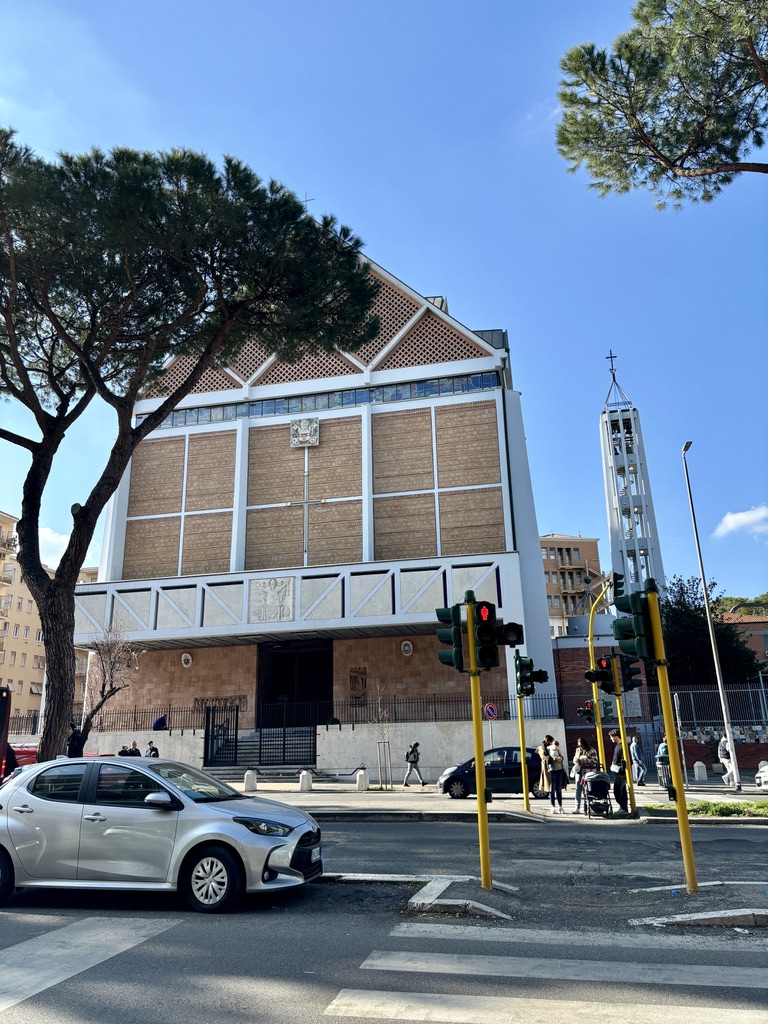

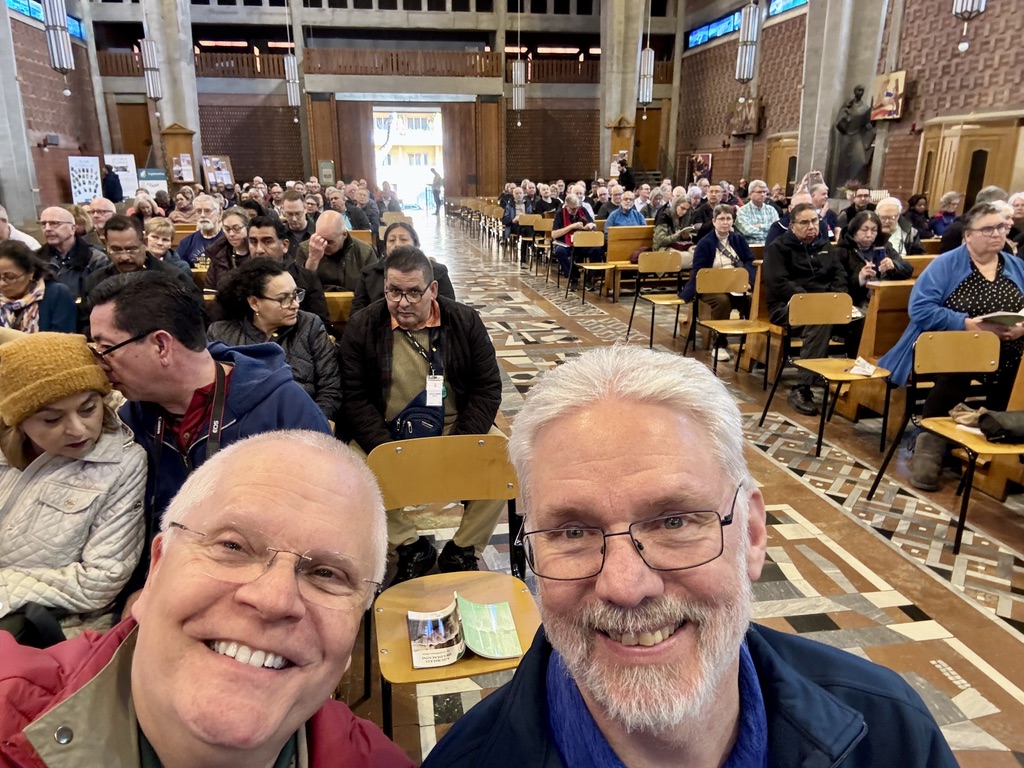
We arrived early, to get good seats. By 3:30 it was starting to fill up. My friend and fellow pilgrim Deacon Richard Hay posed with me for a snapshot just before it began.
After we prayed Midday Prayer, the main speaker stepped to the podium: Cardinal Arthur Roche, the Prefect for the Dicastery of Divine Worship here in Rome.
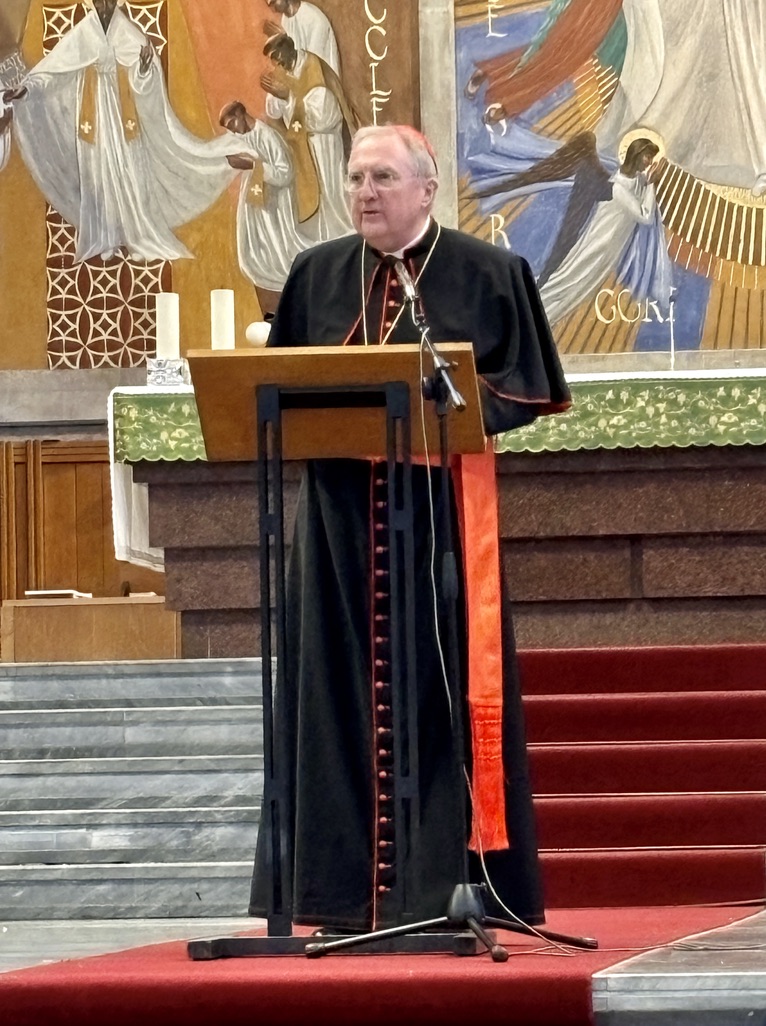
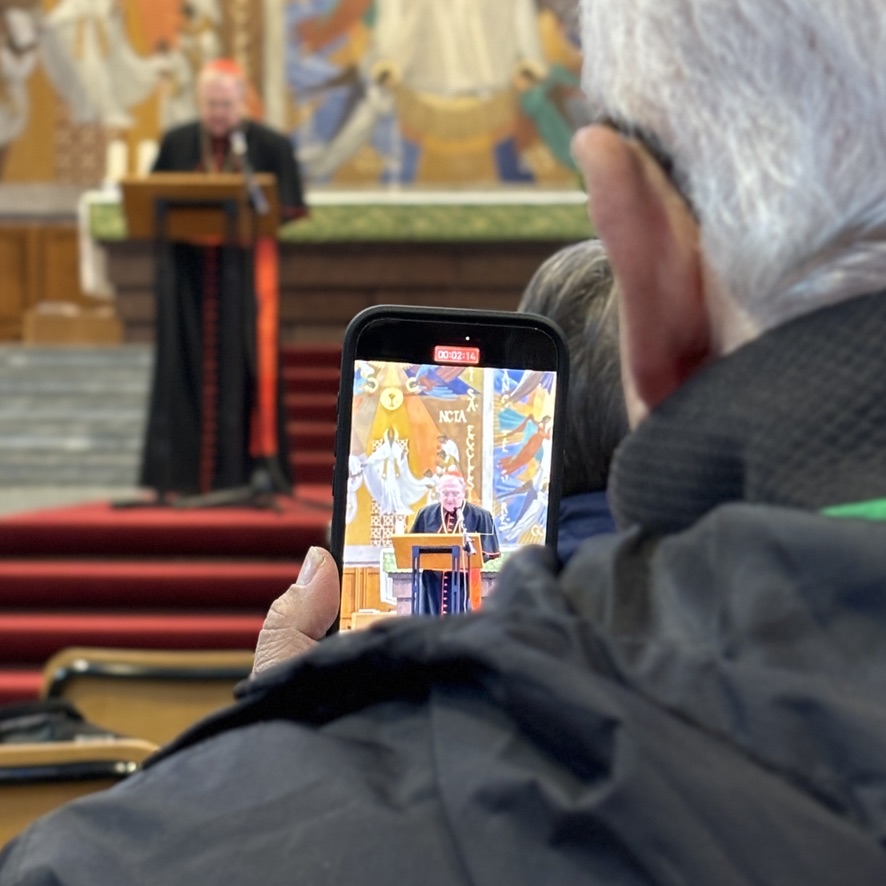
Cardinal Roche is a man of many gifts. Brevity isn’t one of them. The good cardinal spoke for about an hour and twenty minutes, focusing on key attributes of the diaconate — including humility, prayer and service. He delved into history and a little theology, and quoted generously from remarks that Pope Francis made to the permanent deacons of Rome several years back:
I know that you are also present in Caritas and in other bodies that are close to the poor. In this way you will never lose your bearings: deacons will not be “half-priests” or second-rate priests, nor with they be “special altar boys”, no, that is not the path to follow; they will be caring servants who do their best to ensure that no one is excluded and the love of the Lord touches people’s lives in a tangible way. In short, one could summarise diaconal spirituality in a few words, that is, the spirituality of service: willingness on the inside and openness on the outside. Willingness on the inside, from the heart, ready to say yes, docile, without making life revolve around one’s own agenda; and open on the outside, looking at everyone, especially those who are left out, those who feel excluded.
I hope he publishes a version of his text. There was a lot to unpack.
We also heard briefly from two deacons, from Richmond and Los Angeles, who spoke about their own vocations.
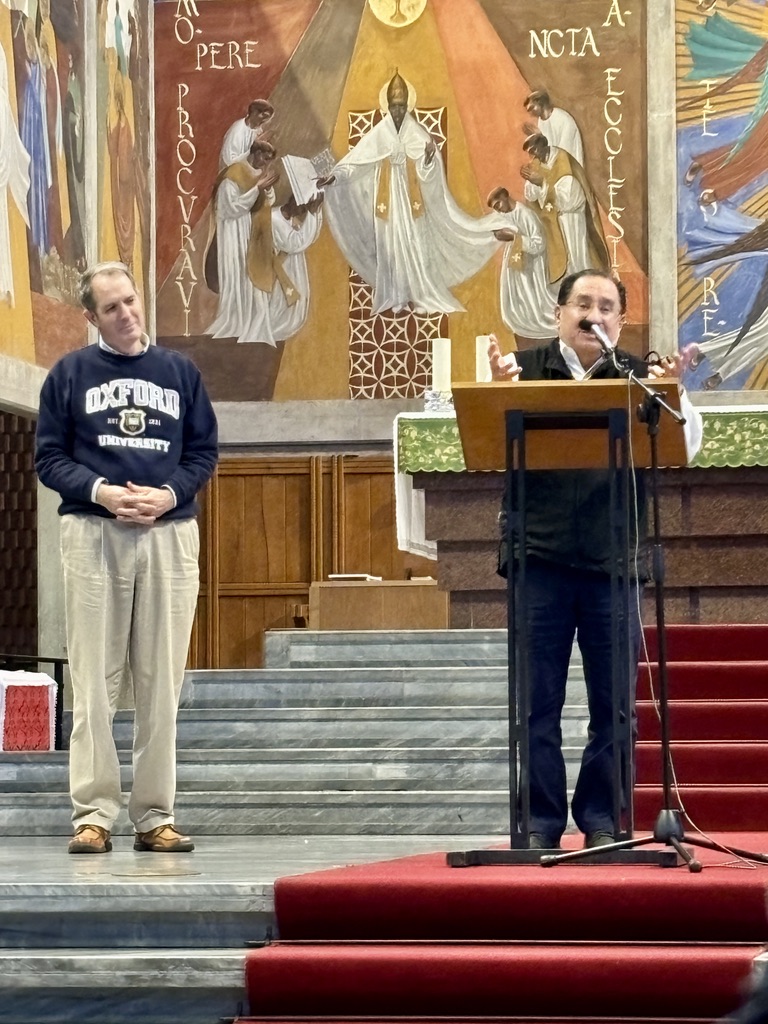
I learned later that the two men were only notified moments before this event that they would be speaking to our group. They did a great job on very short notice!
Things concluded around 5:30 and we walked about 20 minutes back to St. Peter’s Square to reconnect with other members of our group and take the bus to our hotel.
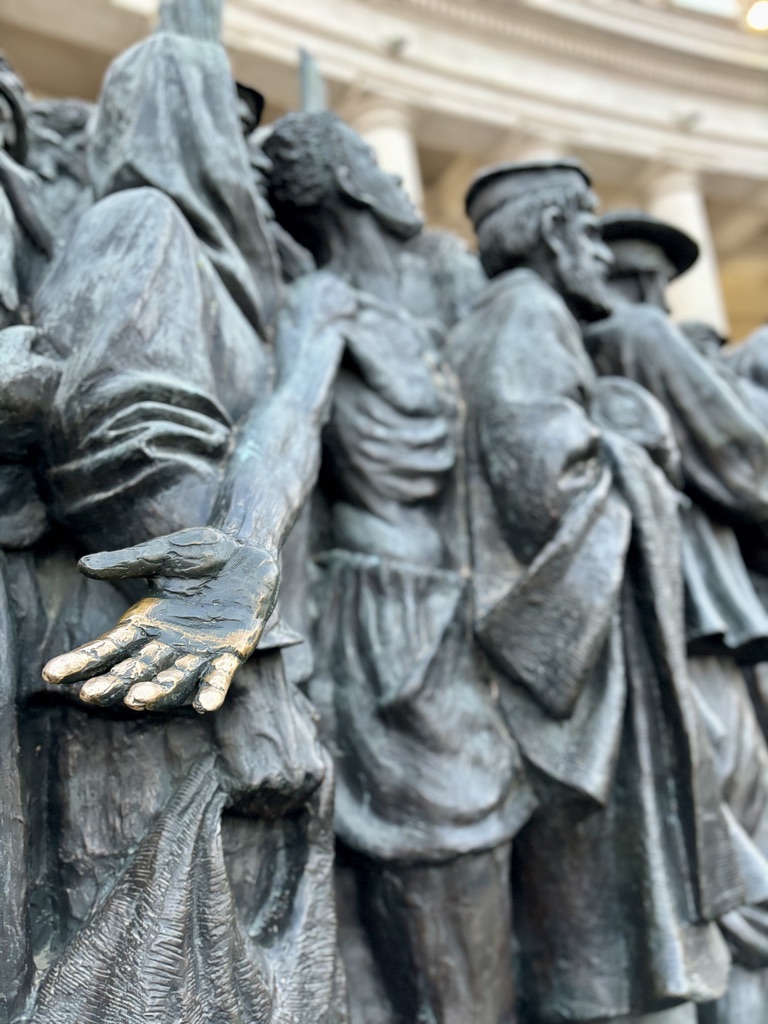
Along the way, we passed Timothy Schmalz’s famous statue in St. Peter’s Square, “Angels Unawares,” honoring migrants from around the world. It’s name comes from the letter to the Hebrews: “Do not neglect to show hospitality to strangers, for thereby some have entertained angels unawares”
It’s a statue that has touched so many around the world — and in the square, I noticed, people have been touching it, too.

Saturday, the Jubilee for Deacons continues with another series of talks and a prayer vigil in the evening.
What a blessing this has been, every moment of it. I’ve had many opportunities to pray for people near and far. Thank you for all the prayers you’ve sent my way as we’ve made this journey, and know you are all being well prayed for here in Rome. Oremus!
To be continued…