We hear a lot of familiar names in this gospel, don’t we?
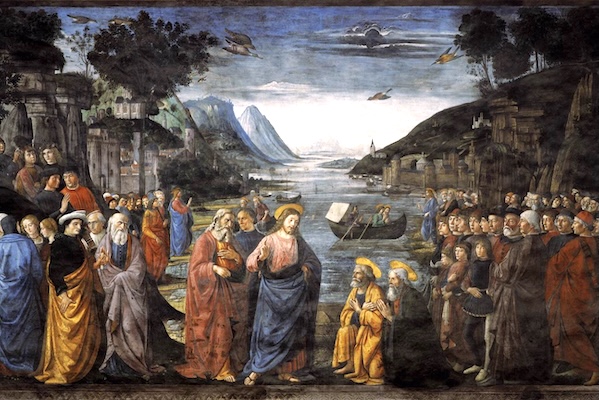
This is one of just four times in scripture where the names of the apostles are listed. It’s almost like a Hall of Fame or a roster of All Stars.
With the notable exception of Judas, they’re all saints. The first Christians would have known about them. Some may have known them personally.
But if they did, most would not have said, “Yeah, I could tell that guy was destined for greatness. I knew he would be a saint.”
The apostles didn’t start out that way. And that’s something to remember today. There is a lesson here for all of us.
Consider the apostles and then consider this: Who they were isn’t who they became.
First, there’s Peter. Outspoken, decisive, always convinced he was right. Yet, at the moment Jesus needed him the most, he fled. He denied him. Three times. But he went on to lead the Church, to become the first Pope. He died in Rome for what he believed.
Or consider Thomas. “Doubting Thomas.” Even after the Resurrection, long after he himself had been given power – as we heard in this Gospel ‑ to “cure the sick and raise the dead,” he refused to believe that Jesus had been raised. But in the Upper Room, he saw and believed and spoke those famous words, “My Lord and my God.” He became one of the first missionaries, traveling to India, where he was martyred. To this day, many in India call themselves “Thomas Christians” and trace their ancestors back to Thomas. It’s one of the most common names in India.
When I first met him, I asked Fr. Matthew, “How come you aren’t named Thomas?” He smiled. “We do have other names, you know.” Of course. Like Matthew!
Matthew, a tax collector – not a job anyone respected. Tax collectors were considered traitors and were known for extortion and greed. Some would scam people every chance they had. But this tax collector, Matthew, chose another path. He went on to become such dominant figure in the Church, the gospel we heard a few moments ago even bears his name.
We also have the brothers James and John, the ones who were so volatile that Jesus nicknamed them “the sons of thunder.” They could explode in anger. But James became a leader in the early Church – the first apostle, in fact, to be martyred. John went on to be known as “the beloved disciple” – the one who rested his head against the heart of Jesus the night before he died, and the one who took care of Mary. John was the only apostle who didn’t die a martyr, but lived to an old age and wrote beautifully in his gospel about love.
You might add to this list the “apostle of the Gentiles,” Paul – who started out persecuting Christians and watching them die, but who underwent probably the most famous conversion in history, on the road to Damascus. He was forever grateful for how God intervened in his life. We hear today in his letter to the Romans this humbling reminder: “God proves his love for us in that while we were still sinners Christ died for us.”
This is how the Church began — with fierce, loyal, devoted, complicated, imperfect men. Sinners like you and me. But in them, Jesus saw something. He saw possibility. To borrow an idea from Paul, he saw people worth dying for. He saw the people who could carry his message into the world.
He sees that in us today. By our baptism, we are called ourselves to be modern apostles, to bear witness to the Gospel, to live in imitation of Christ and to show the world what being a Christian really means.
Put simply: We need to continue what the apostles began.
This Sunday, think about them, think about what God had to work with – and think about what he did with them and through them.
And remember this:
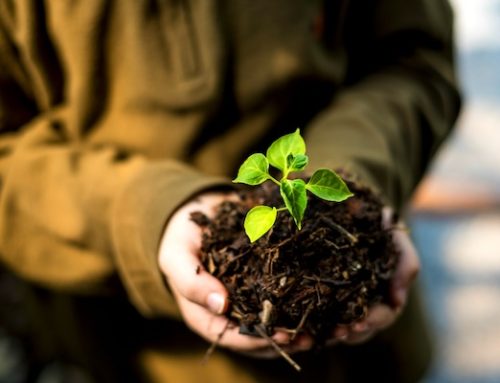
Every one of us, like every one of them, is a work in progress. God isn’t finished with us yet.
I take a lot of comfort from that. Especially now.
For those who haven’t heard this, I wanted to share some news.
Tomorrow afternoon, my wife and I will drive up to The Villages, to Spanish Plaines Hospital, where I will undergo surgery for cancer. I have prostate cancer. I’ll come home on Tuesday, God willing, and spend a few weeks recovering at home. I hope to be back here in this pulpit sooner rather than later.
I tell you this today for two reasons.
First, I wanted you to hear this from me personally. I owe that to you. If you can, please remember me in your prayers. But especially, I would ask you to pray for my wife, because she will have to put up with me while I’m recovering.
I’m not the easiest person to live with when I have a cold. I can’t imagine what I’ll be like while I’m recovering from major surgery.
But secondly, I want to tell you this because, despite how it sounds, it’s not really about me.
This is about you. About all of us.
This is a message for every husband, every father, every brother, every son who is here – and all the women who love them.
I’ll say it simply: Men, check your numbers. Be vigilant about your health.
I know this is something we don’t like to talk about. But hear me out. In my case, I was in good health. I had no symptoms. But a simple blood test caught this early. Now, with God’s grace, and some great medical care, it will be treated and I can get on with my life.
And that’s what this is about.
This is about life. The gift of life!
As a church, as people of faith, we are very good at talking about issues like abortion and euthanasia and the death penalty –pro-life issues that we pray about, march for, fight against.
Well, this is a pro-life issue.
This is about caring for the gift of life, treasuring what Pope Leo has called in his beautiful encyclical “Magnificent Humanity.”
It is magnificent, all of it. If we are pro-active about our lives, and care for the lives we have been given, we can’t help but be pro-life.
This is what God has entrusted to us:
To work with him and for him to live the lives he dreamed for us.
To become more than we thought possible.
And in the Eucharist we are about to receive, to become what we receive.
As we prepare to receive our Lord, let’s treasure and pray about the first people who did that at the first Eucharist. Peter, James and John, Thomas and Matthew and all the others.
Realize once more that who they were isn’t who they became.
As long as we breathe, we can become the faithful followers of Jesus we were meant to be.
I look forward to seeing you all again soon. I know God has more for me to do. He isn’t finished with me yet.
Because God isn’t finished with any of us.