From Aleteia:
Since 2019, Canada’s Quebec province has banned public sector employees in positions of authority — including teachers, police officers, judges, and crown prosecutors — from wearing visible religious symbols, which includes hijabs, turbans, yarmulkes, and Christian crosses.
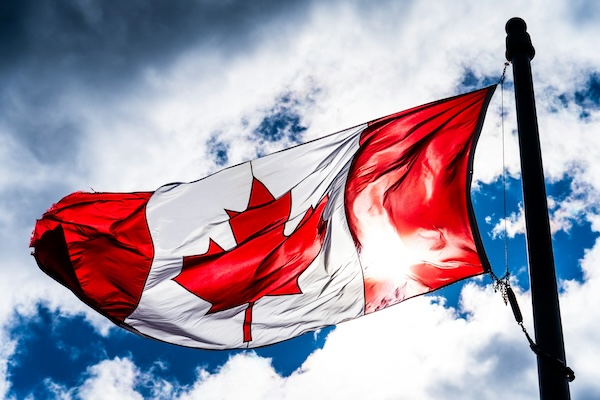
Now, Canada has gone a step farther. Members of the military, particularly chaplains, throughout all of Canada are forbidden from mentioning the word “God” or other religious words at mandatory military public events, such as graduation parades, ribbon-cuttings, ship commissionings, and Remembrance Day ceremonies.
In Canada, chaplains are now banned from publicly talking about God. The directive isn’t limited just to chaplains: All Canadian Armed Forces members, including volunteers, students, casual workers, and contractors, may not use religious language in public remarks.
The new instructions, issued on July 29, 2026, to all Canadian Armed Forces (CAF) Military Personnel, states that “the CAF has a duty of religious neutrality.” According to the directive, at these mandatory public events, chaplains may offer “inclusive” spiritual reflections but may not use religious language.
At least one bishop is objecting:
Bishop Scott McCaig, who leads the Roman Catholic Military Ordinariate of Canada, published a statement criticizing the new policy.
“This instruction is based on a false premise: simply because some belief systems do not profess the existence of God, or some other divine source, does not make them neutral. Atheistic systems of belief require as much assent of intellect and will (faith) as any theistic system of belief. They too profess particular beliefs about God (existence or non existence, nature, etc.), the world and its existence, values, as well as meaning and purpose. That is why Secular Humanists rightly have chaplains in the Canadian Armed Forces. They are one of many ‘Spiritual Faith Traditions,’ and are recognized as such by the government.
There is no such thing as reflections on meaning, purpose and spiritual well being without philosophical and religious presuppositions. It is not the place of the government to adjudicate between them. That is the opposite of state neutrality,” he wrote.
Worth noting: the lyrics of the Canadian national anthem, “O, Canada,” contain that forbidden word:
O Canada!
Our home and native land!
True patriot love in all of us command.
With glowing hearts we see thee rise,
The True North strong and free!
From far and wide,
O Canada, we stand on guard for thee.
God keep our land glorious and free!
O Canada, we stand on guard for thee.
O Canada, we stand on guard for thee.
UPDATE: I was curious about what the guidelines are in the United States and found this posting, from an army chaplain:
Myth #1: Chaplains Cannot Pray in Jesus’ Name
This myth stems largely from confusion regarding military ceremonies versus worship services. Attendance at a military ceremony is required by every soldier in the unit regardless of their faith affiliation. Because attendance is mandatory, a soldier who does not attend might face disciplinary action. Military ceremonies are not focused on a particular faith group or denomination. They are ceremonies for the unit that are part of promoting morale and unit cohesion. During these ceremonies, chaplains often offer an invocation and a benediction. In both of these prayers, because attendance is mandatory, the Army discourages chaplains from praying in Jesus’ name. That said, in the ceremonies I conducted as an Army chaplain, I prayed “in the name that is above all names,” “in the name of the Lamb who was slain for the sins of the world,” “in the name of the Prince of Peace who is Emmanuel, God with us,” and other references to Jesus drawn from Scripture. There was no question in the minds of my soldiers during these ceremonies that a Christian chaplain was praying.
In contrast, attendance at worship services is voluntary. Soldiers can miss worship services without disciplinary action. The chaplain presiding over the worship service is in charge of the service and has the freedom to conduct the service in accordance with their denominational affiliation and their endorsing agent, in my case the North American Mission Board of the Southern Baptist Convention. I always prayed in Jesus’ name during my worship services and was never reprimanded by any superior for doing so. As the chaplain, I presided over the service and planned it in accordance with my faith.