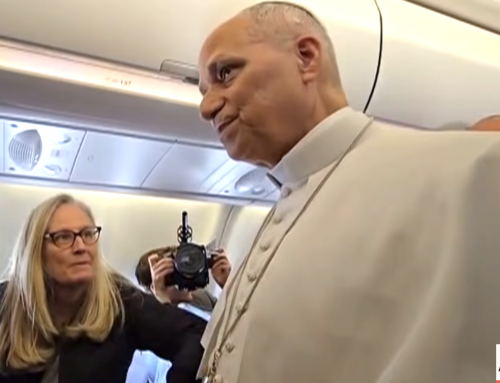

P0litico noticed that the new administration has a lot of Catholics, and decided to look at what that might mean:
Trump, who was raised as a Presbyterian but now considers himself non-denominational, has nominated at least a dozen Catholics to top positions in his administration, including his own vice president JD Vance, a Catholic convert, and Robert F. Kennedy Jr., his pick for Health and Human Services Secretary. Their faith could play a direct role in shaping public policy, from pro-union policies and new tariffs to expanding the child tax credit and more tightly regulating the food and drug industries — and also help carve a new path forward for the Republican Party.
In interviews, several conservative practicing Catholic leaders said they see a close alignment between many of Trump’s second-term policy priorities and a conservative read of Catholic social teaching, which goes far beyond abortion. It’s also focused on promoting marriage and having children, giving parents wide discretion on everything from school content to health care and empowering non-governmental institutions like churches and nonprofit organizations for social support.
“No one’s walking into the administration ready to mount a crusade or anything,” said Rachel Bovard, vice president of programs at the Conservative Partnership Institute, a Trump-aligned think tank. But “there’s a very specific sort of Catholic paradigm that you may begin to see.”
It comes after decades of influence of a more individualistic evangelical Protestantism on the Republican Party that, among other things, strongly embraced individual liberty and free market capitalism.
“The market is not an end unto itself. The market has a purpose — and that is to create a free and flourishing society. If the family is not doing well, society is not doing well. We need to make sure our public policy is helping family to function,” Bovard added.
A spokesperson for the Trump transition did not respond to a request for comment…
…Conservative Catholic leaders see in the GOP’s embrace of populism a turn toward what they call a common-good conservatism that is less focused on individual rights and more focused on families and the community. It trades a pro-business focus for a “pro-family” one. And it’s one they see non-Catholics leaning into. Trump, in a recent interview with TIME Magazine, declared that the GOP has “become the party of common sense.”
“What does Catholic social teaching say about these things? Well, it says the aim of politics is the common good,” said Brian Burch, president of the conservative Catholic Vote. “And right now we have a huge swath of our population, especially families, that are not flourishing.”