
From my homily for this Sunday:
The fact is: we are all, in some way, Bartimaeus.
We are all weak or wounded, begging for God’s mercy.
And so often we are, in one way or another, blind.
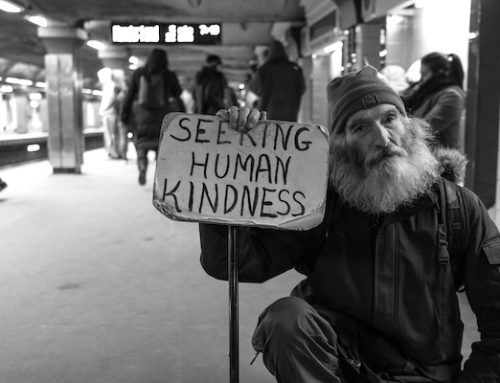
We may be blinded by sin. By pride. By ambition. By selfishness. We may not see clearly or think clearly because of a grudge. We may be lost in a fog of dependency, or addiction, or the relentless ache of a broken heart. We may have given in to darkness. People may have marginalized us, or pushed us aside, and we can only sit on the ground and look up at a world looking down as it hurries past.
And we sit there, our heads lowered and our hearts heavy, with just one thought on our minds:
“I need a miracle.”
Son of David, have pity on me.
What can we do?
We just celebrated the feast of Pope St. John Paul on Thursday. His consistent cry to the world was one we hear again and again in scripture: “Do not be afraid.” With that in mind, I think this gospel offers three important lessons that can lead all of us Bartimaeuses to a place of grace—and they are all connected to that very idea: “Do not be afraid.”
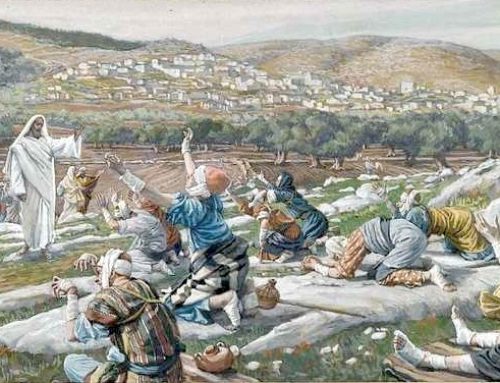
First, do not be afraid to trust in God’s mercy. Bartimaeus wasn’t. And he wasn’t afraid to cry out to Jesus in his need, even when others told him to be quiet. His persistence was rewarded. Jesus heard him, noticed him, responded to him. And Jesus responded by telling his followers, very simply: “Call him.”
Which leads us to the second point…
Do not be afraid of God’s call. Do not be afraid to answer it. And be ready to risk. Bartimaeus didn’t expect Christ to come to him. Instead, he went to Christ—and Bartimaeus went in his poverty, his frailty, his weakness, with all his handicaps and problems. It could not have been easy or comfortable for a man in Bartimaeus’s state to leave the security of what he knew, pleading on the ground, to get up and—literally groping in the dark—find his way to Christ.
But it’s not easy or comfortable for any of us. It entails risk. Vulnerability. Humility. It means getting on our feet, and making our way to where God wants us to be. It can mean leaving what we know and going to what we don’t know. But that is what the journey of faith is about.
However, Bartimaeus wasn’t alone. The gospel describes others who conveyed Christ’s message to him, and who probably helped bring him to Jesus. And that, too, is an important part of this episode: we don’t make the journey to Christ unaccompanied. The Christian community is a community. There are others around us who can help us stand, and help show us the way.
Thirdly, do not be afraid to answer the question Christ posed to Bartimaeus—the question our loving God asks all of us.
“What do you want me to do for you?”
If Christ asked us this question this morning, how would we answer? What would we say?
What do you want me to do for you?
Bartimaeus told Jesus plainly, “Master, I want to see.”
Think about the implications of that and you realize: at the end of the day, that is what it is about for all of us.
We want to see. We want clarity. We want light. We want hope.