As you may have heard, Pope Leo XIV sat down for an extended interview with Elise Ann Allen of Crux a few months ago, for a new book that is out this month. At one point, he was asked about the role of women in the Church. He ended up talking a little about about women deacons and the diaconate.
For most people, certainly the understanding that the role of women in the church has to continue to develop, I think in that sense there was a positive response. I hope to continue in the footsteps of Francis, including in appointing women to some leadership roles at different levels in the Church’s life, recognizing the gifts that women have that can contribute to the life of the Church in many ways.
The topic becomes a hot-button issue when the specific question is asked about ordination. What the synod had spoken about specifically was the ordination, perhaps, of women deacons, which has been a question that’s been studied for many years now. There’ve been different commissions appointed by different popes to say, what can we do about this? I think that will continue to be an issue. I at the moment don’t have an intention of changing the teaching of the Church on the topic. I think there are some previous questions that have to be asked.
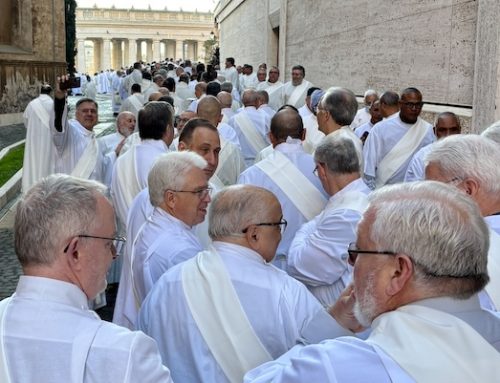
Just one small example. Earlier this year, when there was the Jubilee for Permanent Deacons, so obviously all men, but their wives were present. I had the catechesis one day with a fairly large group of English-speaking permanent deacons. The English language is one of the groups where they are better represented because there are parts of the world that never really promoted the permanent deaconate, and that itself became a question: Why would we talk about ordaining women to the diaconate if the diaconate itself is not yet properly understood and properly developed and promoted within the church? And what are the reasons for that? So while I think there was a significant inspiration at the time of the Council when the permanent diaconate was in effect reinstated, it has not become, in many parts of the world, what I think some people thought it would be earlier on. So, I think there are some questions that have to be asked around that issue.
I also wonder, in terms of a comment I made at one of the press conferences I participated in in the synod, in terms of what has oftentimes been identified as clericalism in the present structures of the church. Would we simply be wanting to invite women to become clericalized, and what has that really solved? Perhaps there are a lot of things that have to be looked at and developed at this time before we can ever really come around to asking the other questions.
That’s where I see things right now. I am certainly willing to continue to listen to people. There are these study groups; the Dicastery for the Doctrine of the Faith, which has responsibility for some of those questions, they continue to examine the theological background, history, of some of those questions, and we’ll walk with that and see what comes.