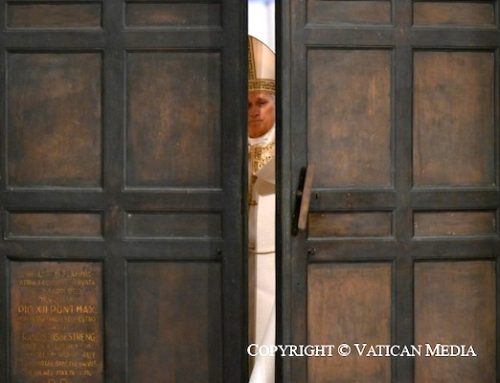

This was it.
This Sunday, we were scheduled to have Mass with Pope Francis and attend the ordination of deacons in St. Peter’s Basilica.
That didn’t happen the way we expected. But the experience was overwhelming nonetheless — what Mass at the Vatican could not be? — and I was so grateful to be there.

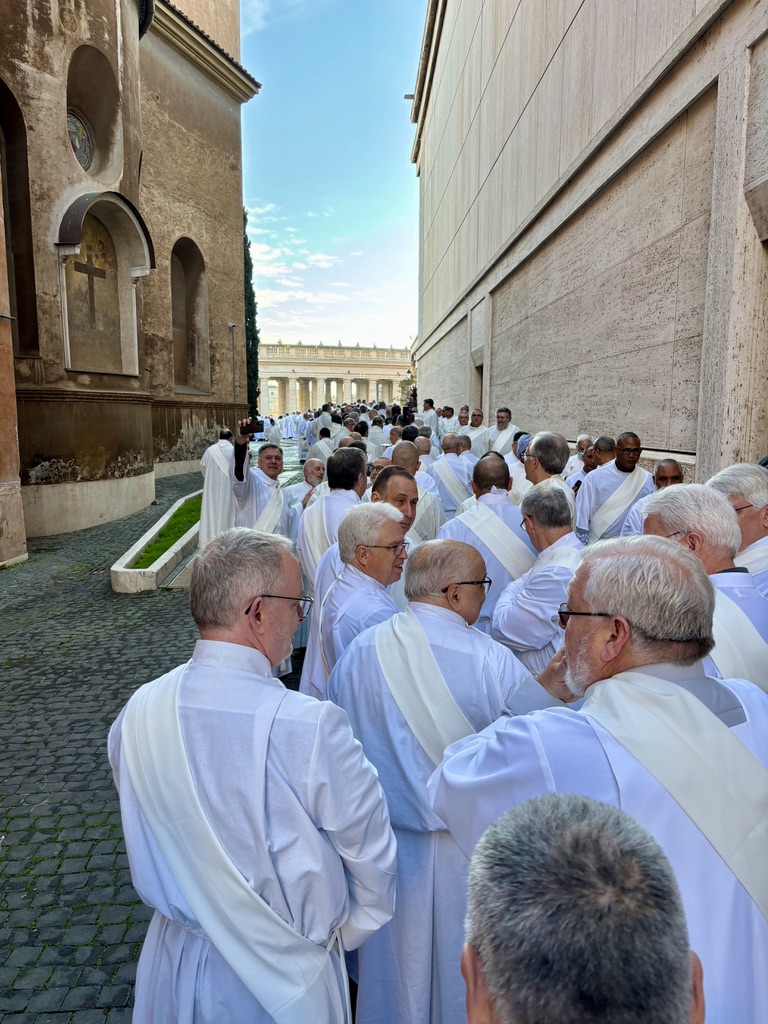
Once again, we arrived at the Vatican early. We were gathered in our hotel at 6 am, to be at Vatican Square by 7, when the doors of Paul VI Hall opened and security began letting us in to vest for the 9 am Mass. Our tour manager took our wives to another entrance, while we got in line.
We had plenty of company.
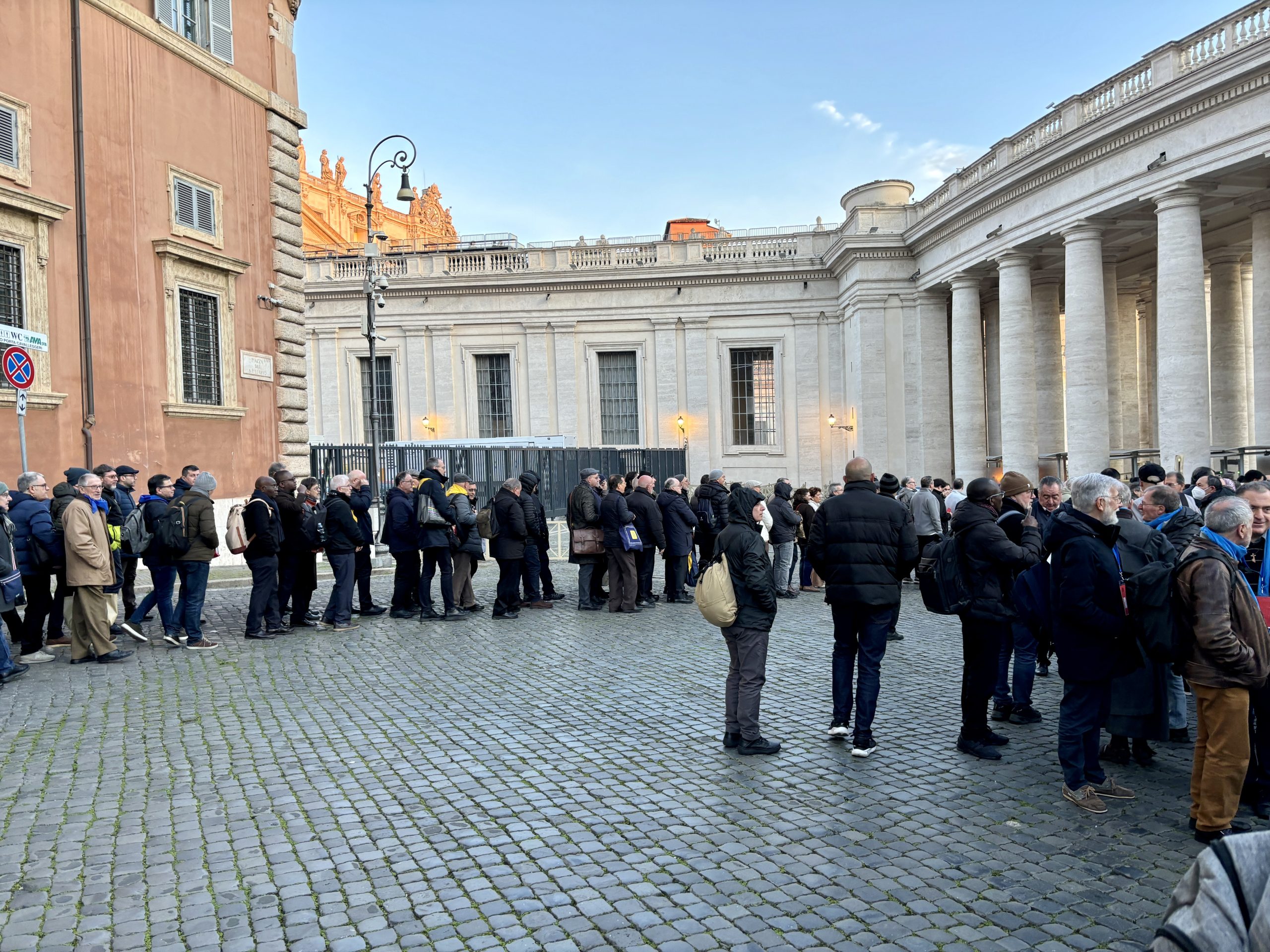
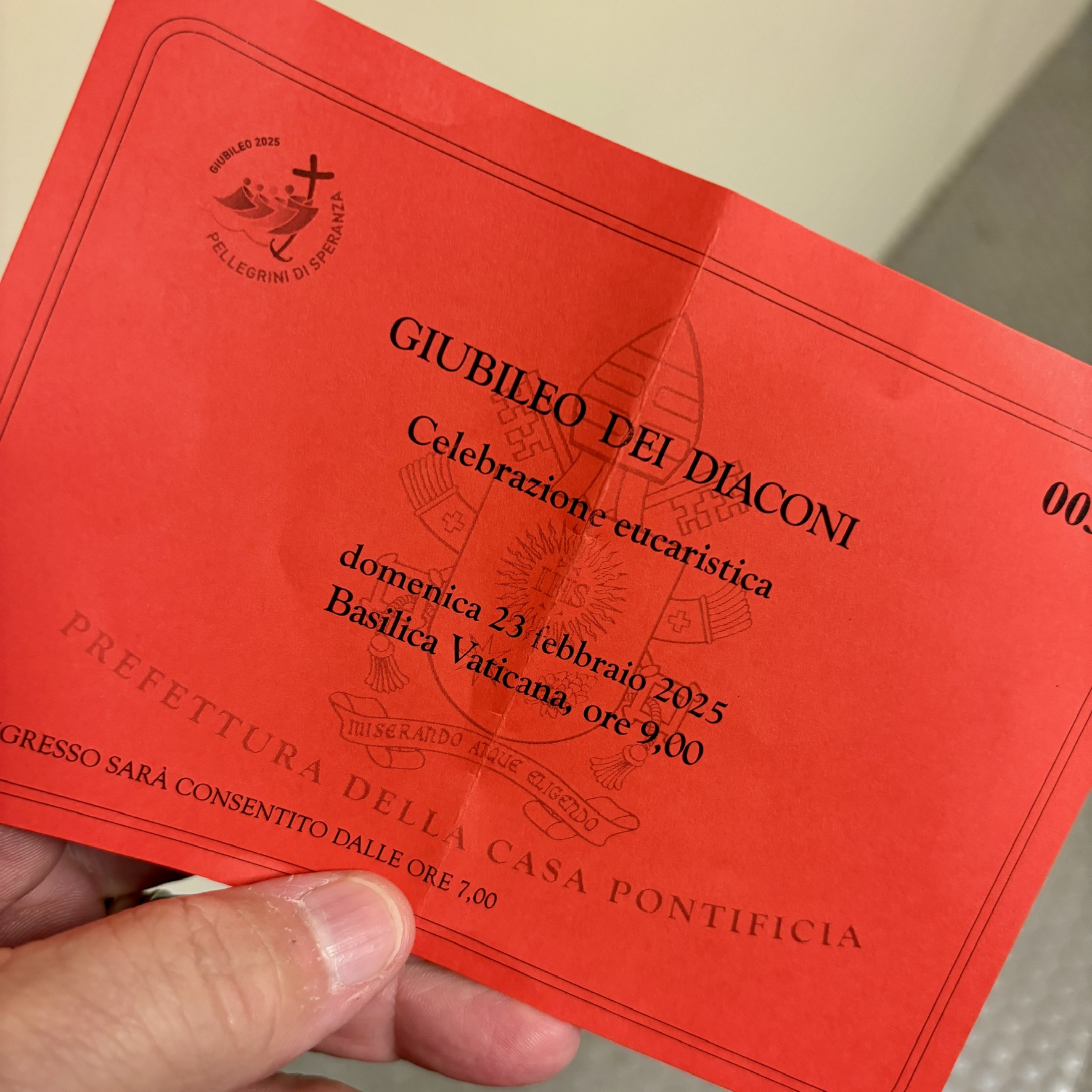
We had to show our ticket, and then pass through metal detectors, as if we were being screened by the TSA. We had to show our tickets a second time.
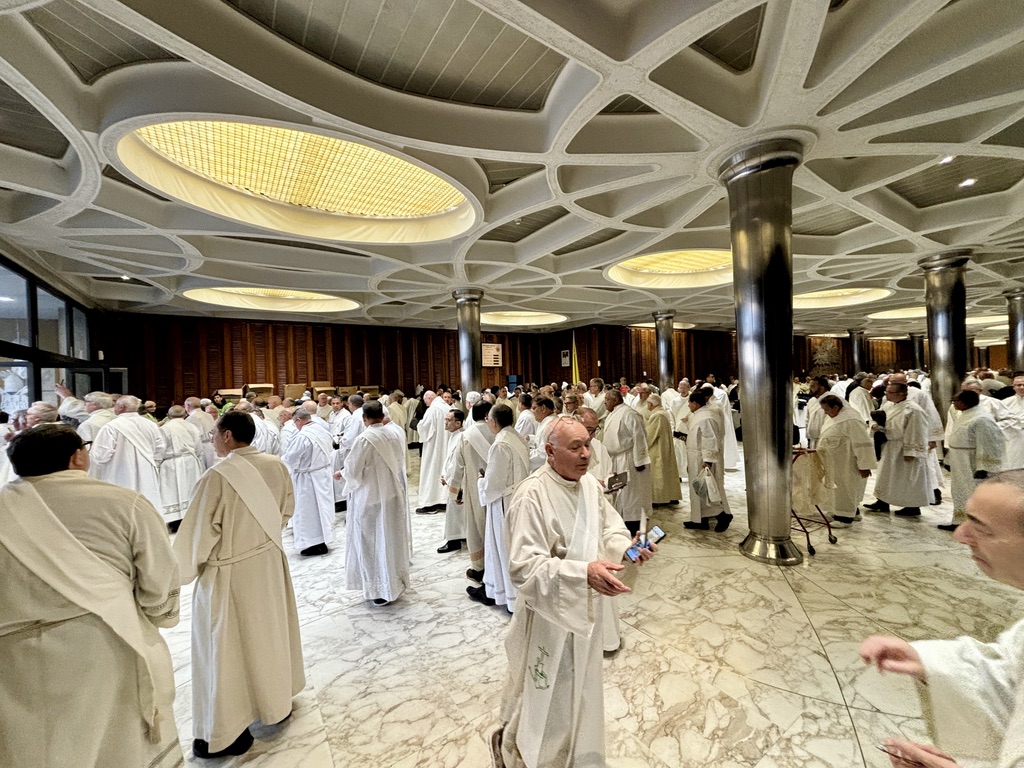
Then it was on to the hall to drop our bags, unroll our albs and mull around.
We were given souvenirs to keep: two stoles, one white and one green, with the Jubilee logo on one side and a representation of the washing of feet on the other.


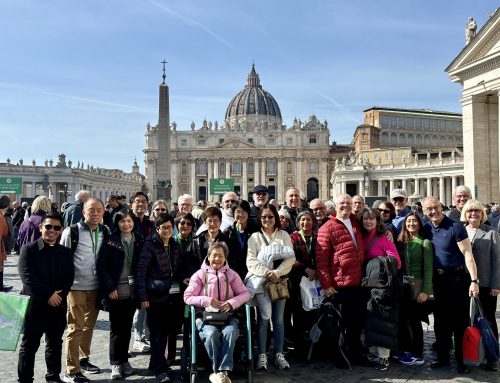
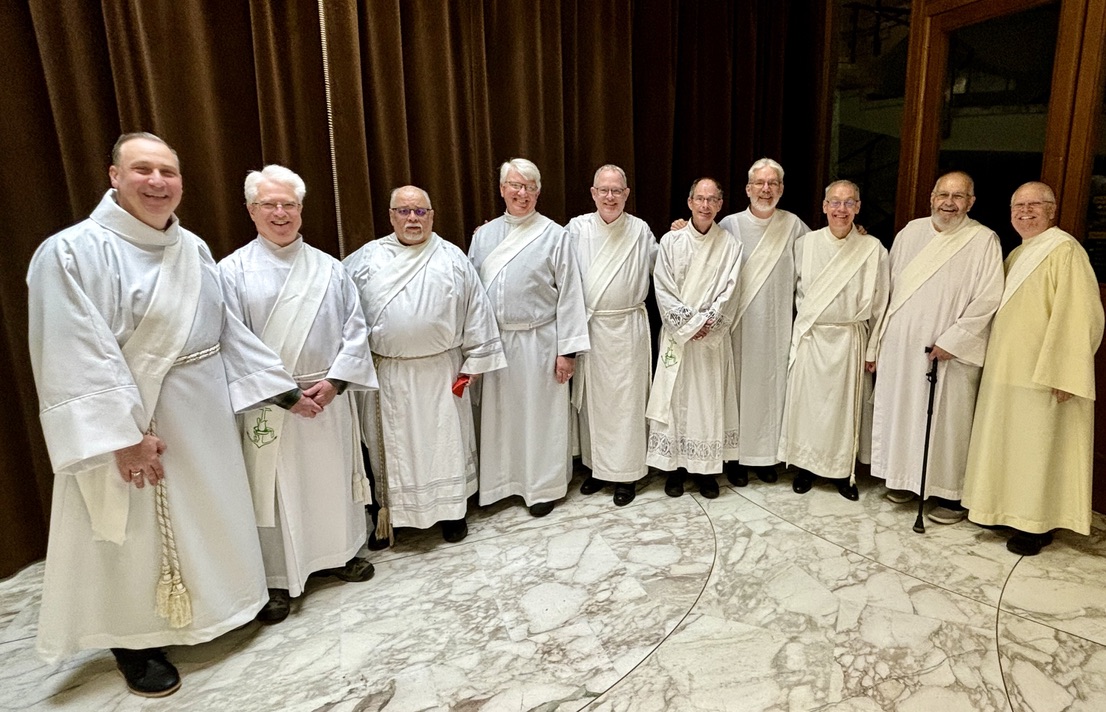
We posed for a group picture — the 10 of us on this pilgrimage — and then we got in line to begin the procession to the basilica.
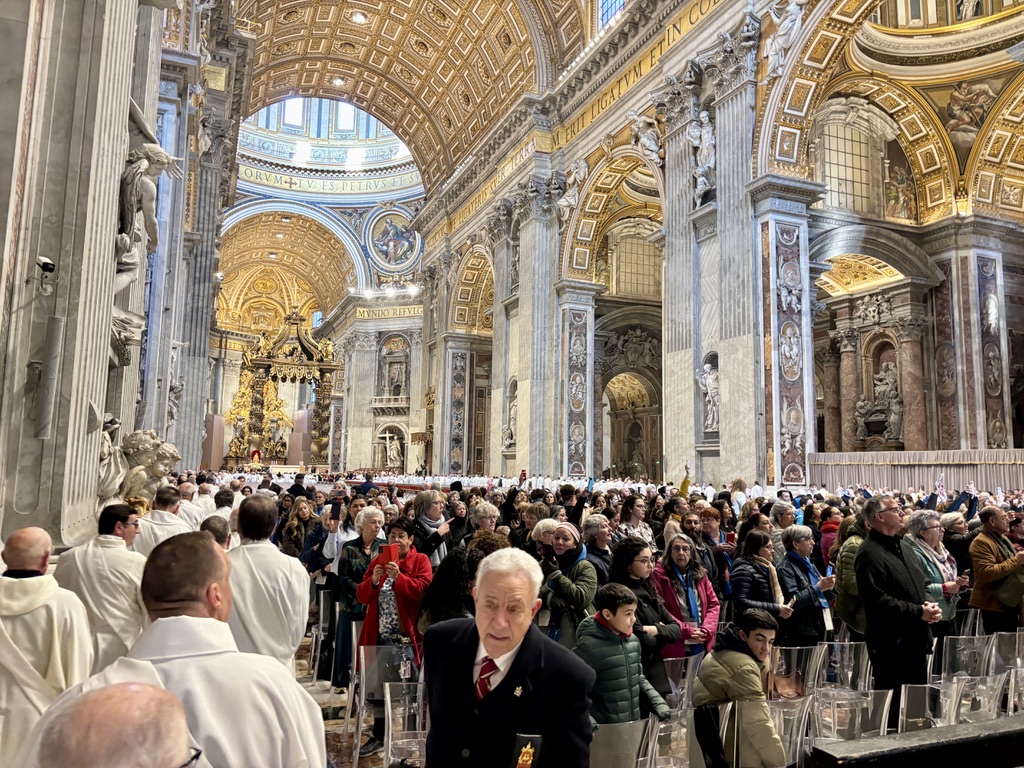
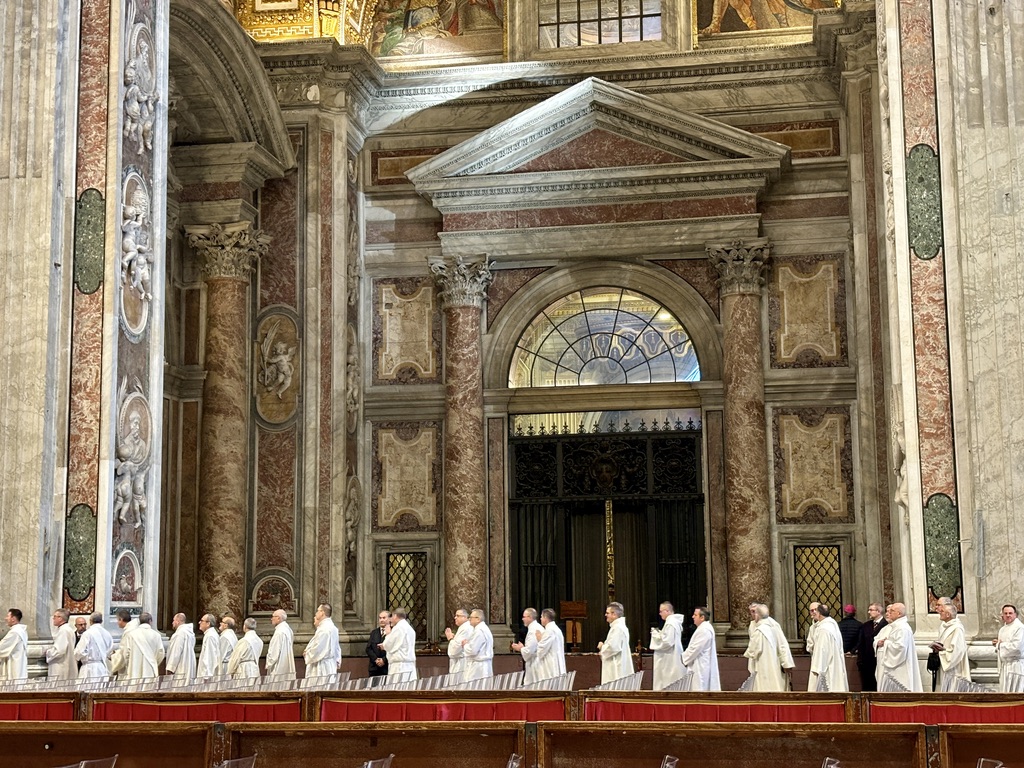
The Mass, celebrated by Archbishop Rino Fisichella, was in Italian, and it wasn’t short. It clocked in at about two hours, but it felt like three. There was a lot of standing instead of kneeling. The plastic seats were not what I’d consider a triumph of comfort.
And I’ll just put this out there: the method for receiving Communion at St. Peter’s is just awful. There’s got to be a better way. The aisles are blocked off, and Swiss Guards are posted to keep you from using them, so the Communion ministers (in this case, deacons) go down and stand at appointed spots, on the other side of a railing, and you have to inch your way over and around other people to receive the Body of Christ.
WWJD? Not this.
Each deacon was accompanied by a layman carrying a candle, who acted as the Eucharist Cop. Several deacons told me these guys strictly prohibited them from receiving the host in the hand and gestured that they had to receive on the tongue — which, given the logistics involved, wasn’t easy. (That didn’t happen to me.) It was awkward, unwieldy, irreverent and rude. I told another deacon, “I can’t believe that after all these years, nobody said, ‘Okay, let’s have a meeting to talk about this and fix it.'” They need to do that.
It would also be helpful for the MC to announce when to stand or sit. This is the first time I can remember standing for the Litany of Saints during the ordination rite. (The archbishop, it should be noted, also stood.)
After the Mass, I found the homily online — written by Francis, but delivered by the archbishop.
Brother deacons, the “gratuitous” work you carry out as an expression of your consecration to the charity of Christ becomes your primary proclamation of God’s word, a source of confidence and joy for those who encounter you. As often as possible, perform it with a smile, without complaining and without seeking recognition, supporting one another, also in your relationships with bishops and priests, “as the expression of a Church committed to growing in the service of the Kingdom by appreciating all the grades of the ordained ministry” (Italian Episcopal Conference, Permanent Deacons in the Church in Italy. Guidelines and Norms, 1993, 55). Through your cooperation and generosity, you will be a bridge linking the altar to the street and the Eucharist to people’s daily lives. Charity will be your most beautiful liturgy and the liturgy your humblest service.
Now, we come to the final point: gratuity as a source of communion. Giving and expecting nothing in return unites; it creates bonds because it expresses and nurtures a togetherness that has no other aim but the gift of self and the good of others. Saint Lawrence, your patron, when asked by his accusers to hand over the treasures of the Church, showed them the poor and said: “These are our treasures!” That is how communion is built: by telling your brothers and sisters by your words but above all by your actions, both individually and as a community: “You are important to us;” “We love you;” “We want you to be part of our journey and our life.” This is precisely what you do. Those of you who are permanent deacons do so as husbands, fathers and grandparents who, by your service, choose to extend your families to include the needy in all the places where you live.
Dear deacons, your mission sets you apart from society only to be re-immersed in it in order to enable it to be an ever more open and welcoming place for everyone. It is one of the finest expressions of a synodal Church, one that “goes forth.”
Soon some of you, in receiving the sacrament of Holy Orders, will “descend” the steps of the ministry. I deliberately say “descend,” and not “ascend,” because being ordained is not an ascent but a descent, whereby we make ourselves small. We lower ourselves and divest ourselves. In the words of Saint Paul, through service, we leave behind the “earthly man,” and put on, in charity, the “man of heaven” (cf. 1 Cor 15:45-49).
Let us all reflect on what we are about to do, even as we entrust ourselves to the Virgin Mary, the handmaid of the Lord, and to Saint Lawrence, your patron. May they help us to experience every expression of our ministry with a humble and loving heart, and to be, in “gratuity,” apostles of forgiveness, selfless servants of our brothers and sisters, and builders of communion.
I love how the pope called us “brother Deacons.”
Here, by the way, is part of CNS’s report on the event:
“Being ordained is not an ascent but a descent, whereby we make ourselves small, lower ourselves and divest ourselves,” Pope Francis said in a message to 23 men from eight countries, including three from the United States, who were ordained permanent deacons in St. Peter’s Basilica.
The Feb. 23 ordination Mass at the Vatican was the culmination of a three-day Holy Year celebration that drew thousands of deacons, plus their wives and others, from more than 100 countries to Rome for communal prayer, discussion and celebration of the diaconate.
When Mass ended, we made our way back to the Paul VI Hall, packed up our belongings, visited the bathrooms — man, the lines were looong — and made our way back to a meeting point to reconnect with the rest of our group.
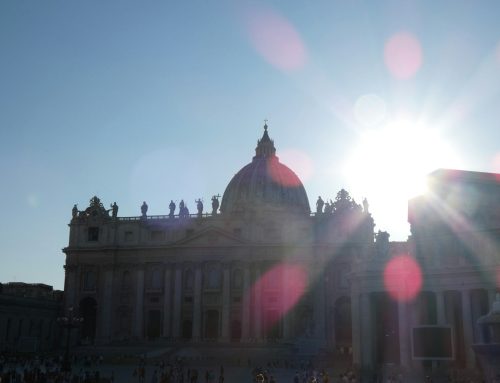
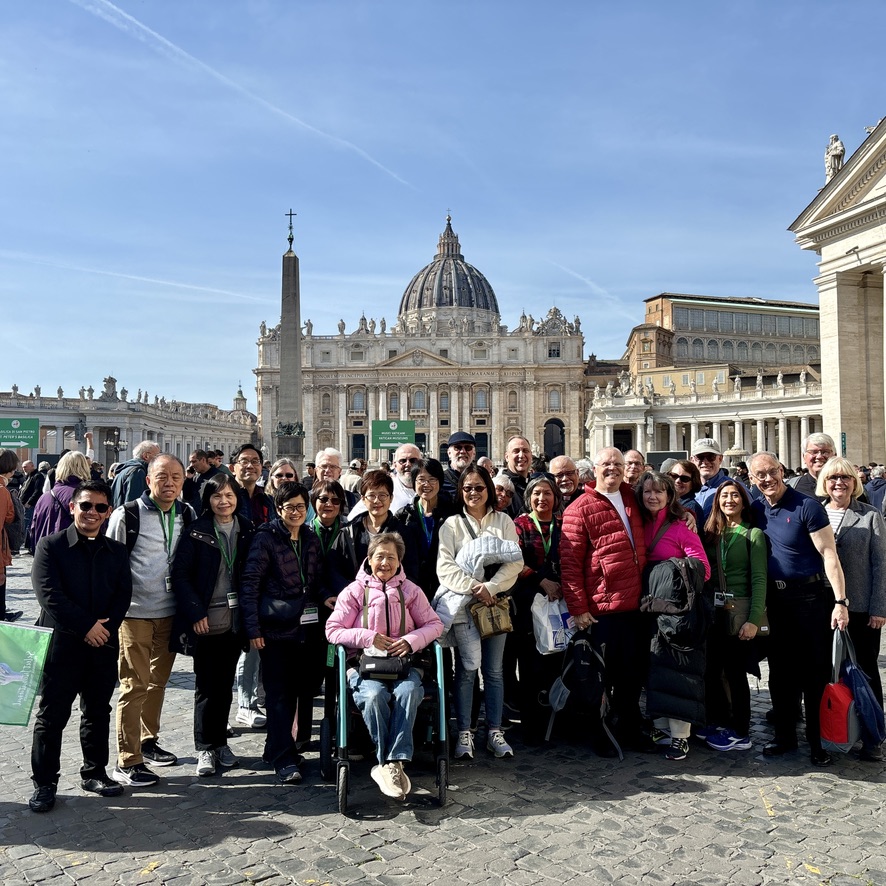
And then: one final shot of all of us in front of the most famous church on earth.
We have one final farewell dinner tonight. Tomorrow, we begin with Mass at Santa Maria Maggiore, and then head by bus to the Rome Airport to say “Arrivedérci!”