This is why we came here.
It wasn’t for the sensational weather, glorious blue seas or exotic dining. It was for this.
First, a word about time. Every second counts on a pilgrimage, and the good people from Select International Tours, and their partners on the ground here in Greece, Expedition and Travel, proved to be savvy and strategic planners. They could have done the D-Day invasion without breaking a sweat. Again and again, we were up with the sun (sometimes before the sun) and beat the crowds to the most popular holy sites. Today was no exception.
We were out the door very early, to arrive in ancient Ephesus around 7:30 am. I’m not exaggerating when I say: we were the only ones there. Our tour manager has visited there dozens of times and was gobsmacked. “You don’t know what a blessing this is,” she said. She couldn’t stop gawking and taking pictures. “I’ve never seen it this deserted. Ever.”
As a result — thanks to our spirited guide, Oz — we were able to the walk the streets St. Paul walked, and appreciate the sites without mobs of people with backpacks and selfie sticks.

Hiking down the main street of the city was surreal. Oz explained that this was the path Paul followed often during the three years he lived and preached in Ephesus. And we had it all to ourselves.

The video below shows what it was like.
The architecture, the details, the history…it all came alive.

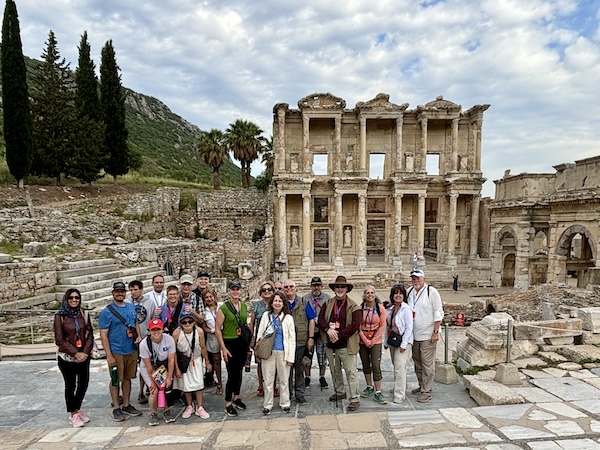
We posed for a group picture outside the historic library:
The Library of Celsus is considered an architectural marvel, and is one of the only remaining examples of great libraries of the ancient world located in the Roman Empire. It was the third-largest library in the Greco-Roman world behind only those of Alexandria and Pergamum, believed to have held around 12,000 scrolls.
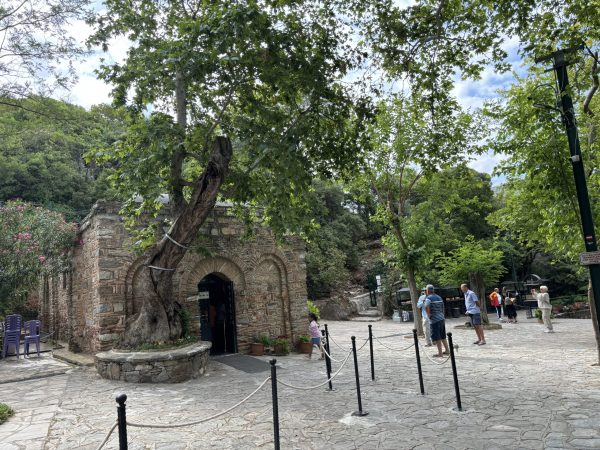
After touring the archeological site, we returned to the bus to travel up the hills, to one of the most venerated sites in the Christian world, a shrine that tradition holds is the house where Mary spent the last years of her earthly life with St. John.
It’s an idyllic, beautifully peaceful spot.


You can read more about the house and its history here.
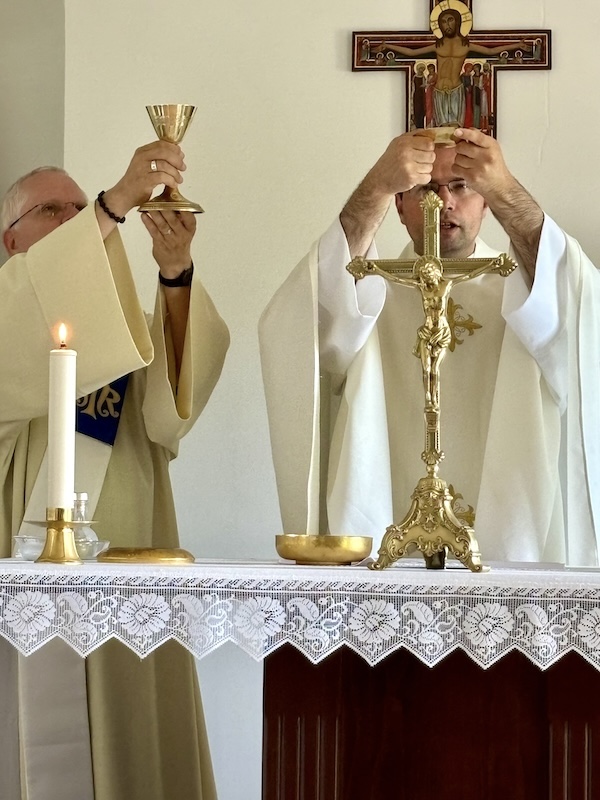
After a quick walk through the house — a visit doesn’t take more than a few minutes — we went to a small chapel next door for daily Mass. Again, this was an extraordinary privilege. Most public Masses are celebrated outdoors, at a large altar under a canopy that can accommodate hundreds. Our tour manager was able to secure us this private chapel.


Before we departed, some visitors (including my wife) stopped to pray or leave wishes at a stone prayer wall — reminiscent of the Western Wall in Jerusalem.

What a blessed morning. And when made our way back to the bus, we couldn’t help but notice a long, long, LONG line of pilgrims waiting to get in to Mary’s house.
Tip of the day — and, really, the week: wherever you go, get there early!

Our next stop in Ephesus was a cooperative that makes and sells gorgeous handmade Turkish rugs, supporting hundreds of women in the community and helping to keep alive what is truly a dying art.
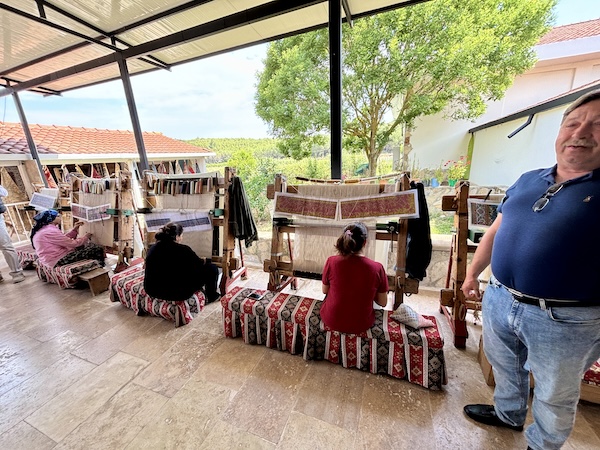
As part of the tour, staff showed off some of their handiwork. See it for yourself. Father Jeremy shot the short video below.
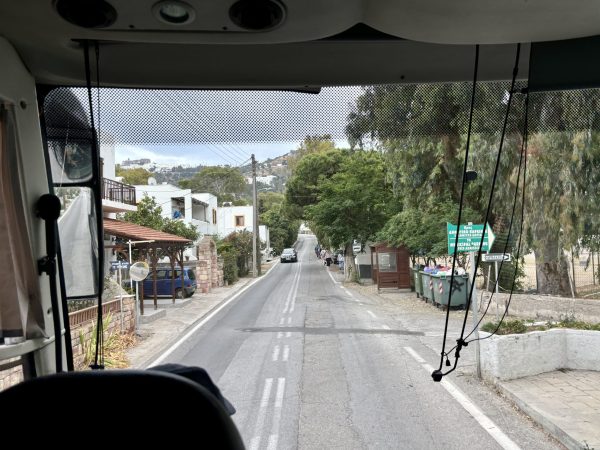
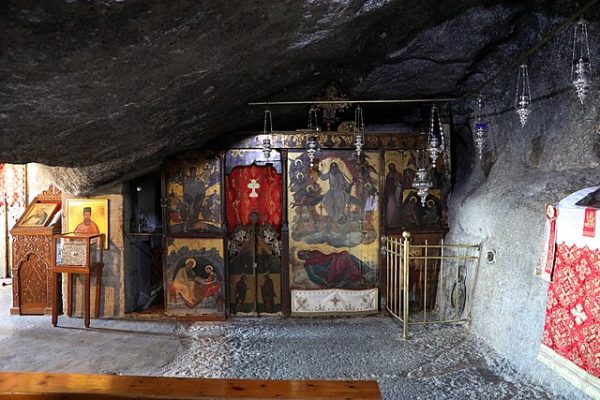
After a return to the ship for lunch and rest, we disembarked late in the afternoon to visit the island of Patmos, where St. John was exiled. Our first stop: the cave where John wrote the Book of Revelation.
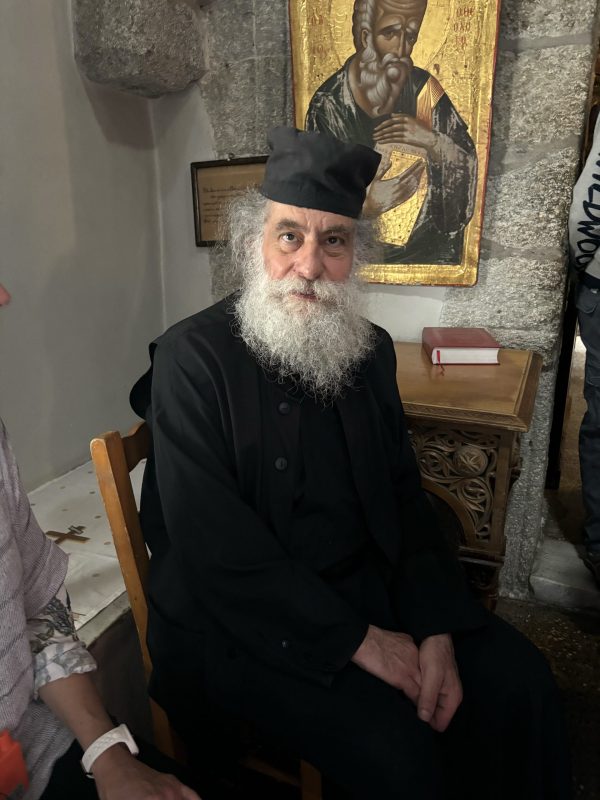
We were greeted by a monk who has been carrying for the place for decades. Deacon Tom Sommero’s photo captures him perfectly.
Photographs of the cave itself are not permitted. Wikipedia, however, has this photo by Francesco Bini, available for public use.
To the right, covered in tapestry, is the shelf that St. John’s scribe, the sainted deacon Prochorus, used to write the visions as John dictated them.
As Wikipedia describes it:
On this island, St. John received visions of the final days of Earth, witnessing destruction of the old Earth and the creation of the new Earth as the Holy City of Jerusalem came down from heaven. The cave became a place of refuge for him, and his faithful disciple and scribe Prochorus who had also been exiled. It has been told in Christian tradition that the rock inside the cave was shredded, and through three thin openings, symbolizing the Holy Trinity, he heard a loud voice in his head instructing him to write down what he saw in a book and send it to the seven churches. The location on the island in which he received and recorded these visions became known as the Cave of the Apocalypse to signify the event of the end of the world, and he compiled his writings into what became known as the Book of Revelation in the bible
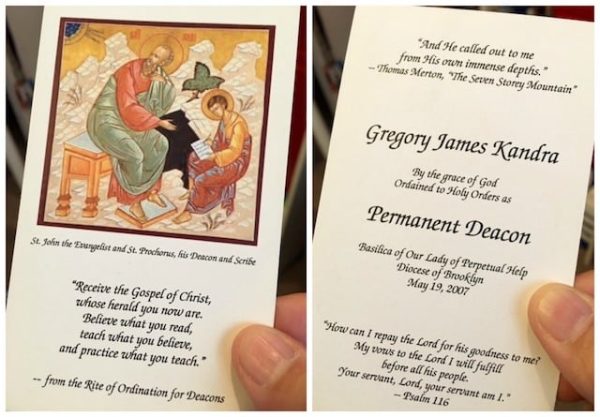
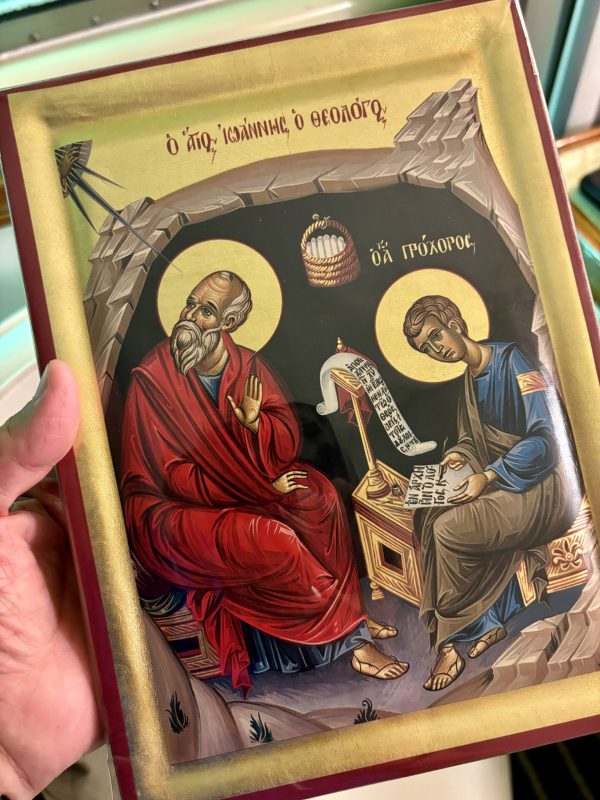
Prochorus was one of the first seven deacons ordained — he is mentioned in Acts of the Apostles — and by some accounts, he was the nephew of the first martyr, St. Stephen. Since he was a deacon who had a way with words, I chose an icon of St. John and St. Prochorus to use on my holy card for my ordination in 2007.
I couldn’t resist buying a copy of the icon in the gift shop — a memento of this journey I’ll treasure for the rest of my life.
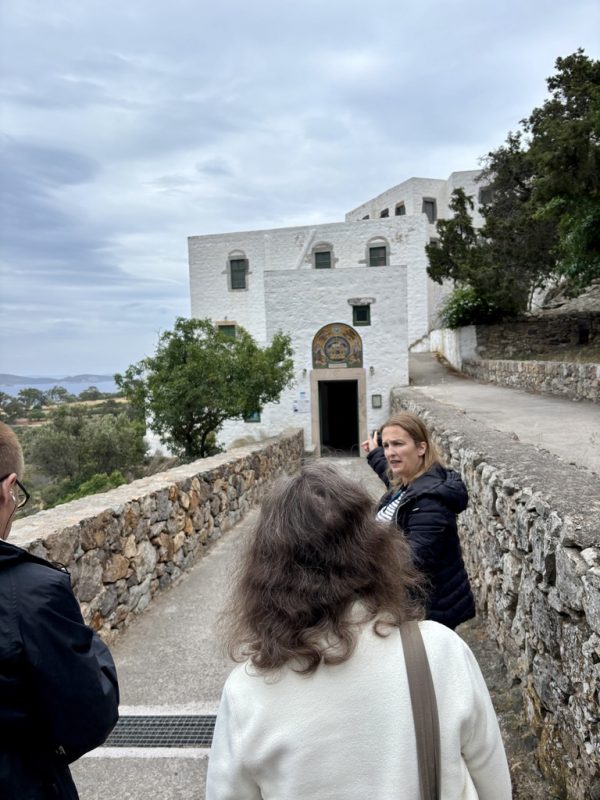
Just being in this sacred space would be enough to make this day complete. But there was more. We next ventured a short drive up the mountain to an ancient monastery, the Monastery of St. John the Theologian.
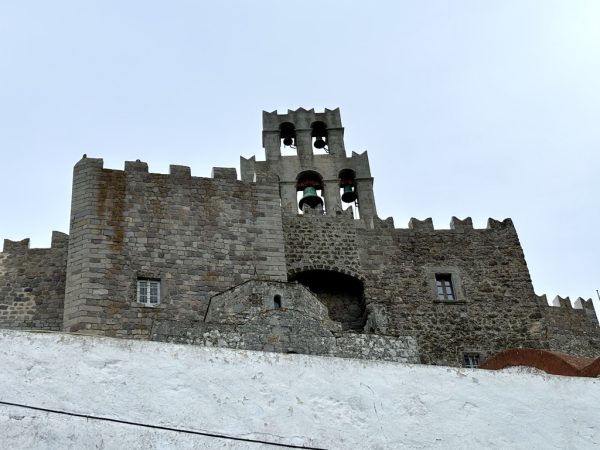
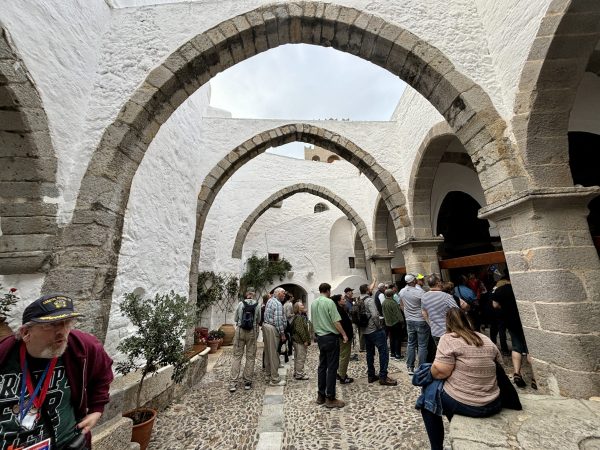
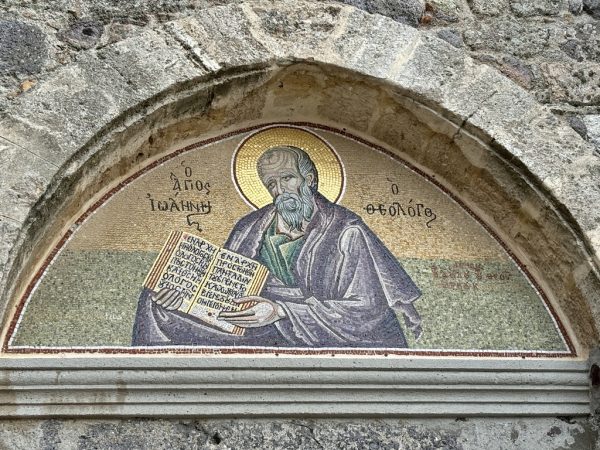
The monastery contains some truly stunning icons and decorations — including what is purported to be the skull of St. Thomas.
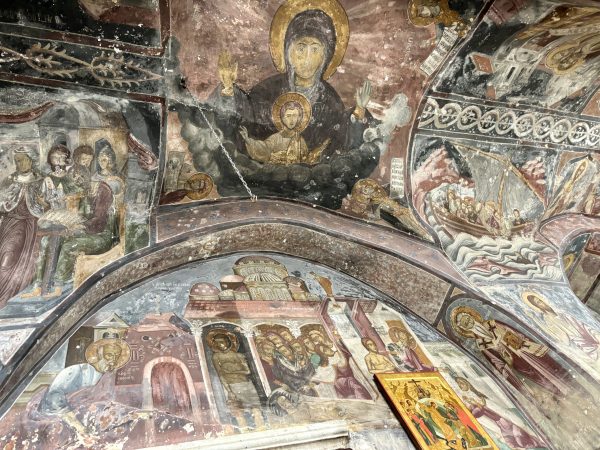
I don’t know how anything can top our experience of Ephesus and Patmos. It’s hard to put into words. I found myself deeply moved and profoundly humbled to just be so close to these sacred sites, places where even now you can feel the nearness of God.
Tomorrow, we head to Corinth to see what remains of the ancient the Corinthians called home.
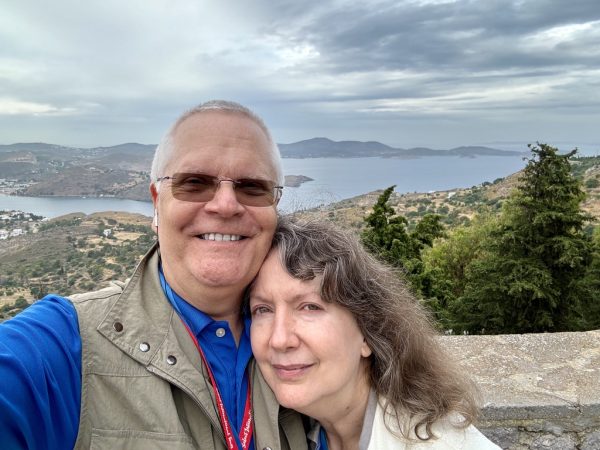
What a blessing all this has been. Here’s a shot of two happy pilgrkims from outside the monastery on Patmos.