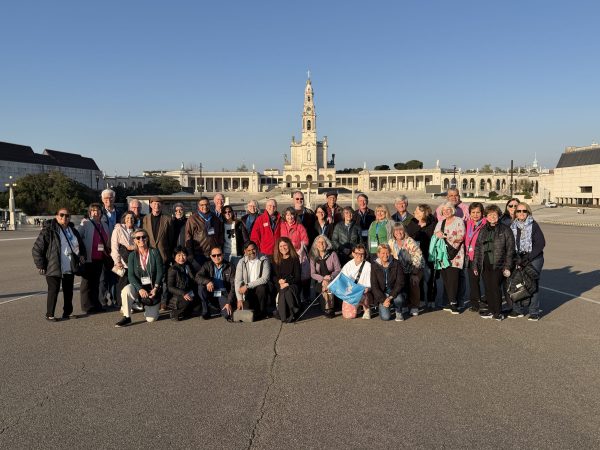
Our first full day in Fatima!
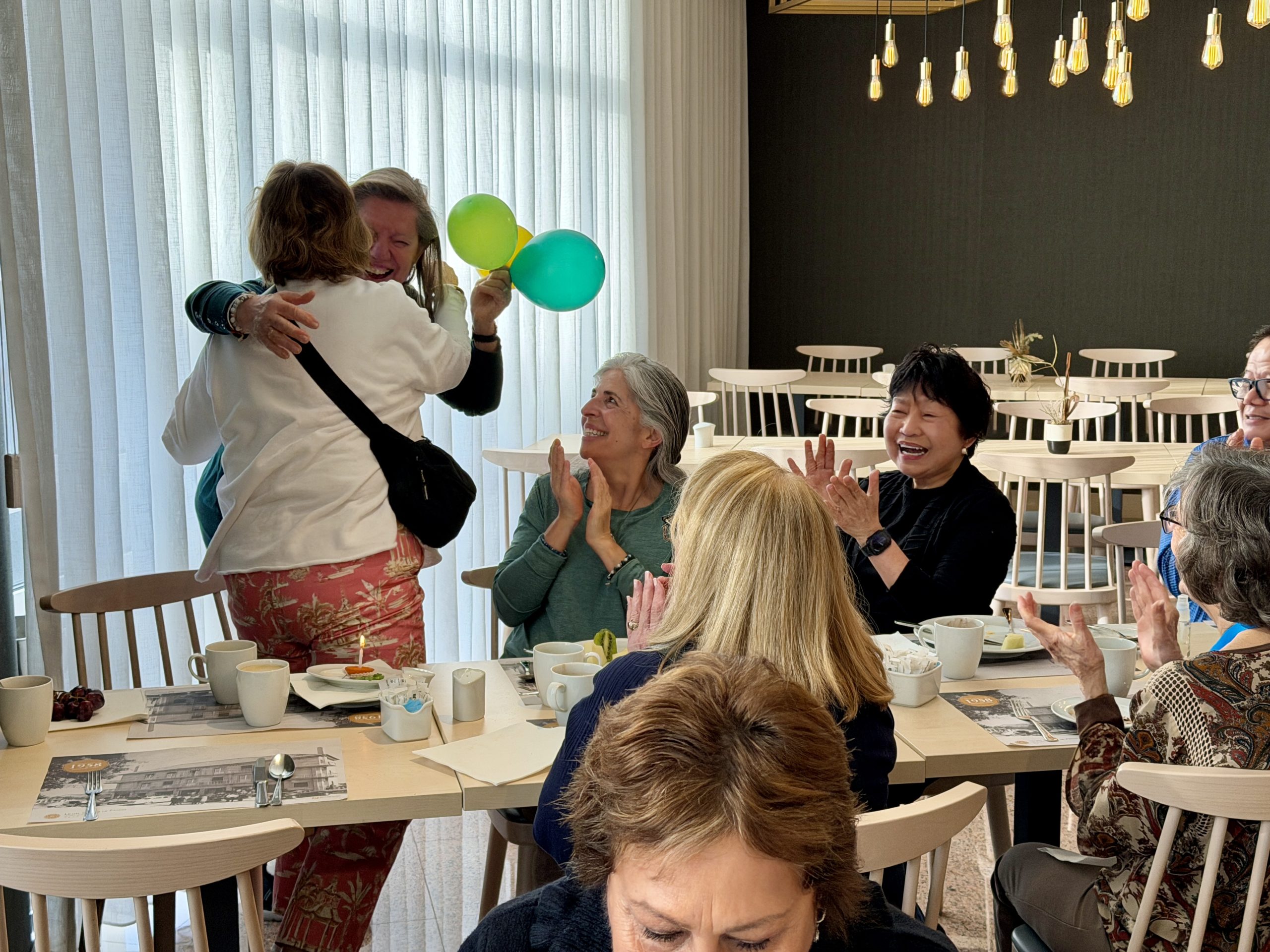
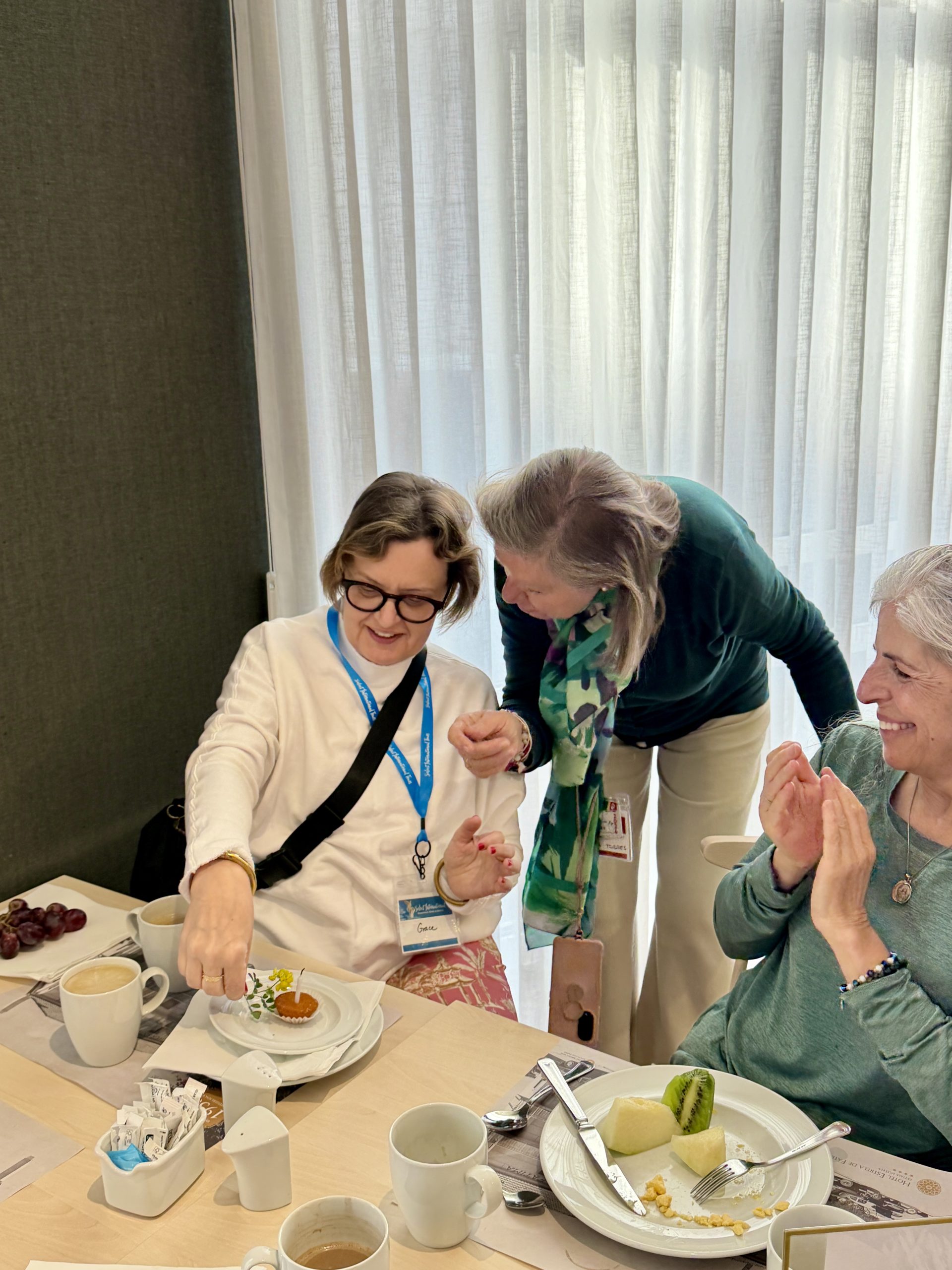
We began with a celebration at breakfast: one of our pilgrims, Grace Paz, was marking her birthday on this pilgrimage, so our guide Teresa surprised her with little pastry, a candle and balloons.
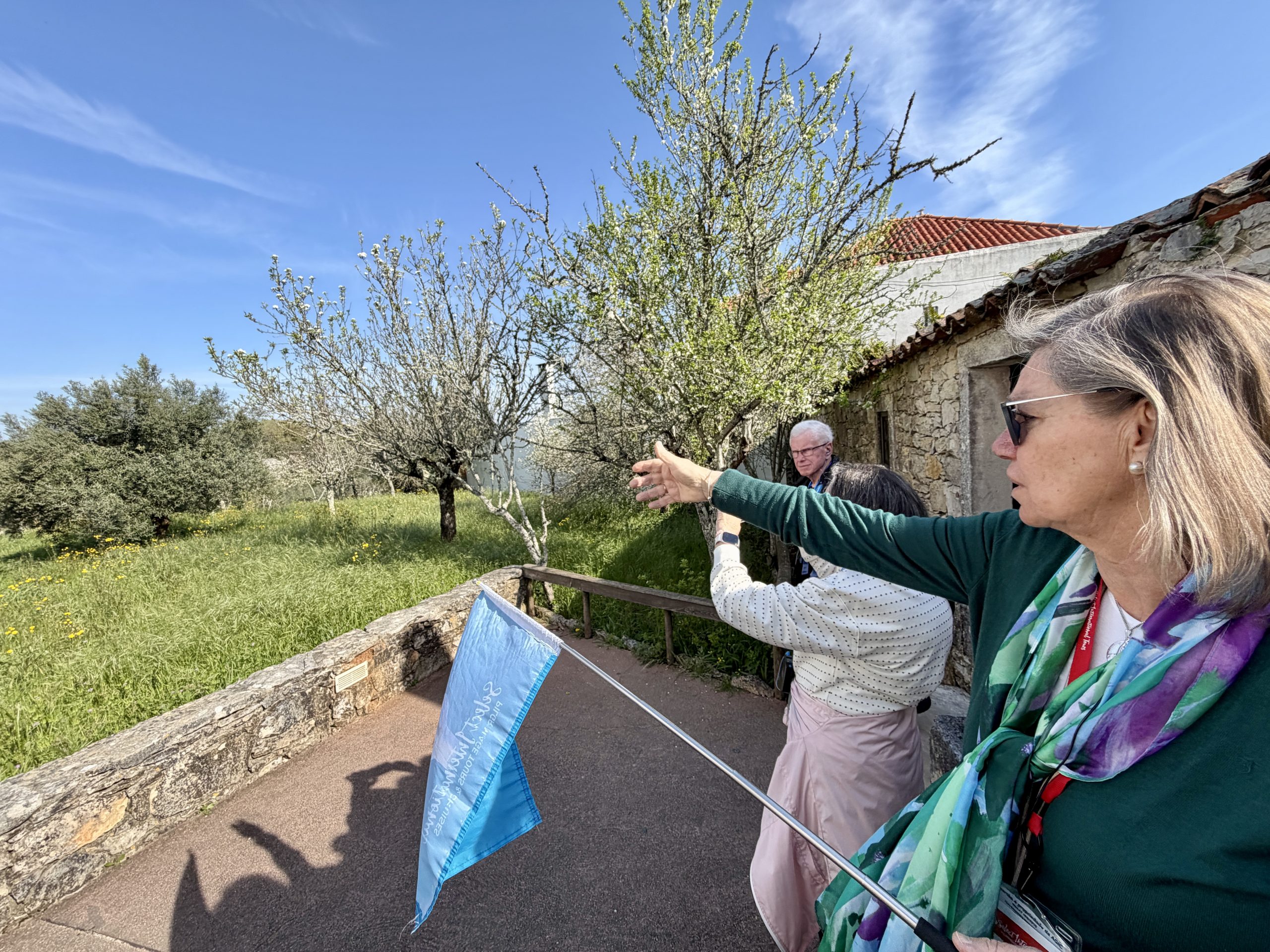
Then, we were out the door of our hotel, driving through downtown Fatima to see where the young visionaries lived.
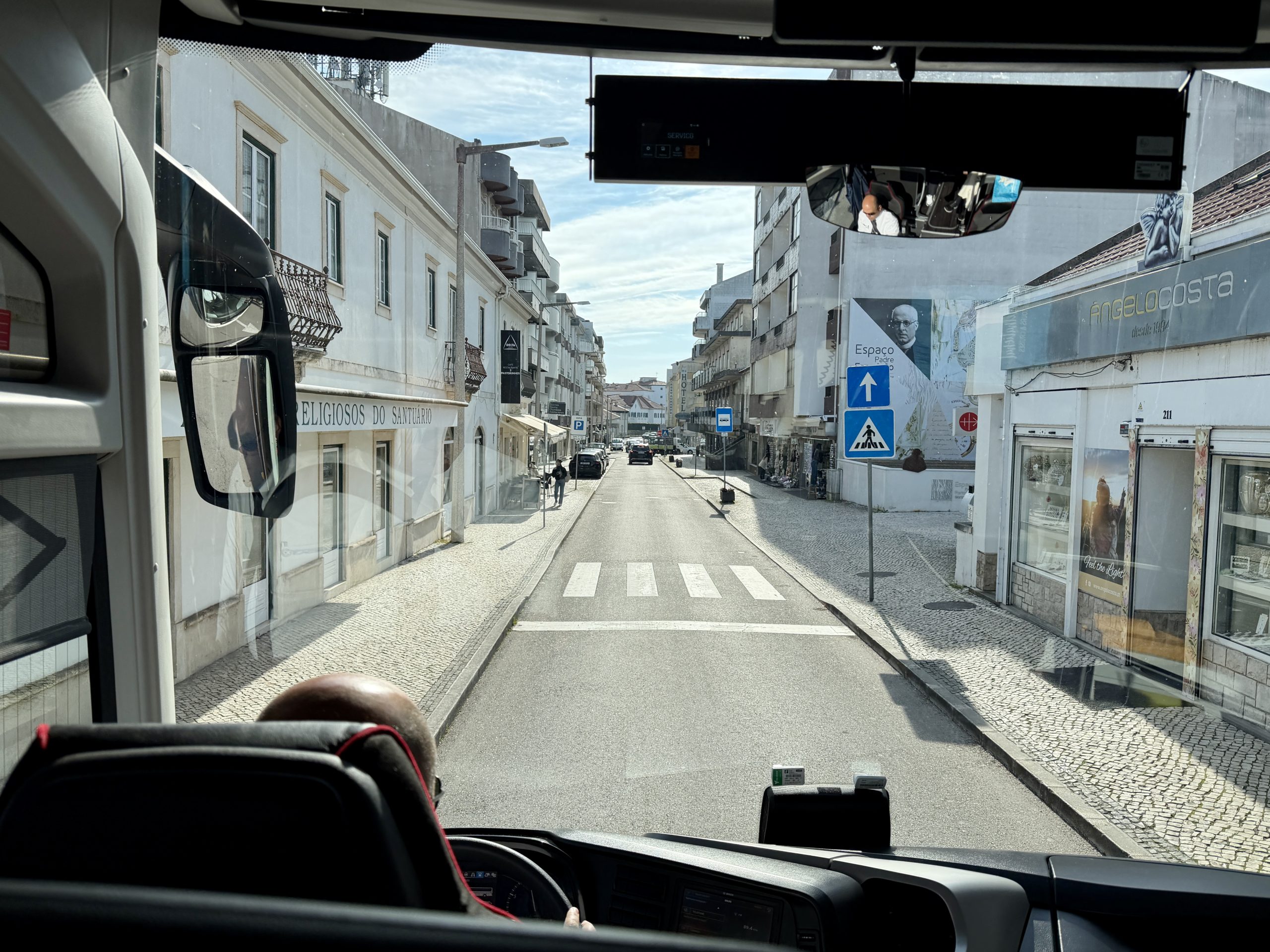
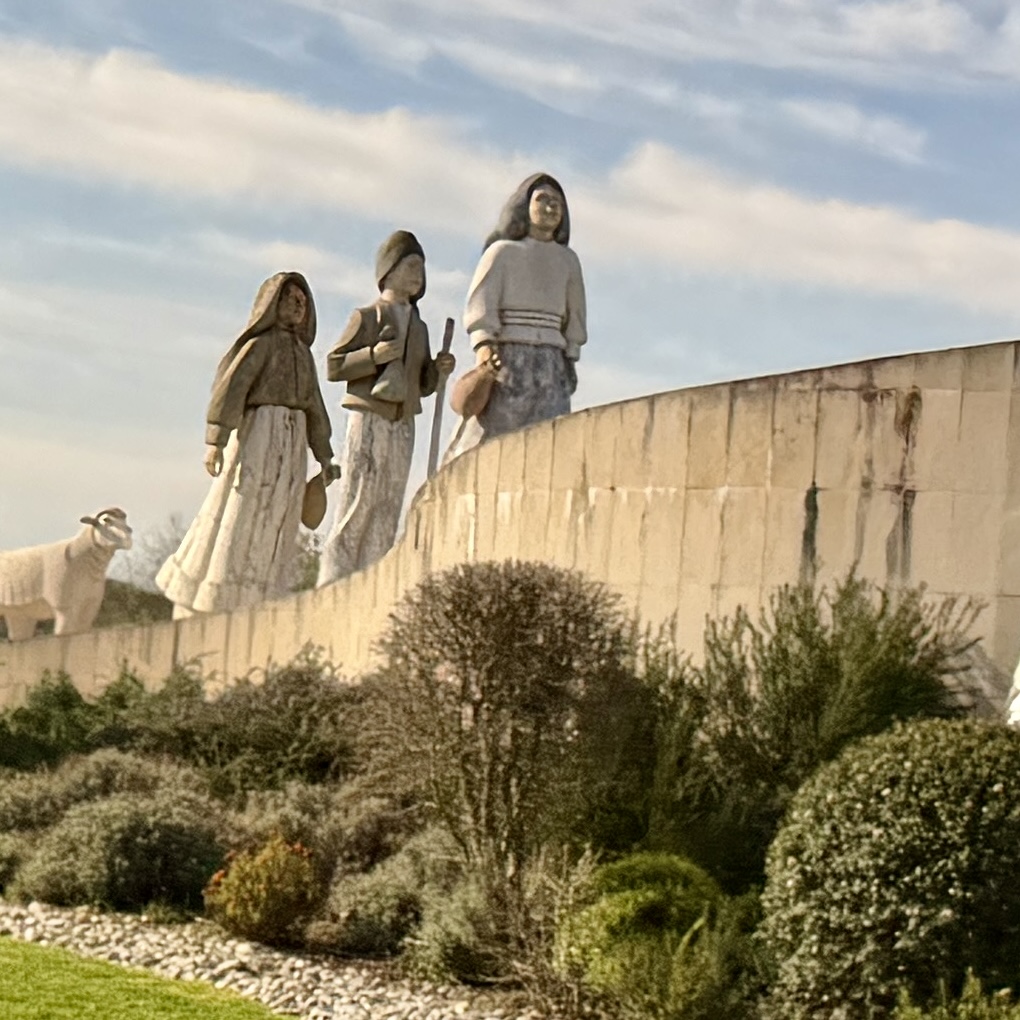
We passed by a beautiful statue of the children.
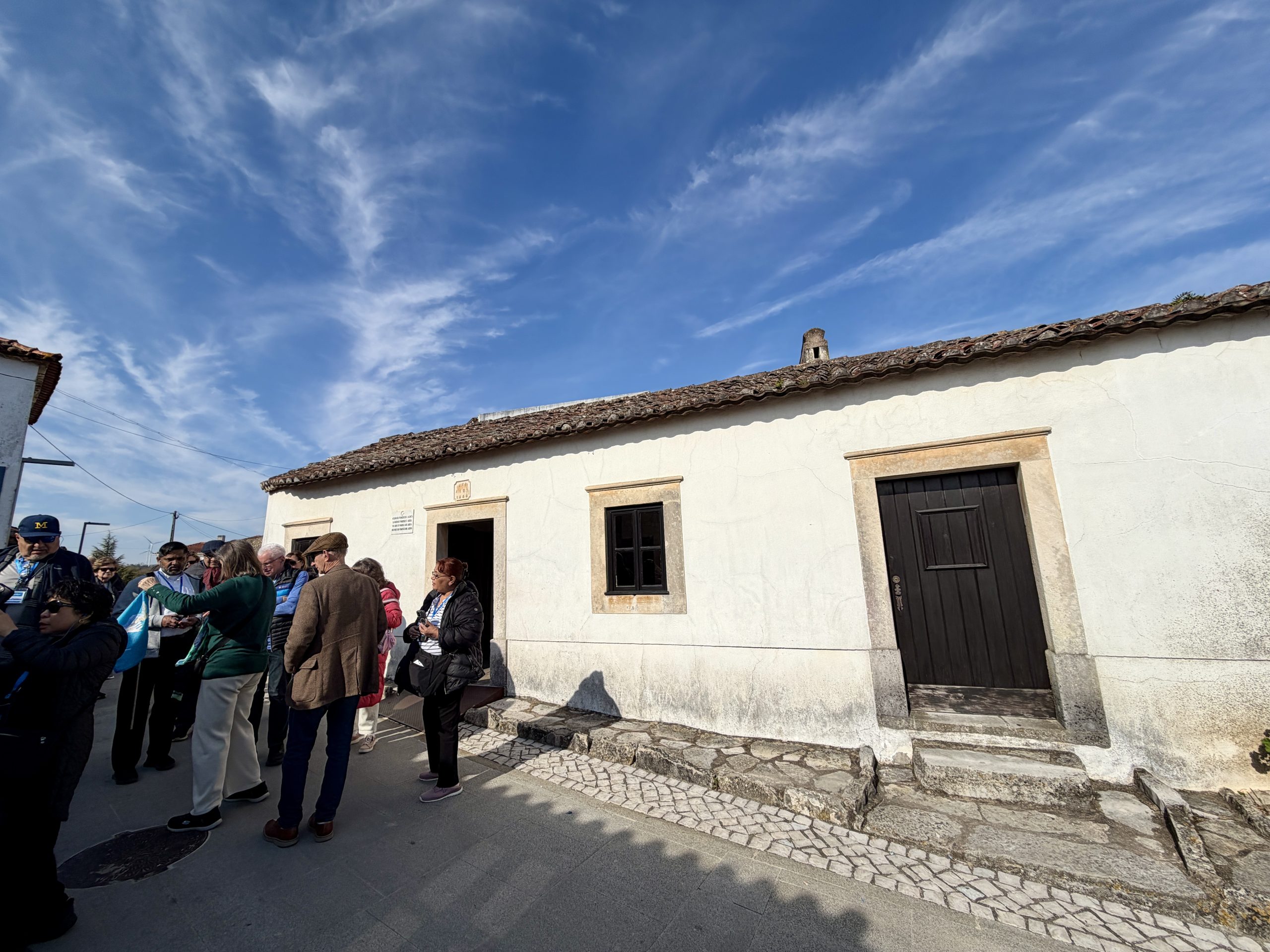
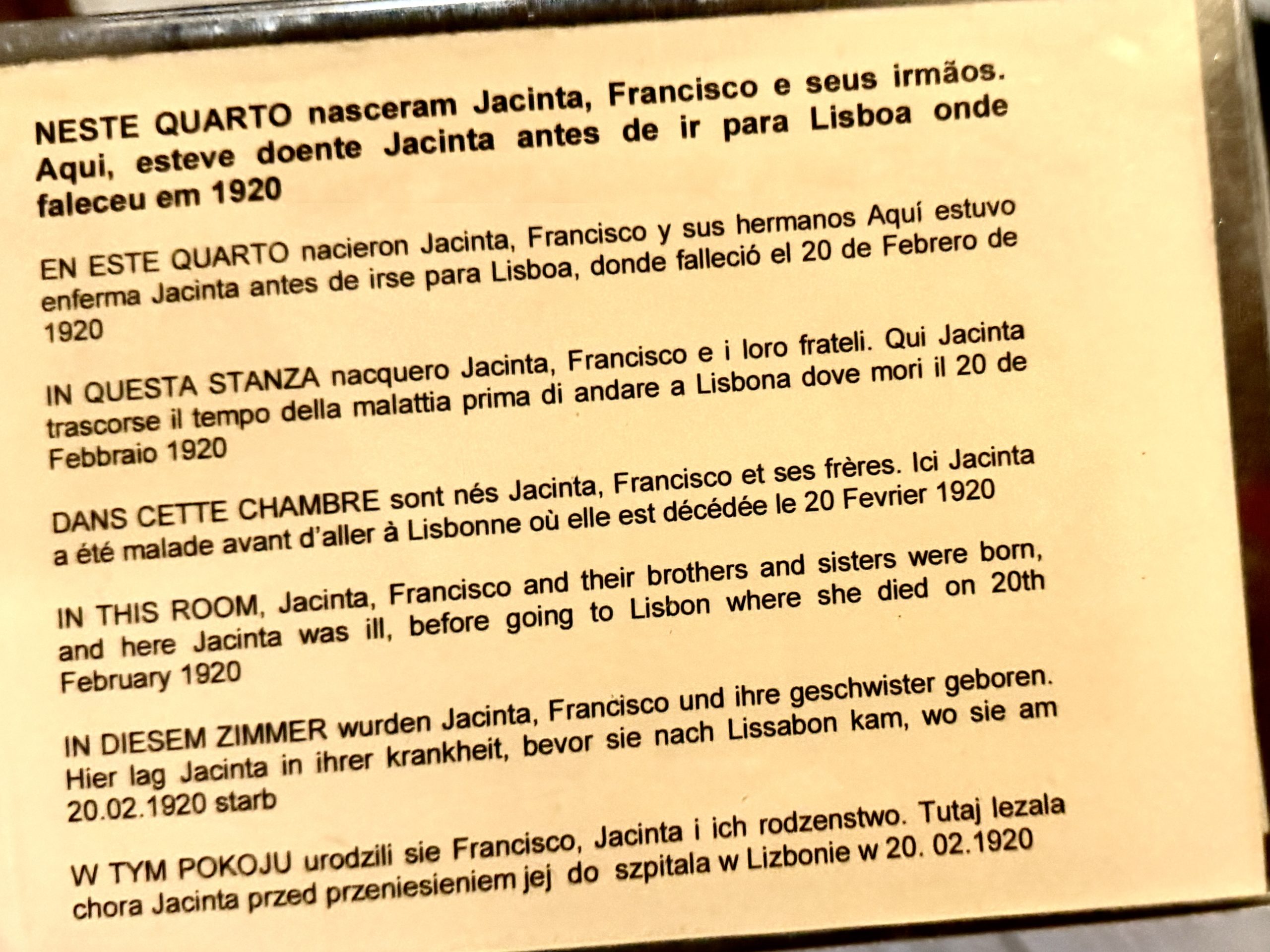
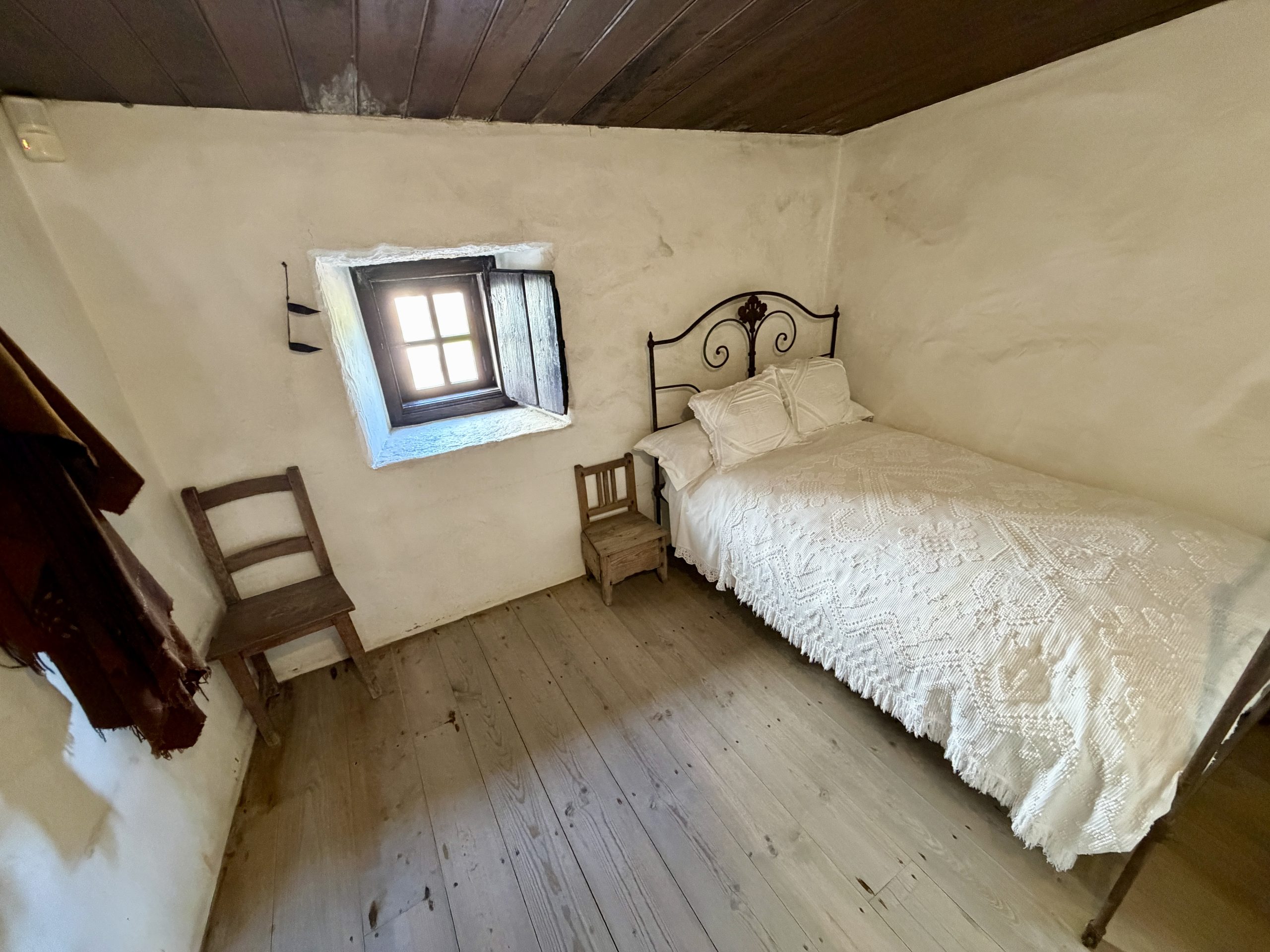
And soon enough, we arrived at the humble house where two of the children, Francisco and Jacinta, were born.
Along our route, we were shown this photograph of young Lucia.
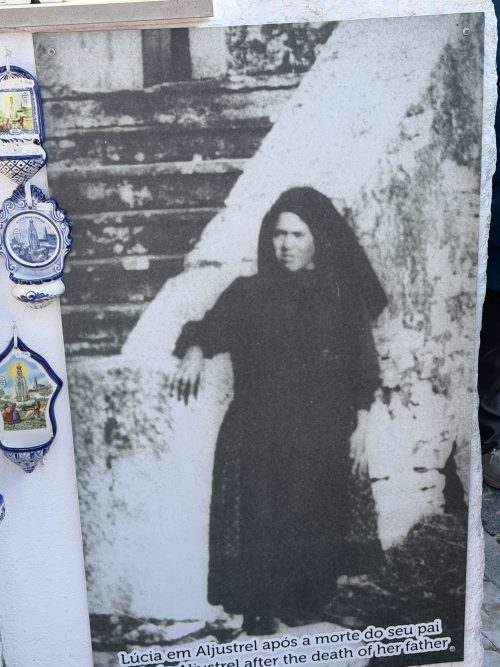
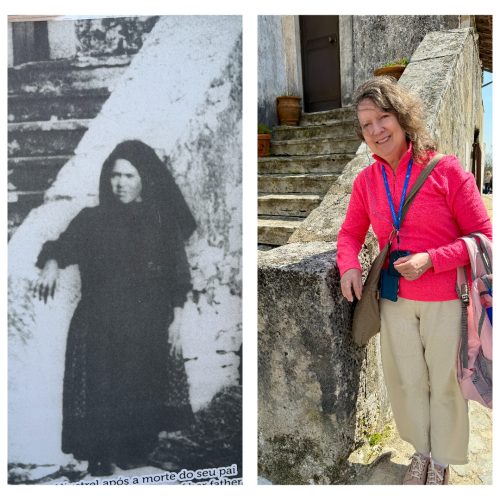
Incredibly, the staircase where she stood is still there. I couldn’t resist the opportunity to ask Siobhain to recreate the picture.
 We explored more of the byways and backroads of Fatima, and walked through some of the expansive fields that have been preserved for prayer, contemplation and simple silence.
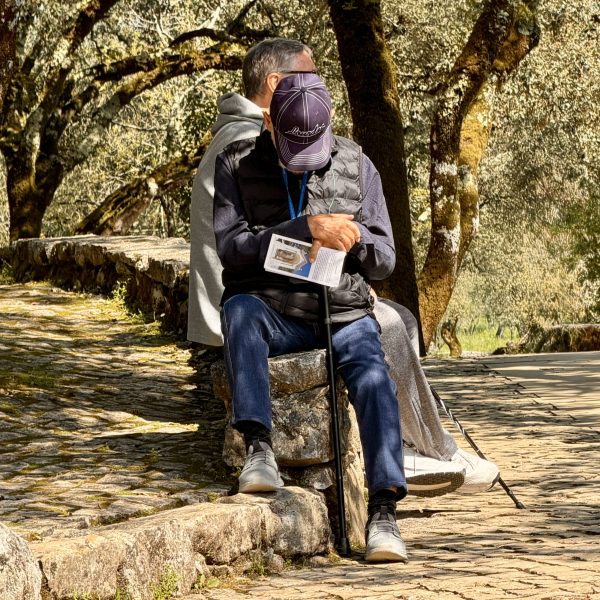
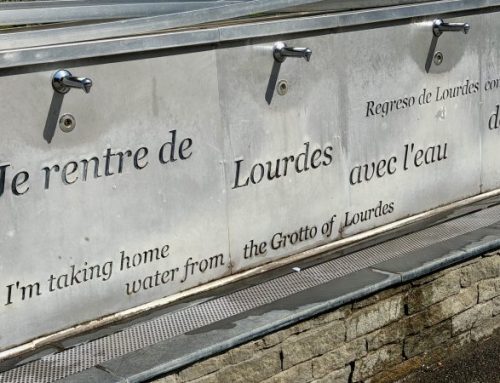
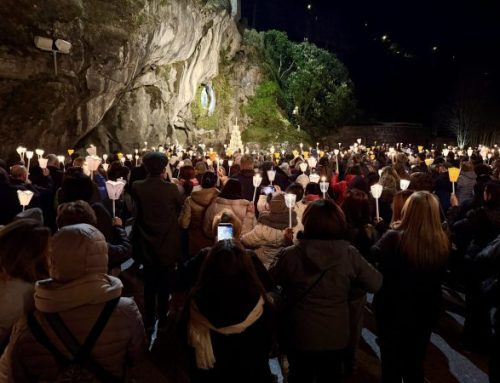
This is something distinct about Fatima, that makes it a different experience from Lourdes.
So much of Lourdes has been built-up — hotels, shops and restaurants crowd every avenue — but Fatima has been left largely undeveloped. I told Teresa, “It’s like the people who took over this site looked at what happened at Lourdes and said, ‘No, let’s not do that.'” She agreed — and explained that the people of Fatima held fast to the notion that this place is holy ground that needed preservation. They didn’t want it disturbed or commercialized.
And no wonder. Here is where Mary came, again and again and again, and where heaven met earth. You can walk through the cobblestone paths around Fatima and hear birds chirping, roosters crowing, leaves stirring in the wind. This is the world the children would have known. And it’s still there, for us to experience for ourselves.
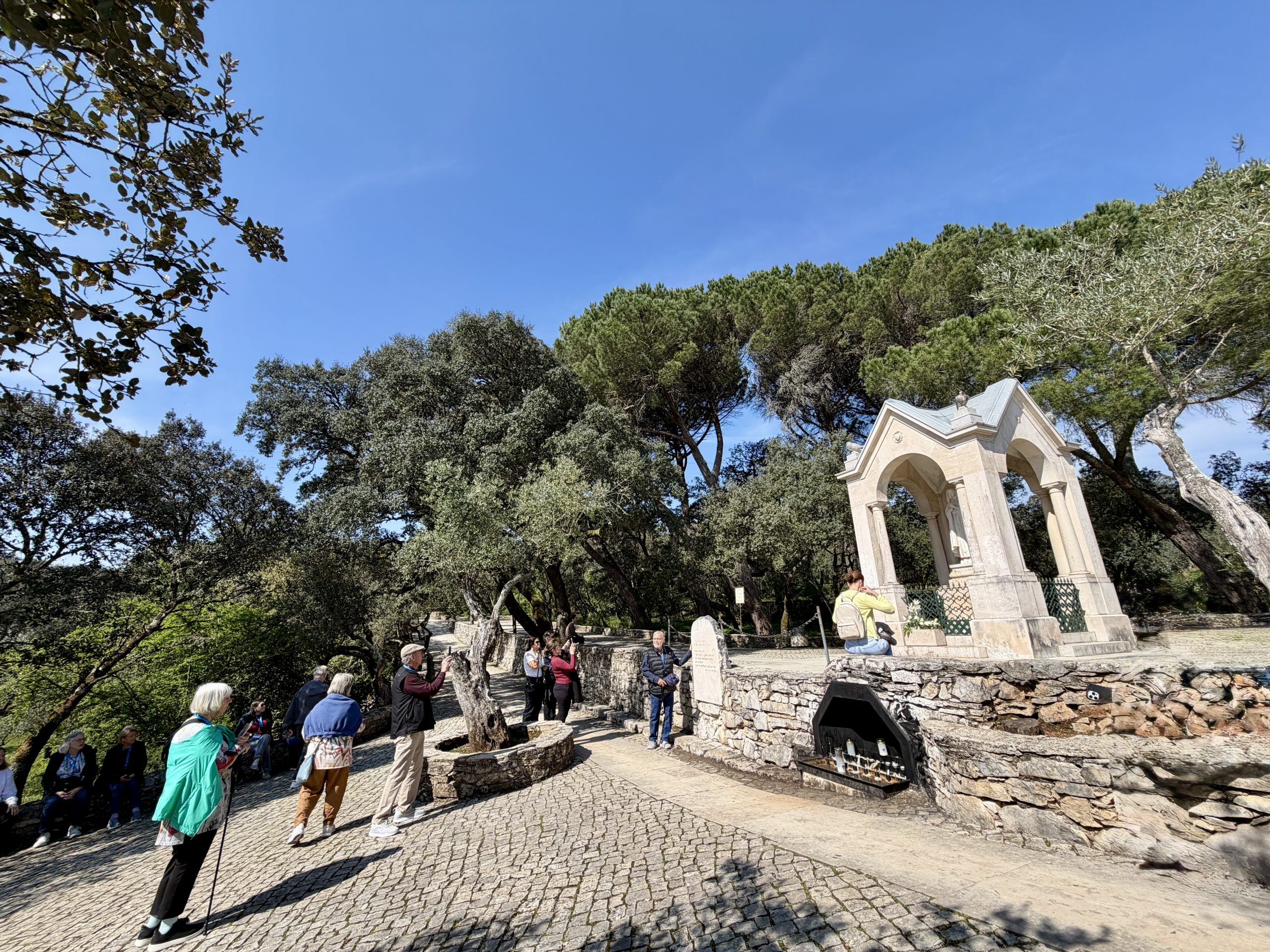
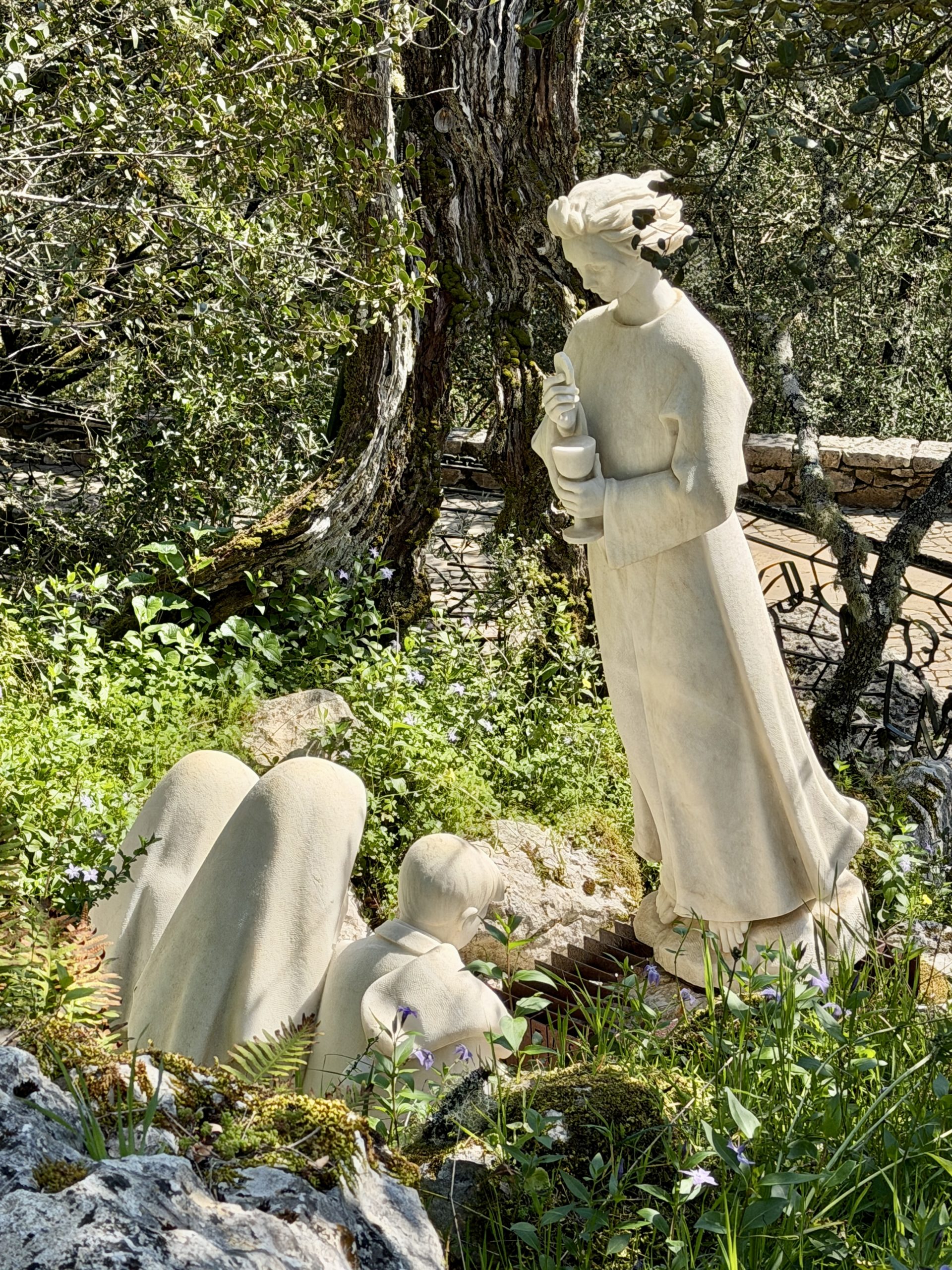
We prayed a rosary while we walked to one site: a place where the Guardian Angel of Portugal appeared to the children and gave them Holy Communion. A statue marks the spot.
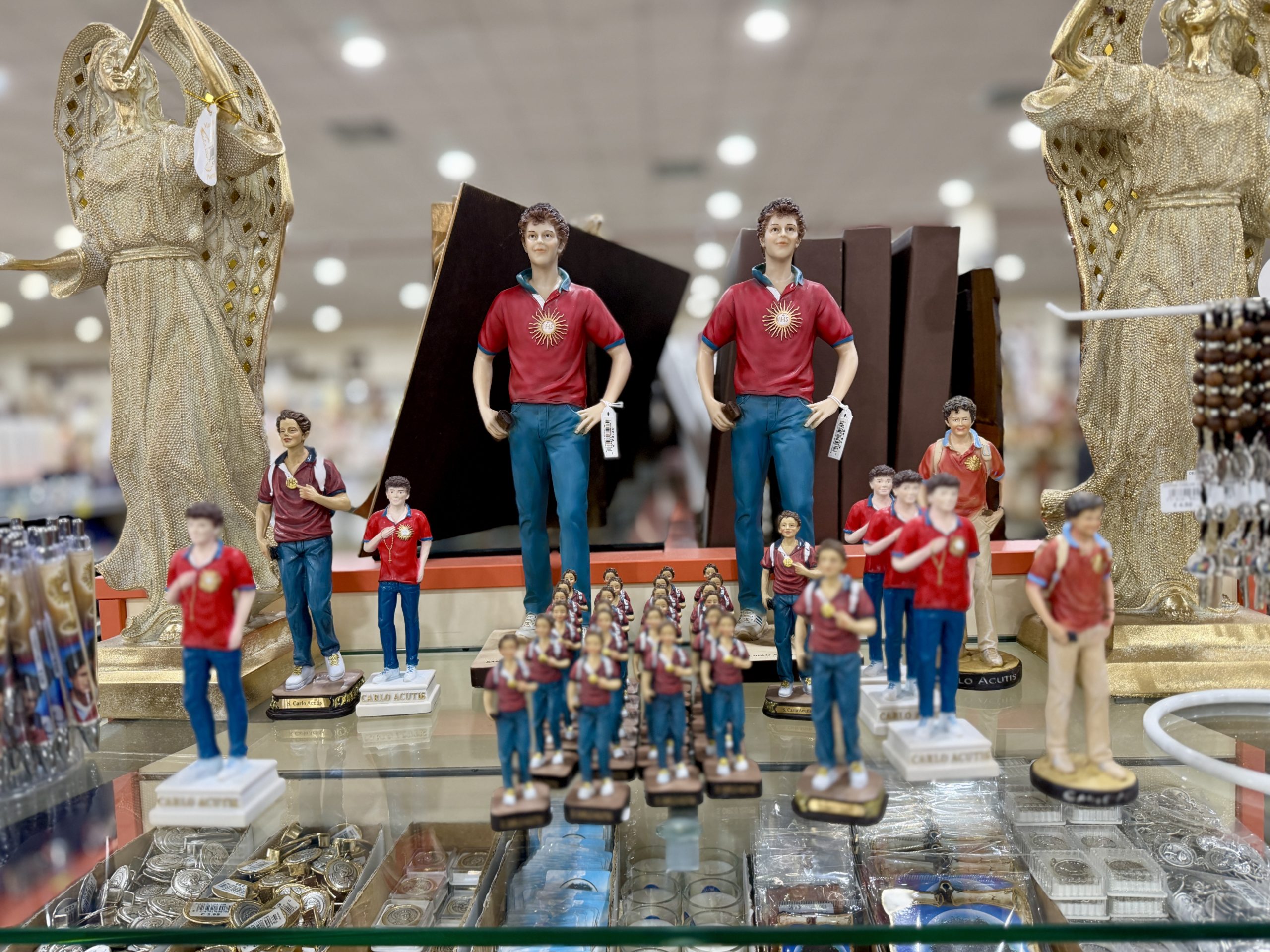
As morning came to an end, we found our way back to the bus, and were taken to a little factory, which produces many of the statues and rosaries for sale in the area.
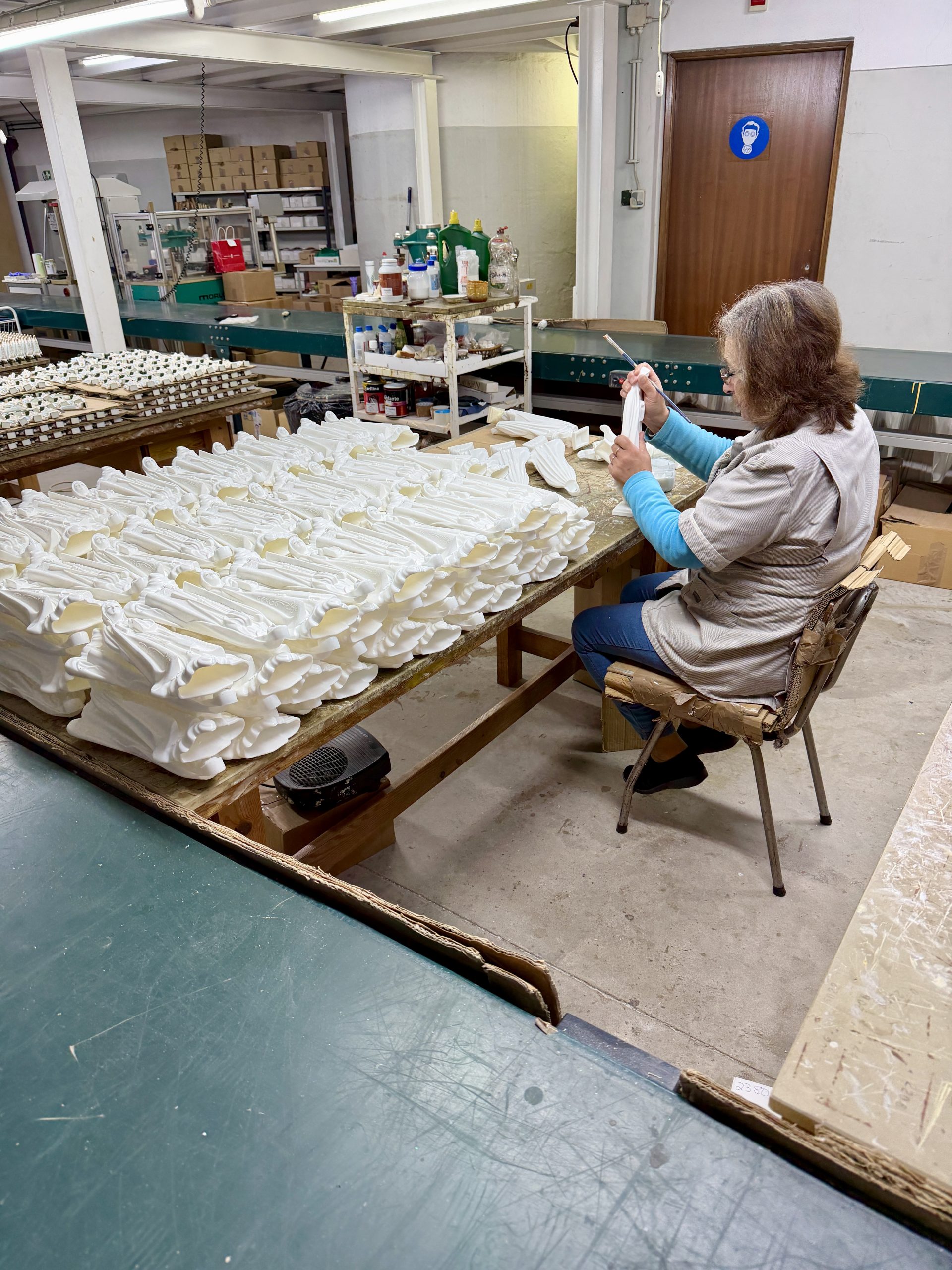
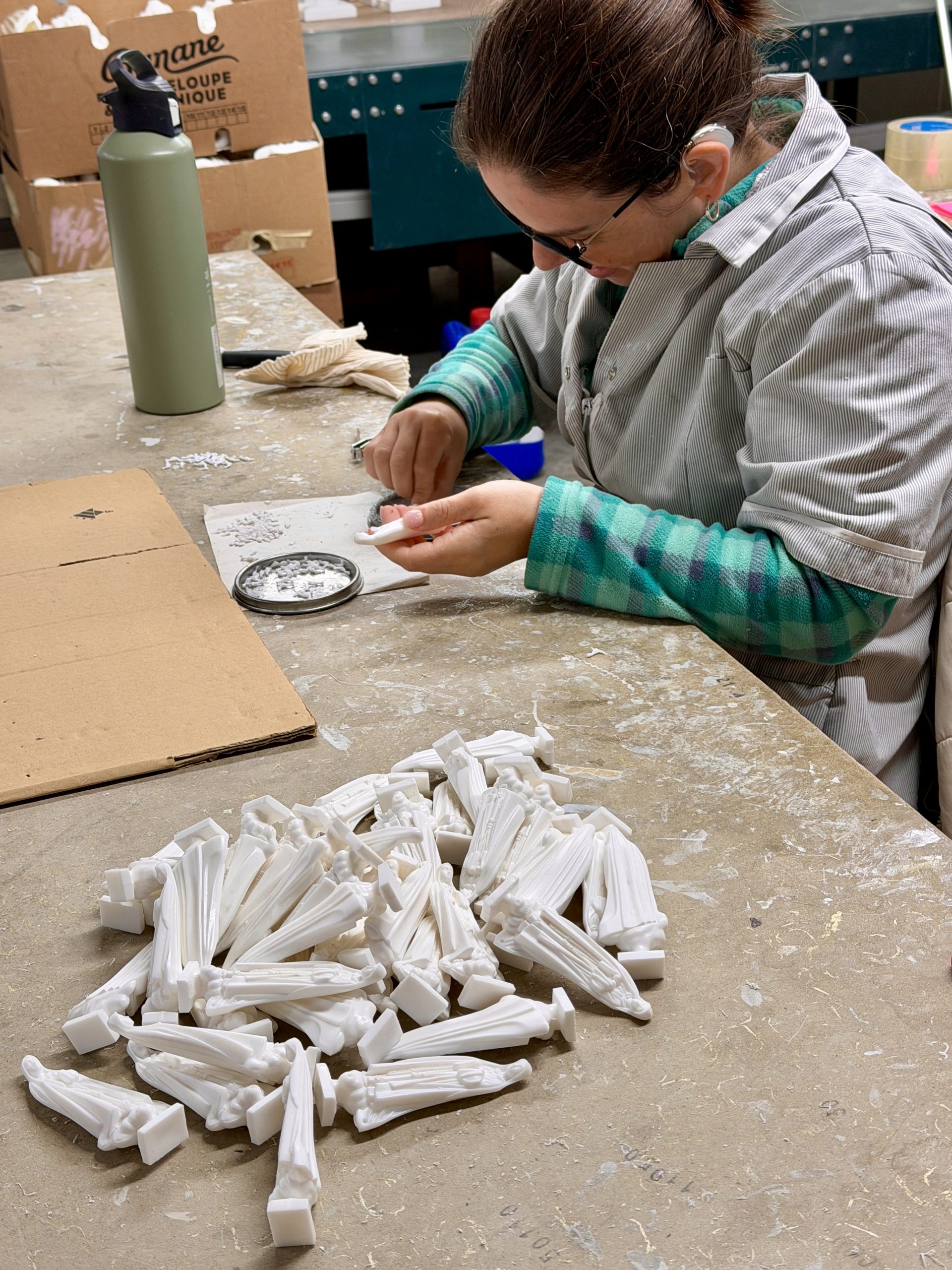
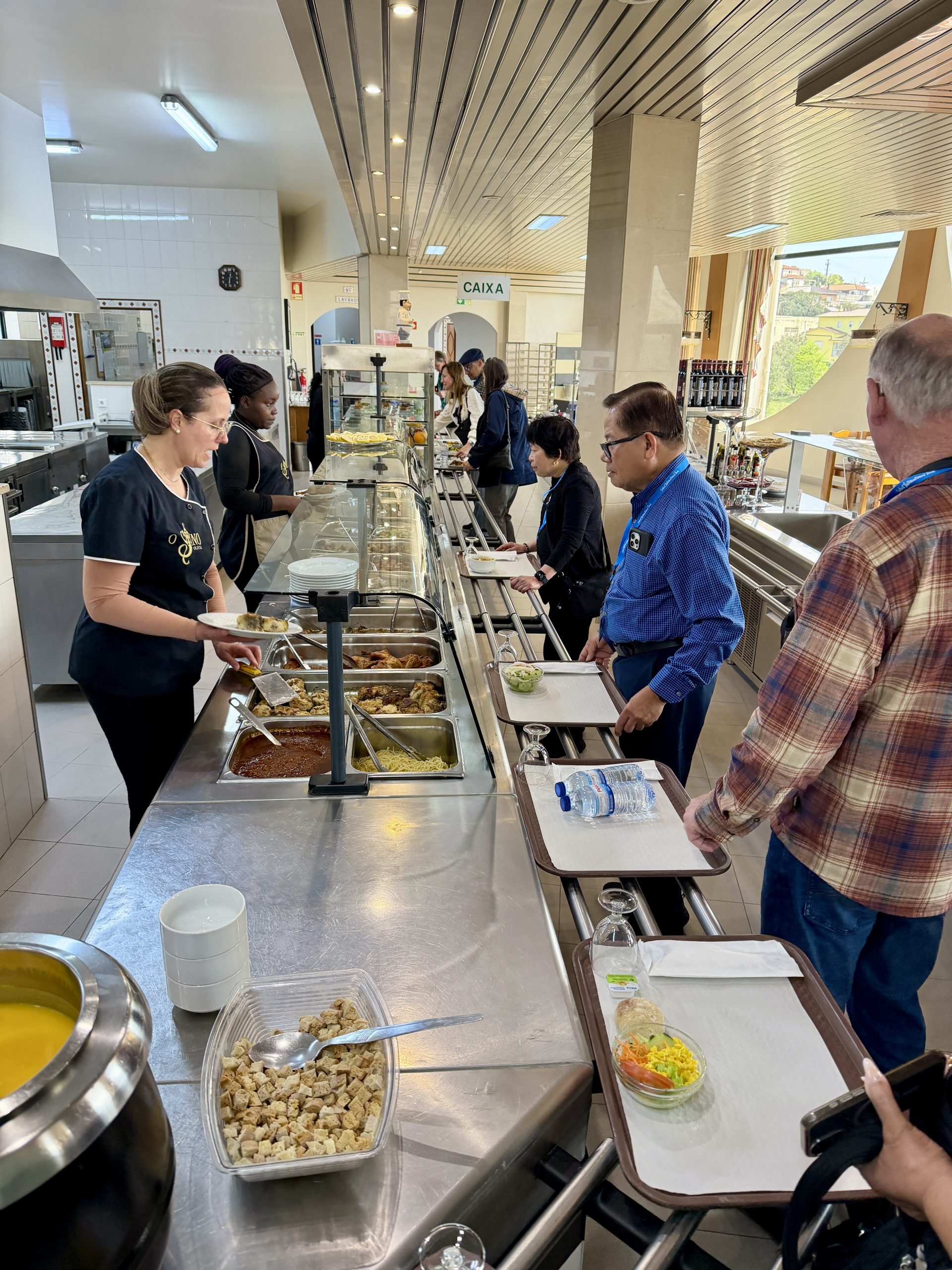
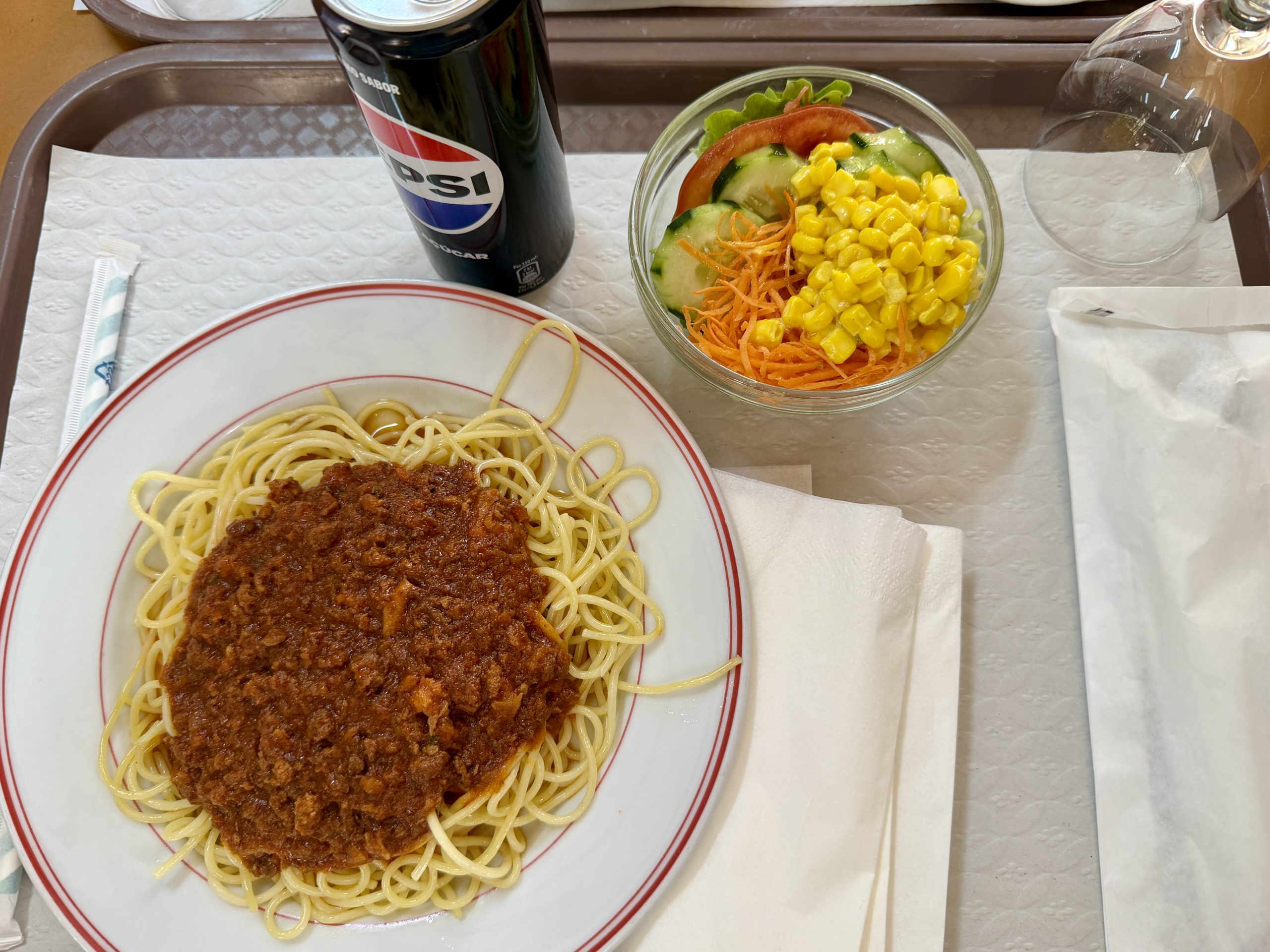
Conveniently, there’s a gift shop adjoining the factory — of course! — and we were invited to pick up a basket and browse after lunch, which we enjoyed in the cafeteria upstairs. This was truly One Stop Shopping. Lunch and souvenirs in one place!
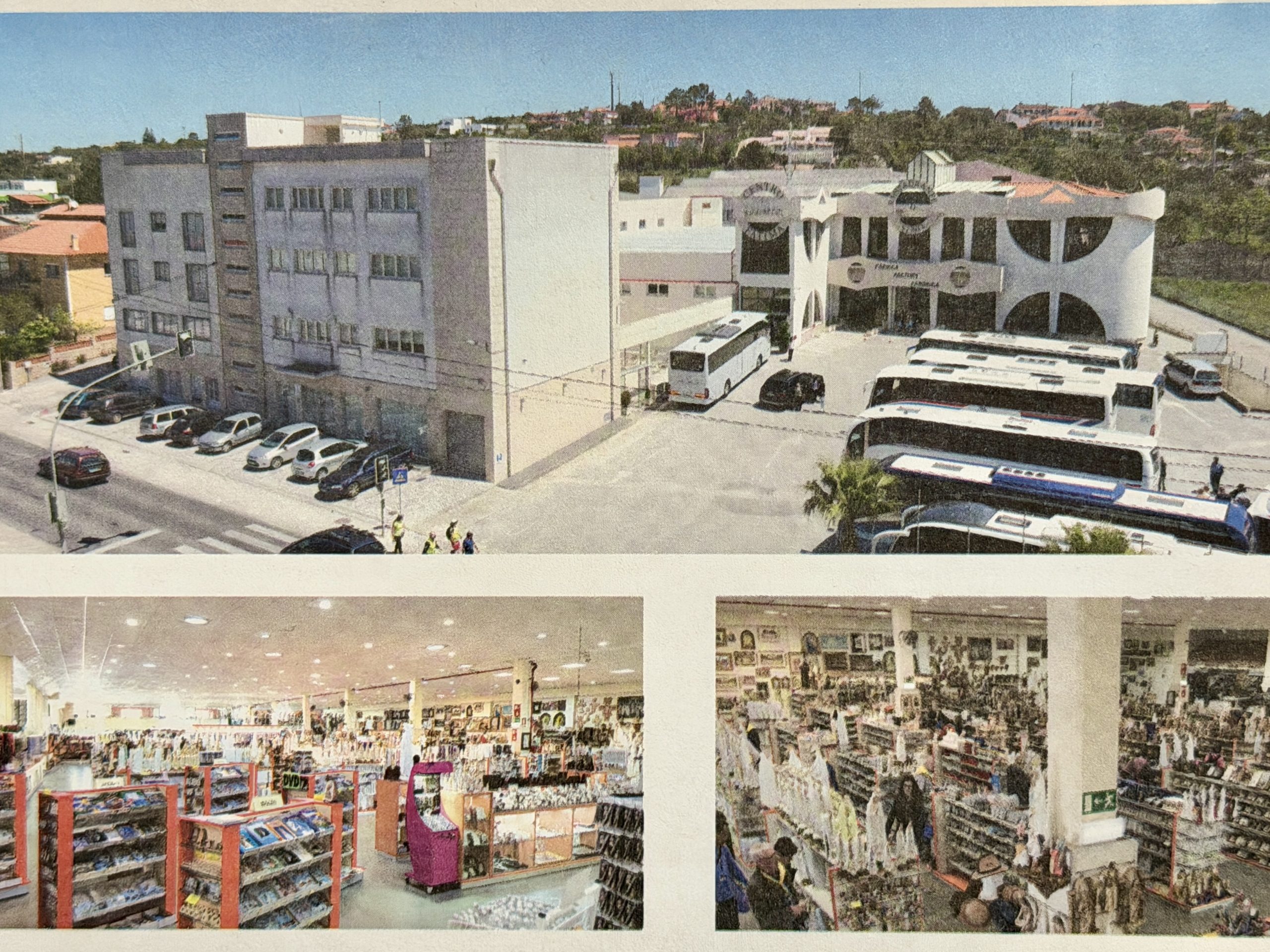
A new saint, Carlo Acutis, is featured prominently in the gift shop.
After a hearty meal, we were back on the bus, which took us to the basilica for a brief tour and time for prayer at the tombs of the three visionaries.
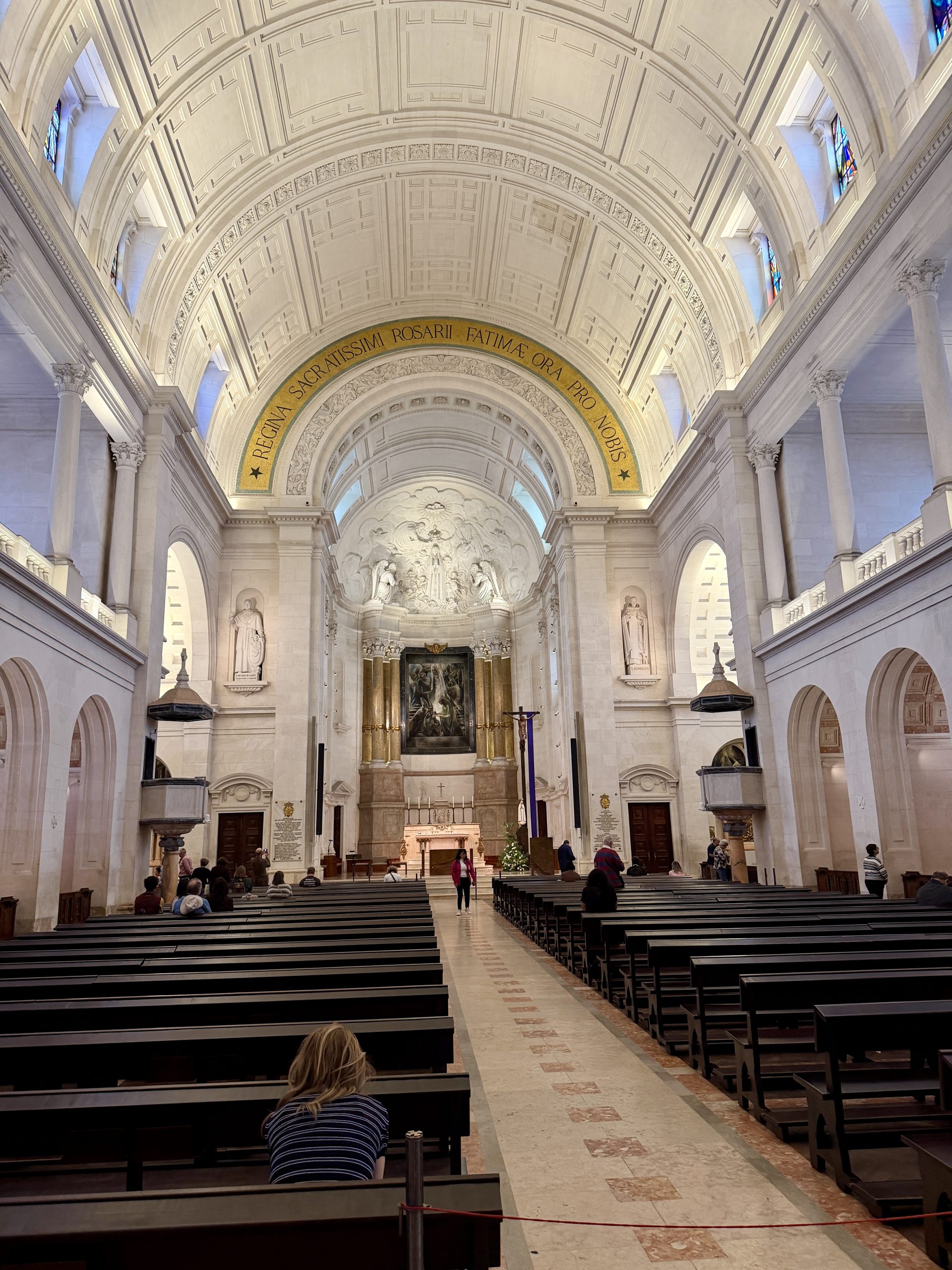
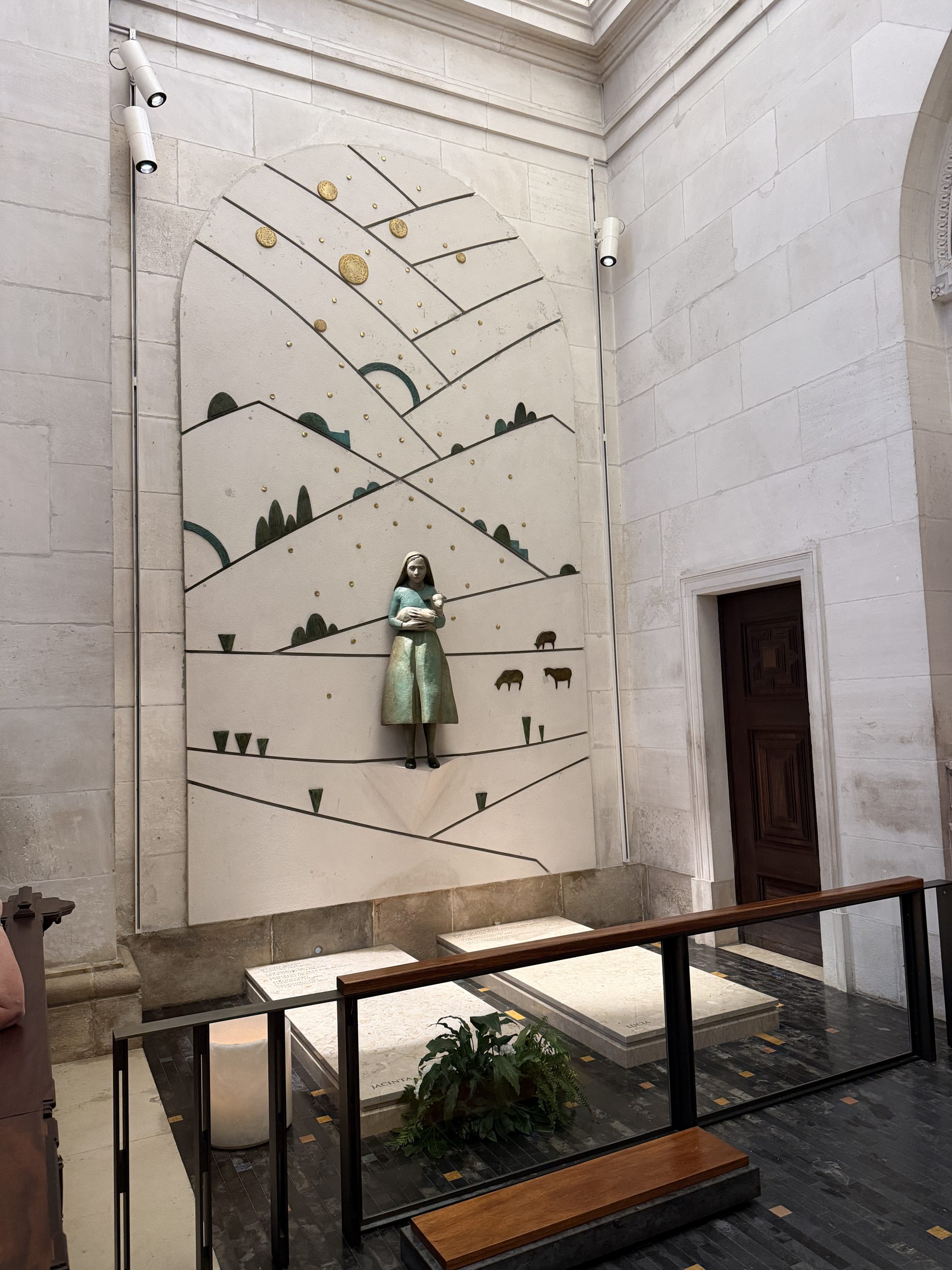
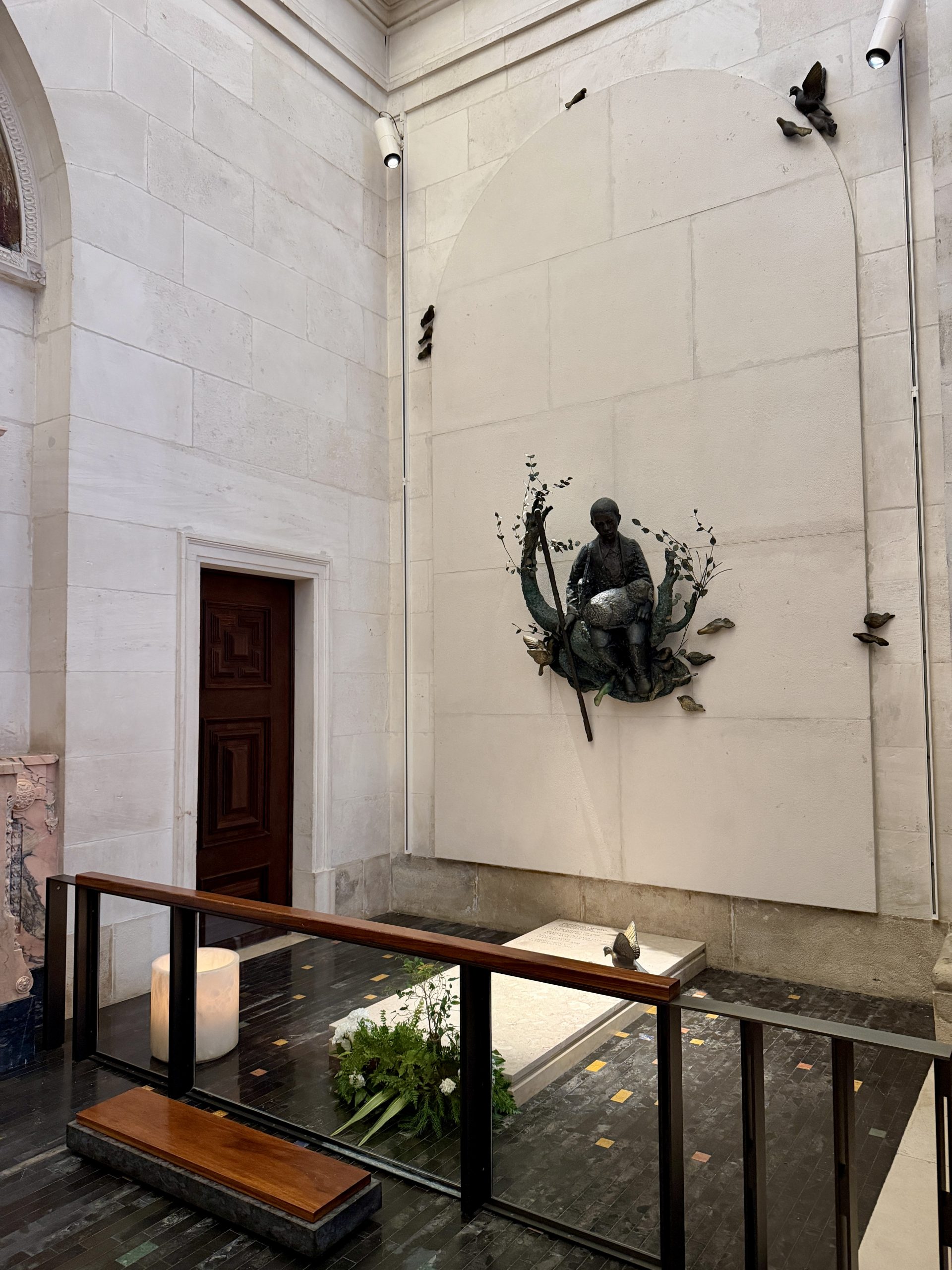
Two of them died quite young — Francisco and Jacinta — and have been canonized; the third, Lucia, spent a long life as a nun and died in 2005. Her cause is still pending.
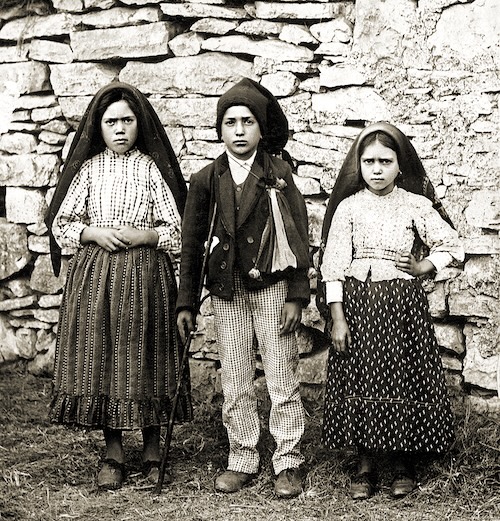
It’s fascinating to learn about the lives of these three figures:
Our Lady of Fátima (Portuguese: Nossa Senhora de Fátima, pronounced [ˈnɔsɐsɨˈɲɔɾɐðɨˈfatimɐ]; formally known as Our Lady of the Holy Rosary of Fátima) is a Catholic title of Mary, mother of Jesus, based on the Marian apparitions reported in 1917 by three shepherd children at the Cova da Iria in Fátima, Portugal. The three children were Lúcia dos Santos and her cousins Francisco and Jacinta Marto. José Alves Correia da Silva, Bishop of Leiria, declared the events worthy of belief on 13 October 1930.
Francisco and Jacinta Marto died in the global flu pandemic that began in 1918 and swept the world for two years. Francisco Marto died at home on 4 April 1919, at the age of ten. Jacinta died at the age of nine in Queen Stephanie’s Children’s Hospital in Lisbon on 20 February 1920. Their mother Olímpia Marto said that her children predicted their deaths many times to her and to curious pilgrims in the brief period after the Marian apparitions. They are now buried at the Sanctuary of Fátima. They were beatified by Pope John Paul II on 13 May 2000 and canonized by Pope Francis on 13 May 2017.
On 17 June 1921, at the age of fourteen, Lúcia was admitted as a boarder at the Sisters of Saint Dorothy (Dorothean) school in Vilar, a suburb of Porto, Portugal. In 1925, at the age of eighteen, she began her novitiate at the convent of the Sisters of Saint Dorothy in Tui, Spain, near the border with Portugal. Lúcia continued to report in her memoir private visions periodically throughout her life.
But it turns out that seeing the Blessed Mother wasn’t all angels and beatific visions.
Our guide explained that the children were hounded by reporters, and some tourists who visited Fatima took the time and trouble to pack scissors. They would seek out the children, meet them, and cut pieces of their clothing to take home as holy souvenirs.
Following our visit to the basilica, we had Mass in a nearby chapel, with Deacon Tim Helmick assisting and his wife Rosalie serving as lector.
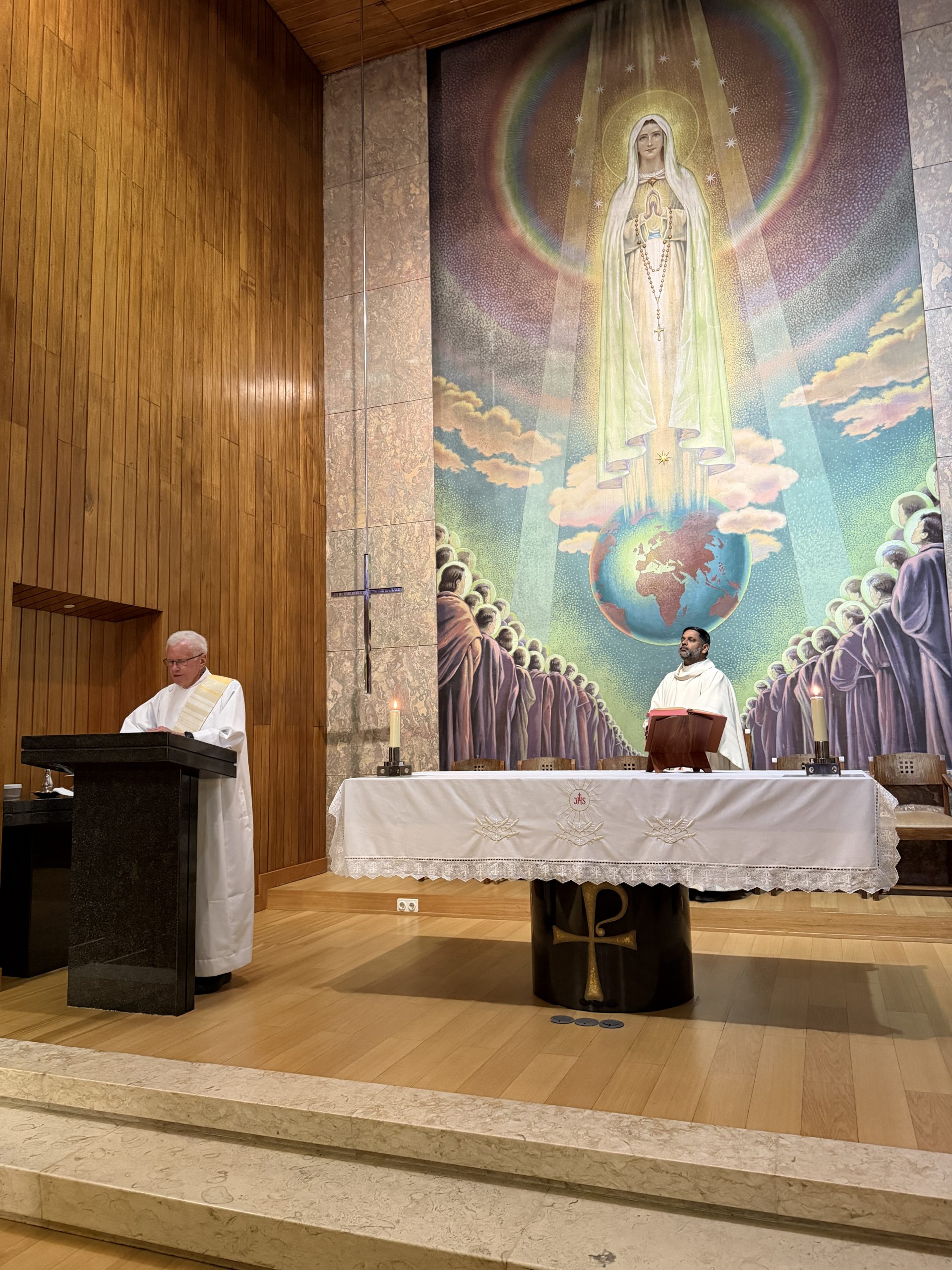
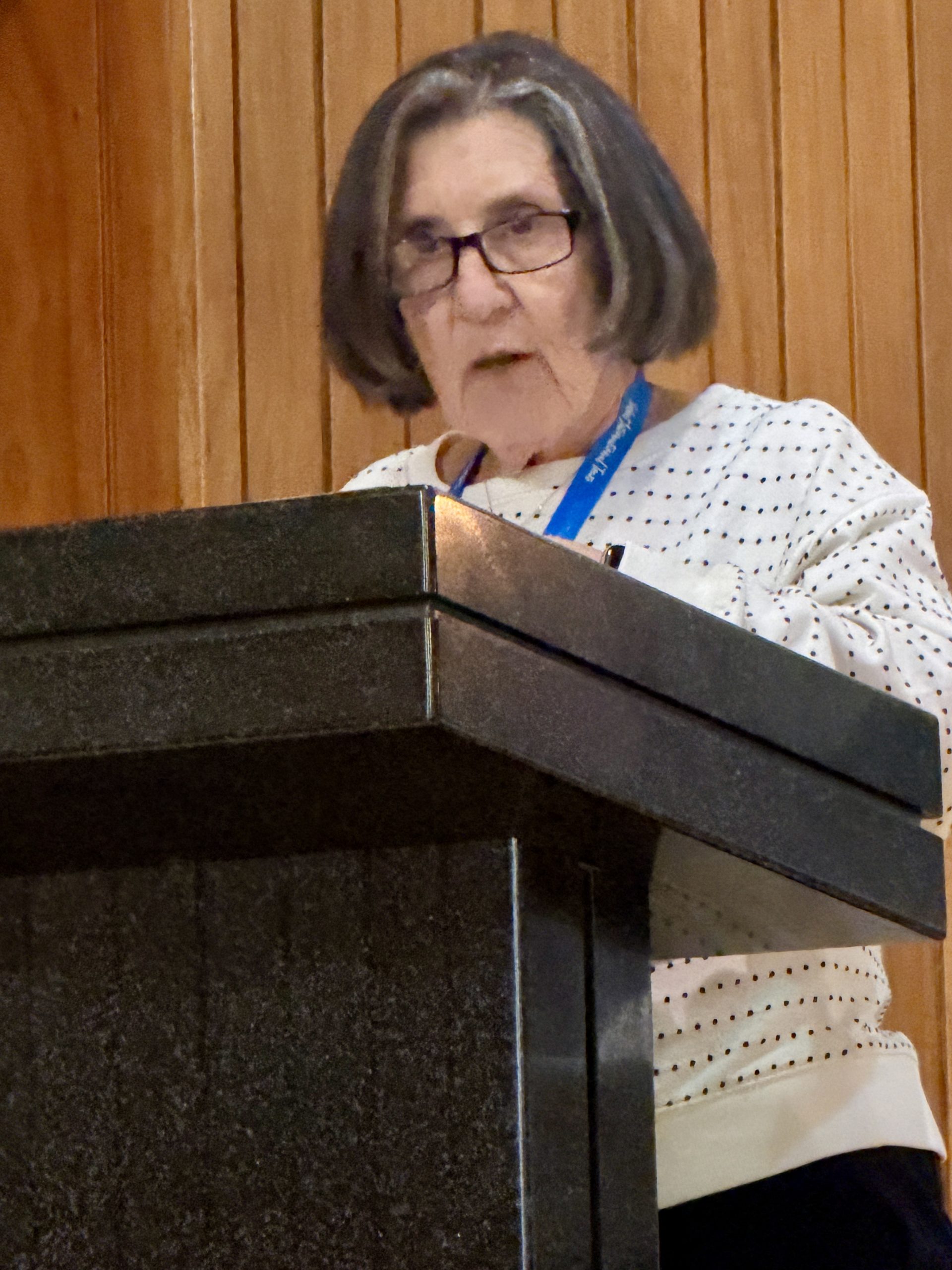
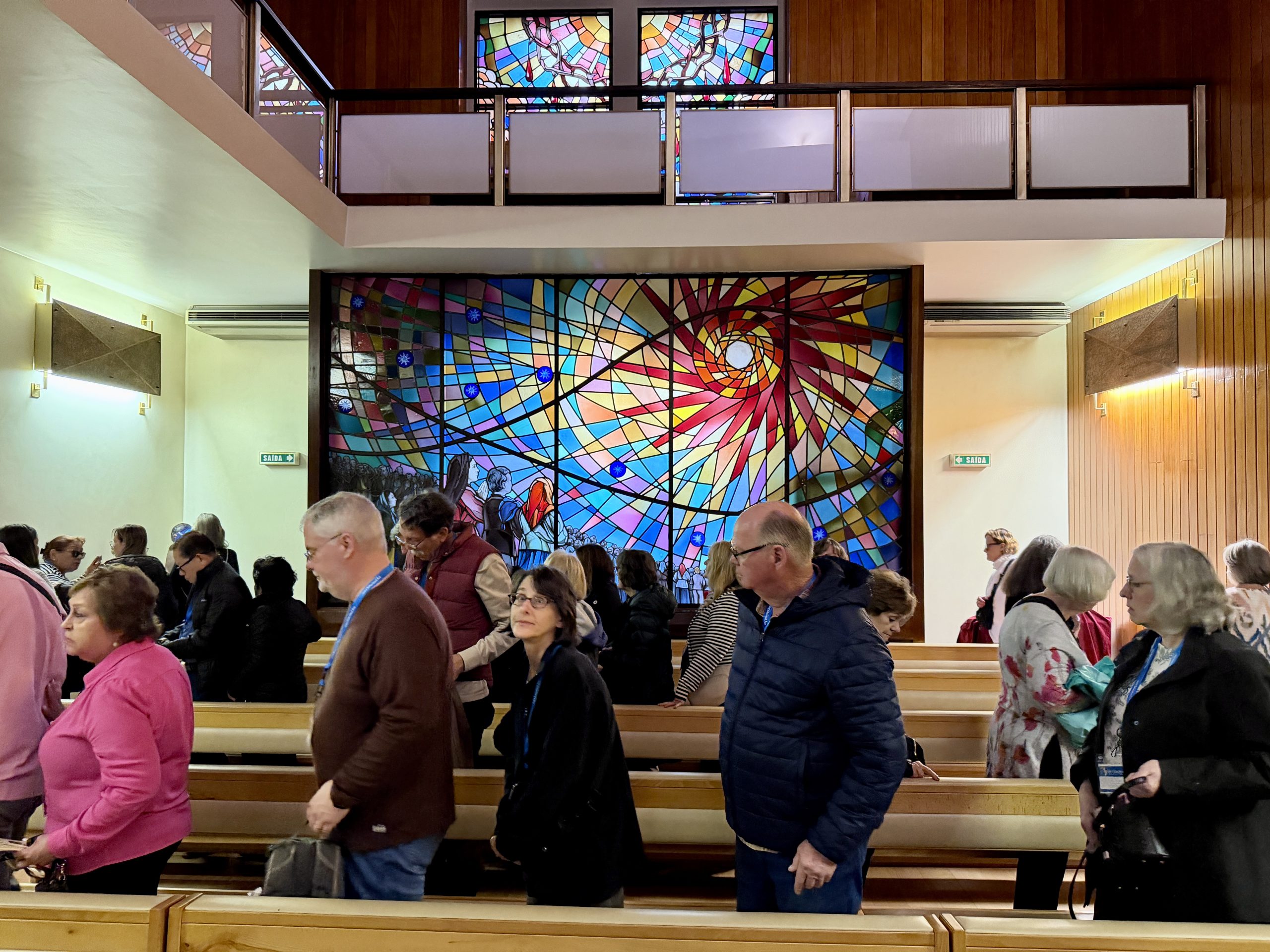
Later, we had some time for pictures.
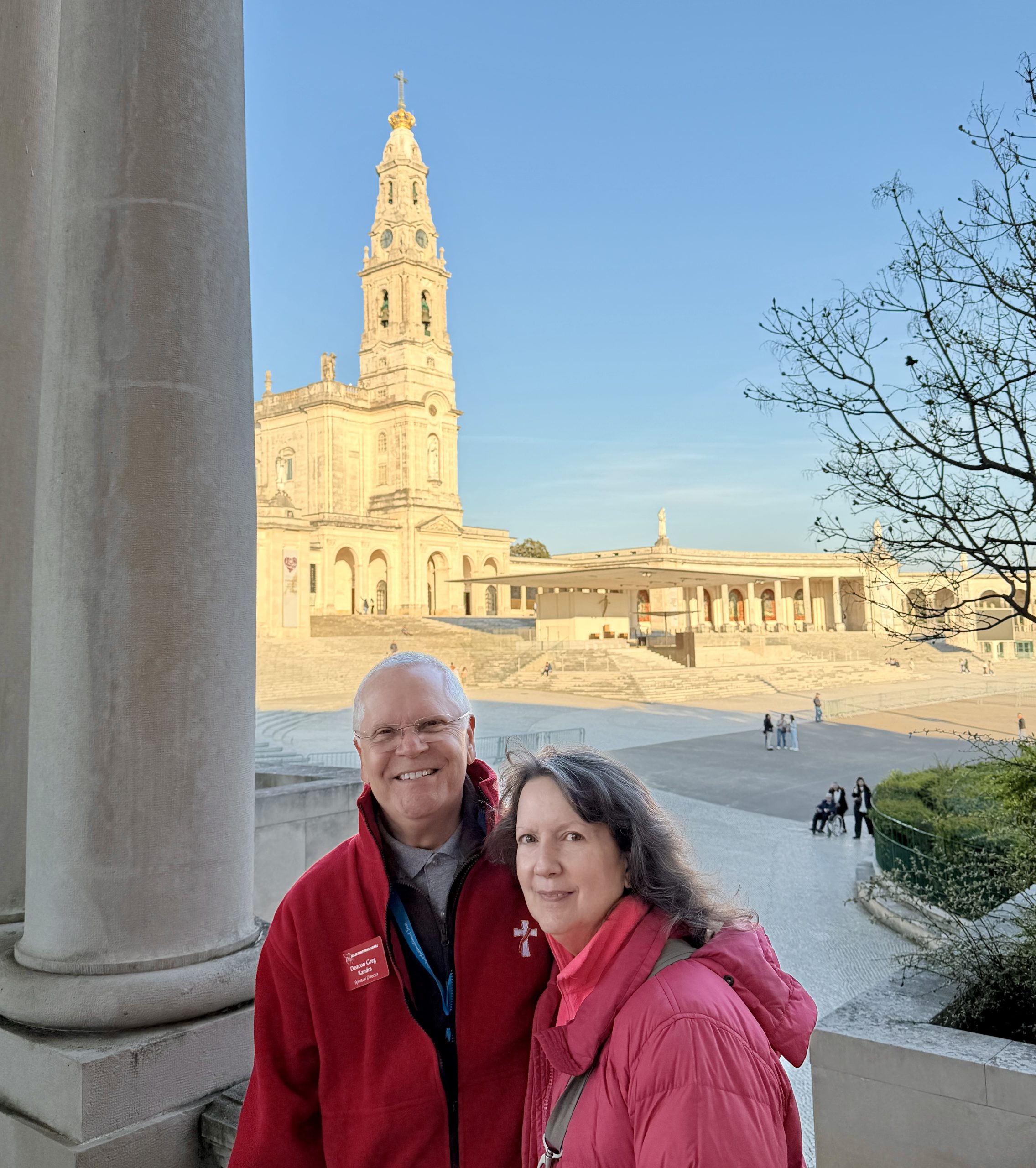
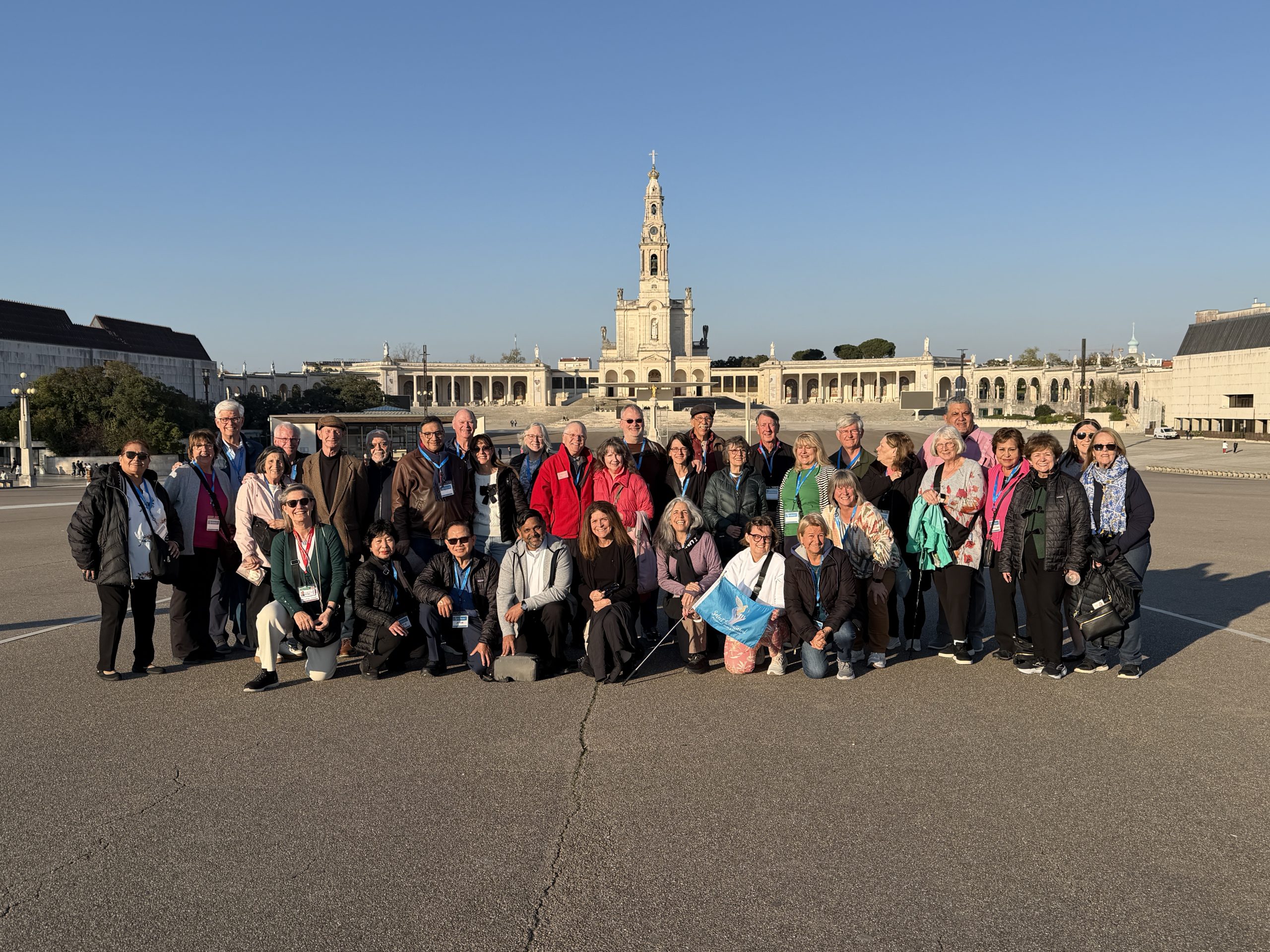
Then, dinner!
We piled into the bus again for a short ride to a local Portuguese restaurant. This would be our traditional “farewell dinner” on pilgrimage — a festive and memorable occasion that offers a chance to sample some great local cuisine.
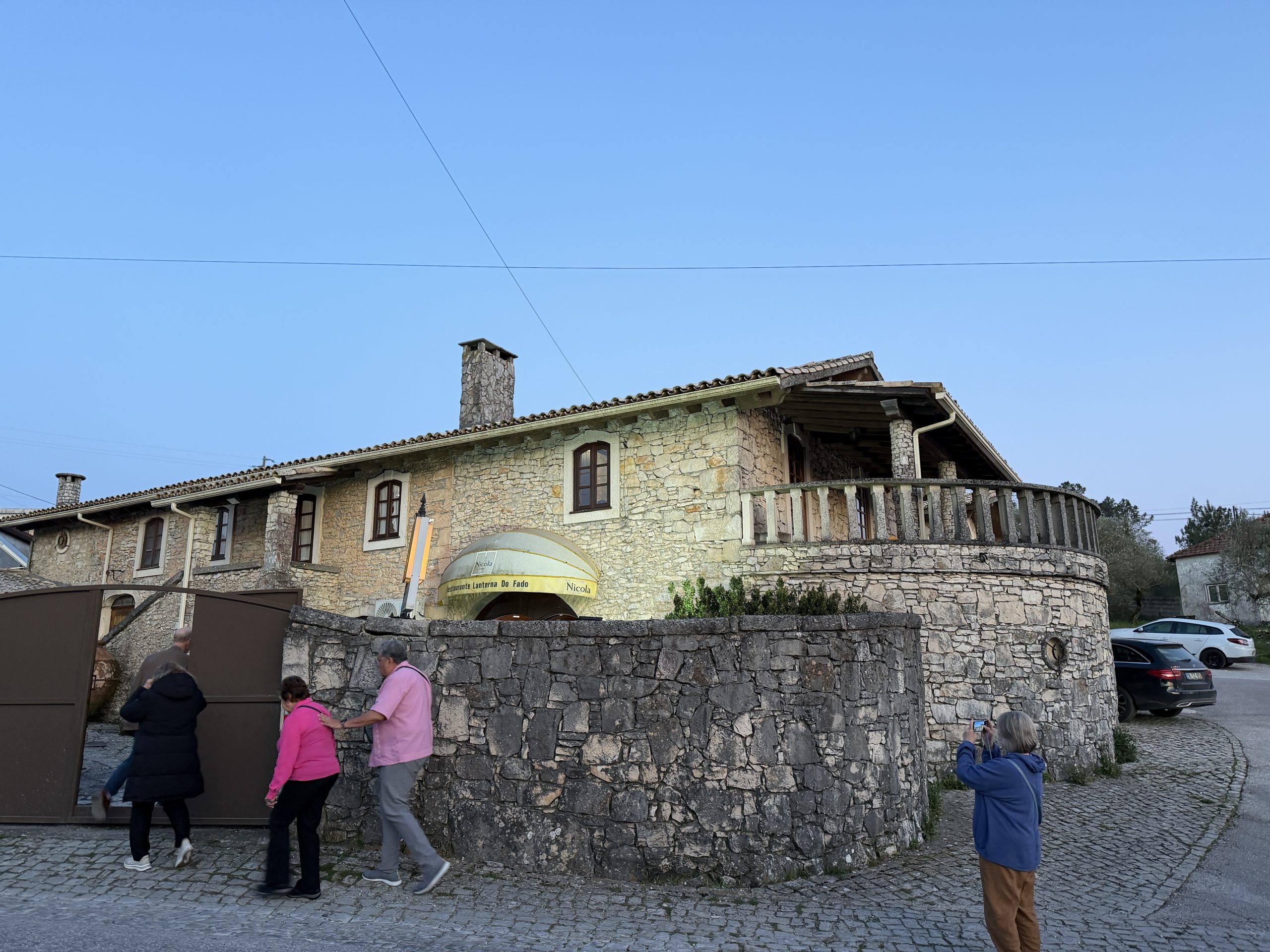
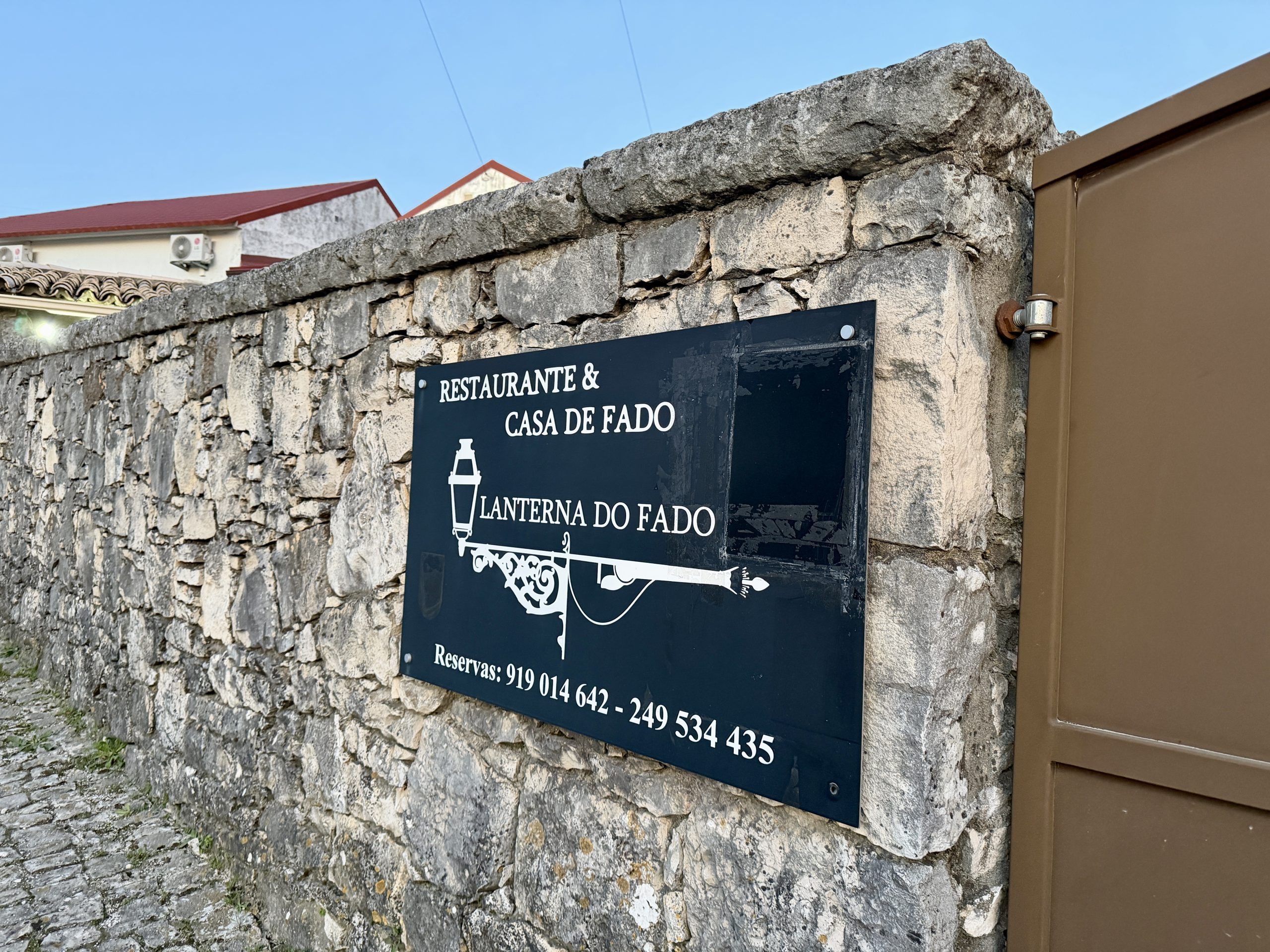
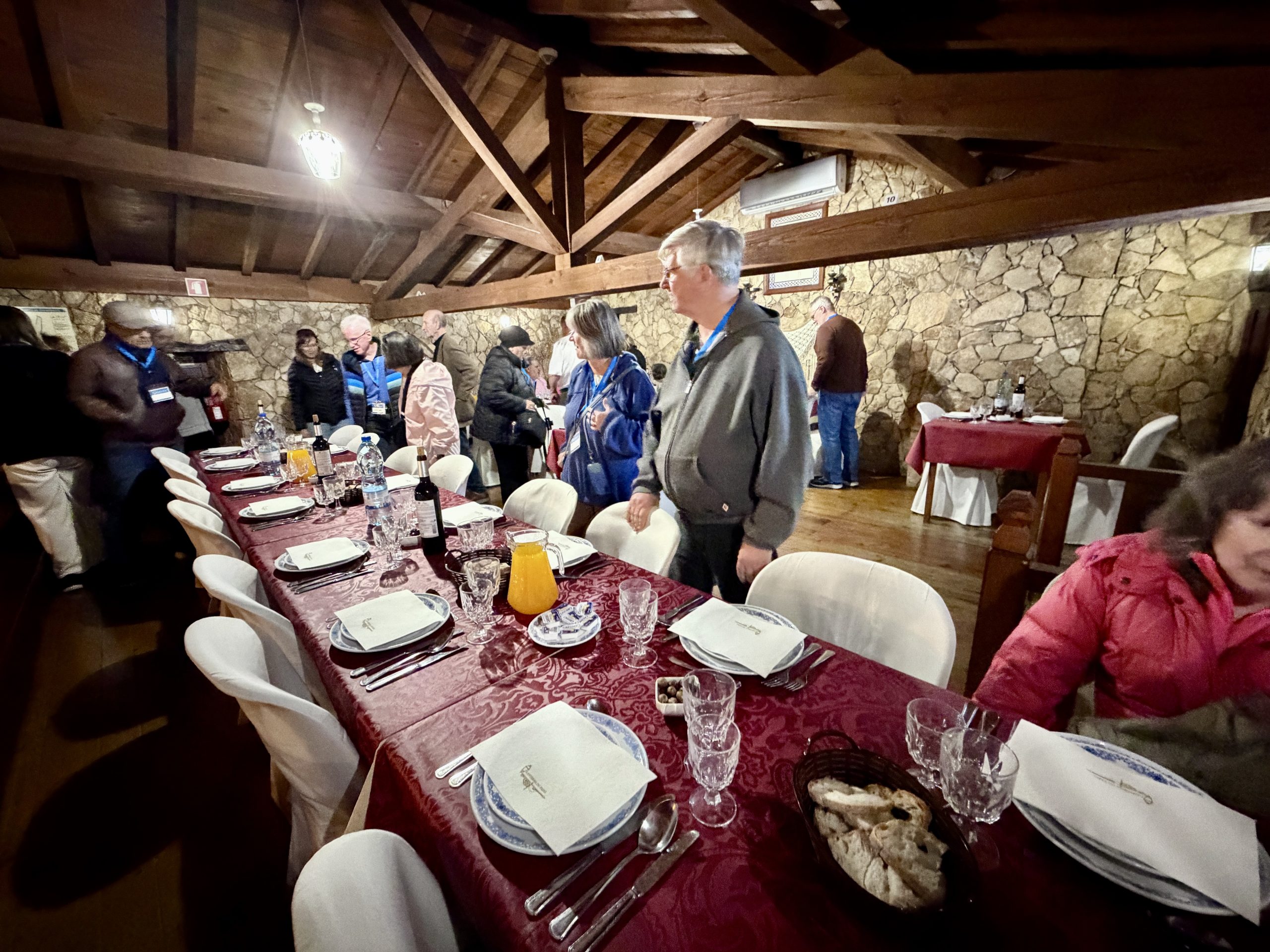
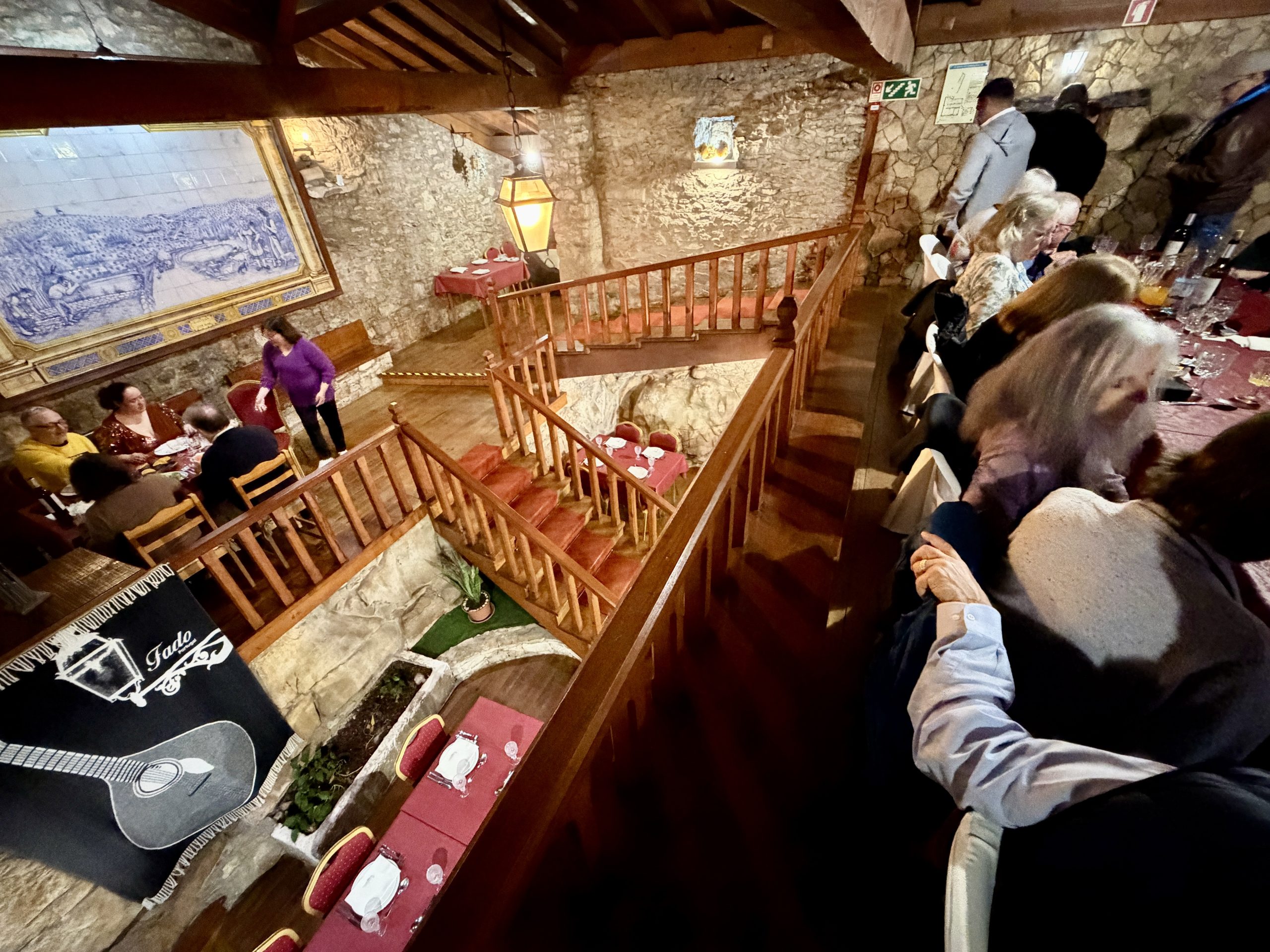
The food was amazing — so good, I forgot to photograph it — but I remember that one of the dishes I sampled was, I kid you not, rooster. It was delicious. We celebrated Grace’s birthday, again, and all of us received an incomparable gift of our own: some superb music during our meal.
It was a wonderful, beautiful, inspiring, humbling, joyful day.
Tomorrow, we bid goodbye to Fatima and head to our last stop in Portugal: Lisbon.
It’s hard to believe, but our pilgrimage is drawing to a close.