And we’re here.
We landed in Paris late Tuesday afternoon — St. Patrick’s Day! — after a very long journey from Orlando International Airport. Air France didn’t make check-in very easy — it wasn’t clear to many of our pilgrims that you needed to spend time at a kiosk, processing your passport and tagging your luggage — and the long line didn’t move quickly.
But once we got our bags checked and boarding passes printed, we slid down the hall to the TSA checkpoint, and that was surprisingly quick. We settled in at our gate about three hours before we had to board.
The trip was not the most comfortable way to spend 9 hours. The seats were cramped — the most cramped I’ve had on an international flight — and the food was not exactly memorable. (It also wasn’t, frankly, easy to eat, with tight tray space.)
But we made it on time. After landing at Charles de Gaulle Airport and working our way through passport check and baggage claim, we gradually started connecting with other pilgrims who had flown in from around the country.
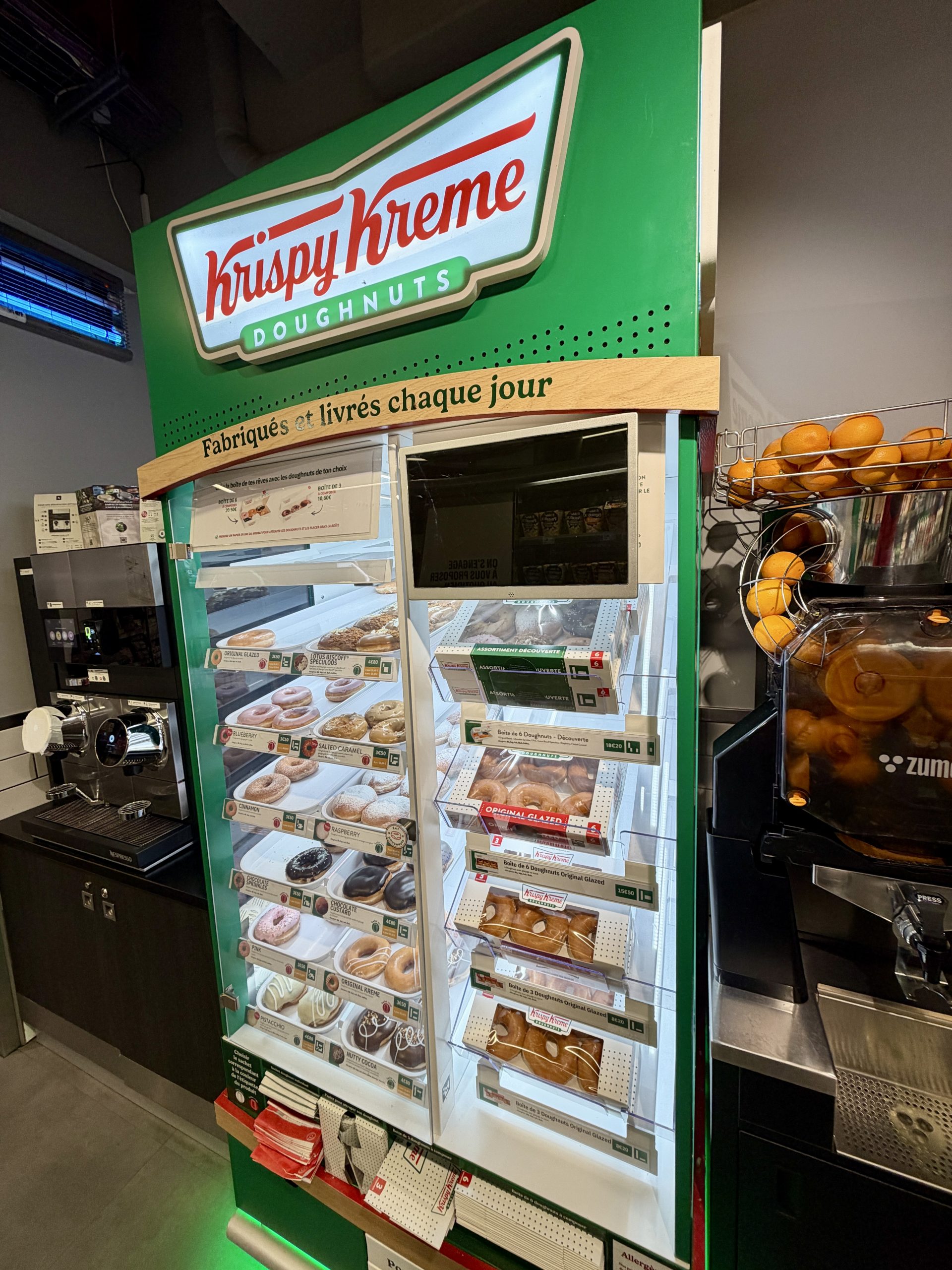
I also got my first glimpse at fine French cuisine.
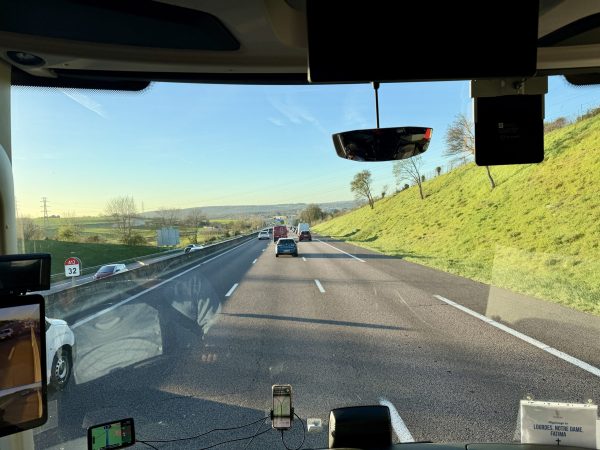
We were a little late getting started; one of our pilgrims had her flight delayed by a few hours in New York City. That caused us to rearrange our schedule a bit and forced us to cancel our first Mass. But soon enough, we were all there — 38 total, including one pilgrim from my Florida parish who is 83 years old! We boarded the bus and headed to Lisieux, where we checked in and had a late dinner at about 8:30.
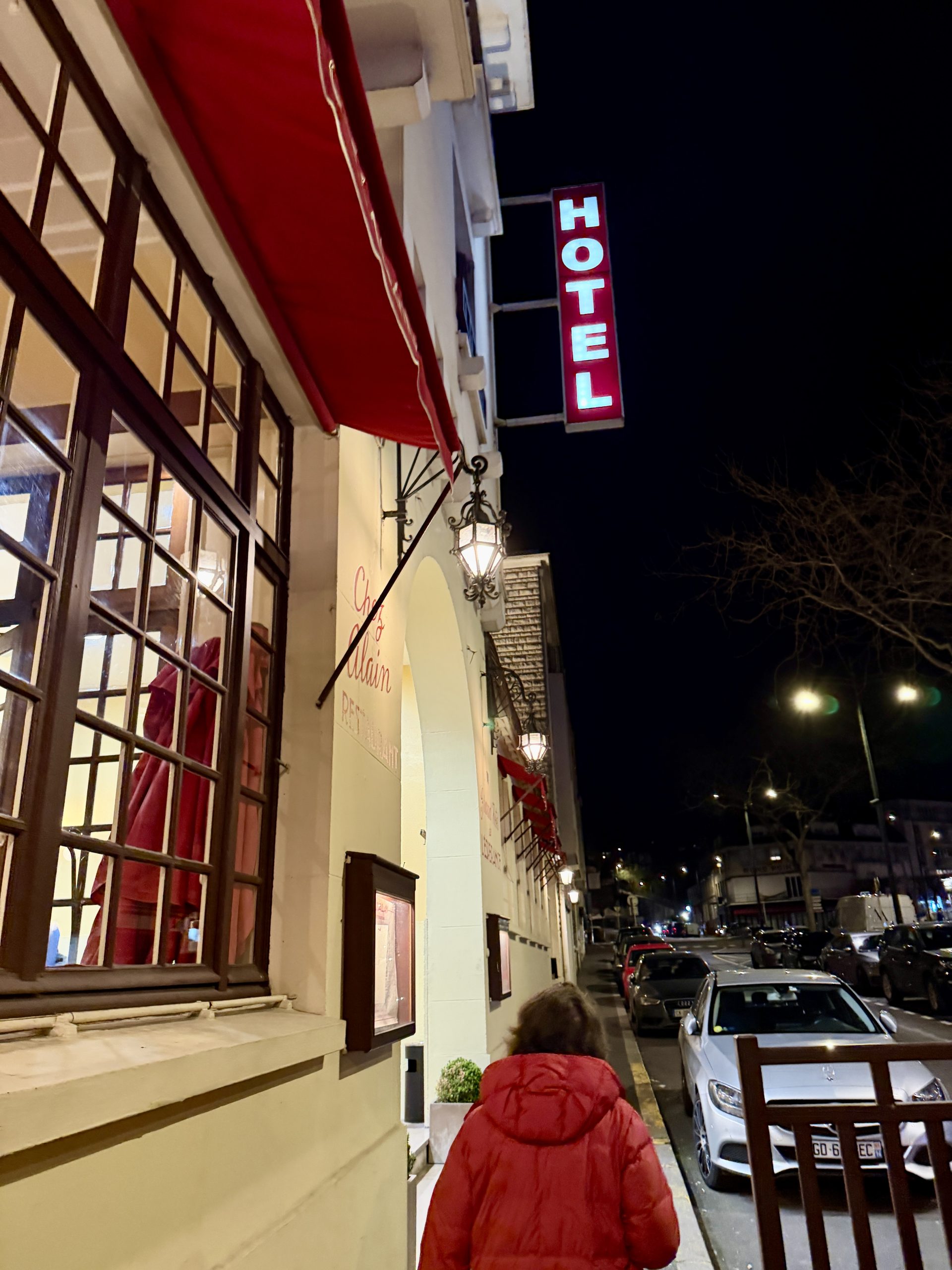
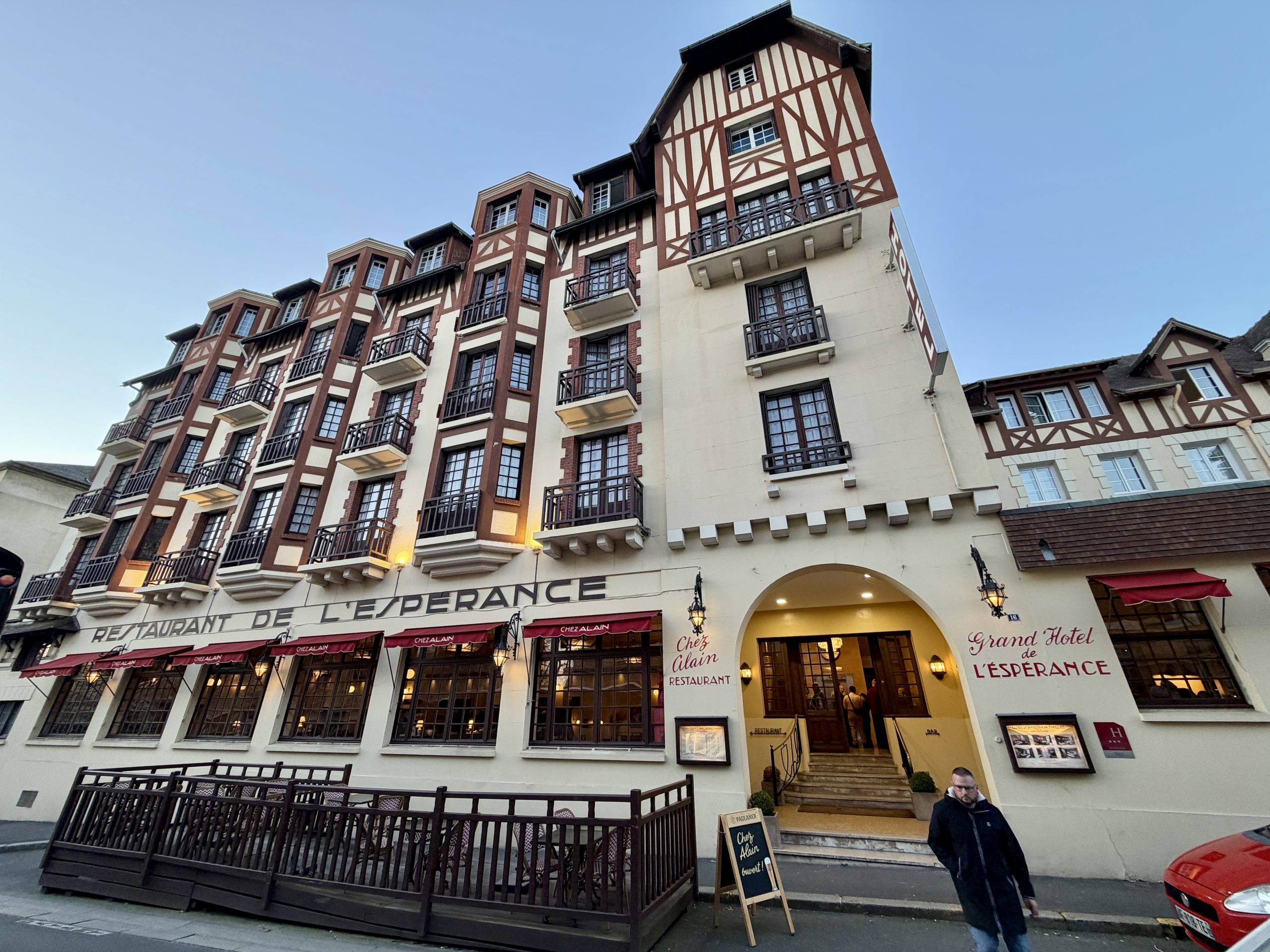
The hotel turned out to be quite nice: a small, old-fashioned place with real room keys and hearty French food for our meals — various forms of mashed potatoes were on the menu multiple times — and we enjoyed the atmosphere, the service and the company.
The Grand Hotel de L’Esperance was a perfect spot to collapse after a long day on the road.
We got up bright and early Wednesday — our wake-up call was 5:45 am — to have breakfast at 7 and depart on the bus by 8. (Caffeine, I love you.)
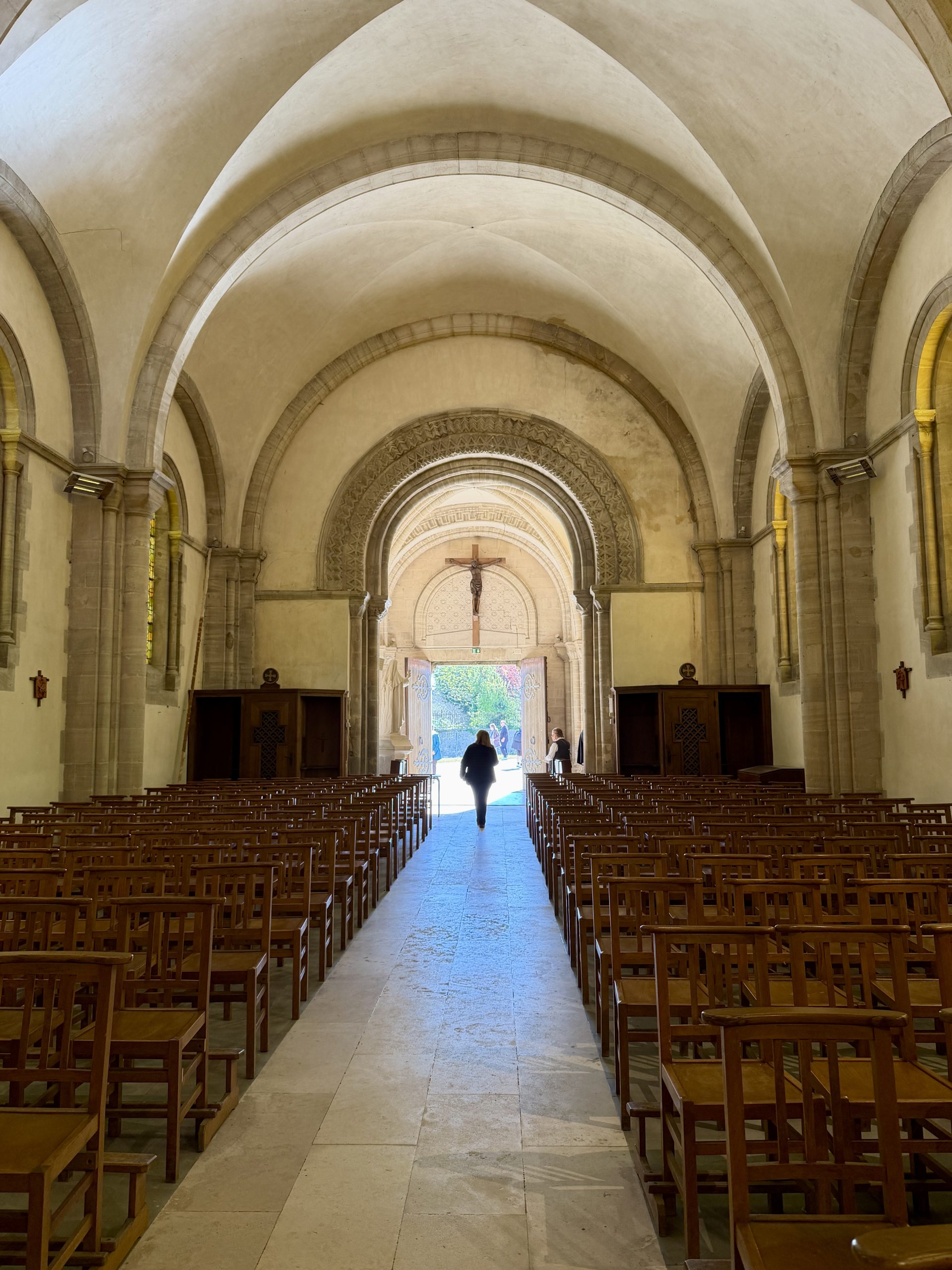
We drove about two hours to a small town in Normandy, where we celebrated Mass in a wonderful thousand-year-old church named for St. Aignan. The interior was cold, but that just made the place feel more authentic.
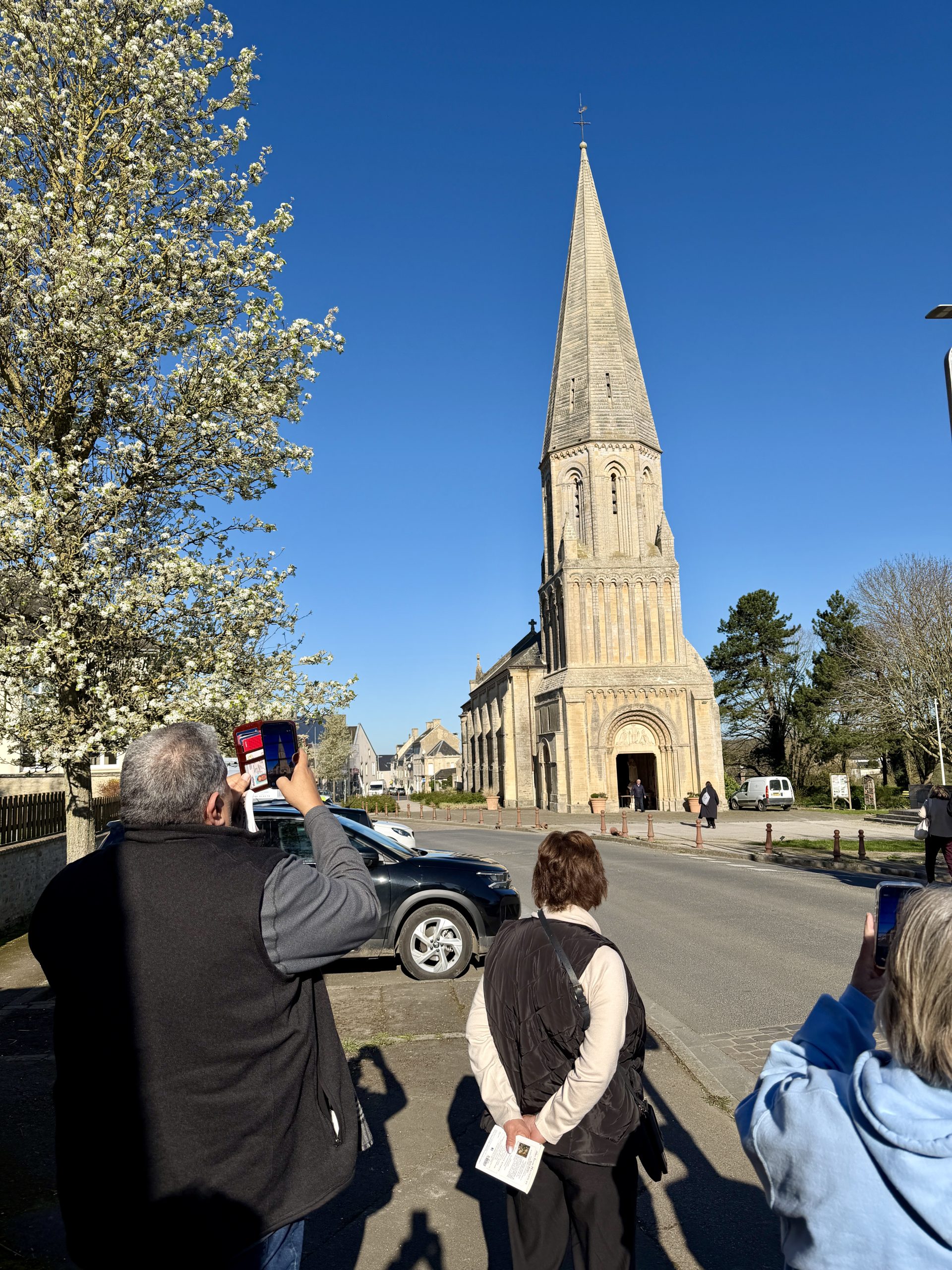
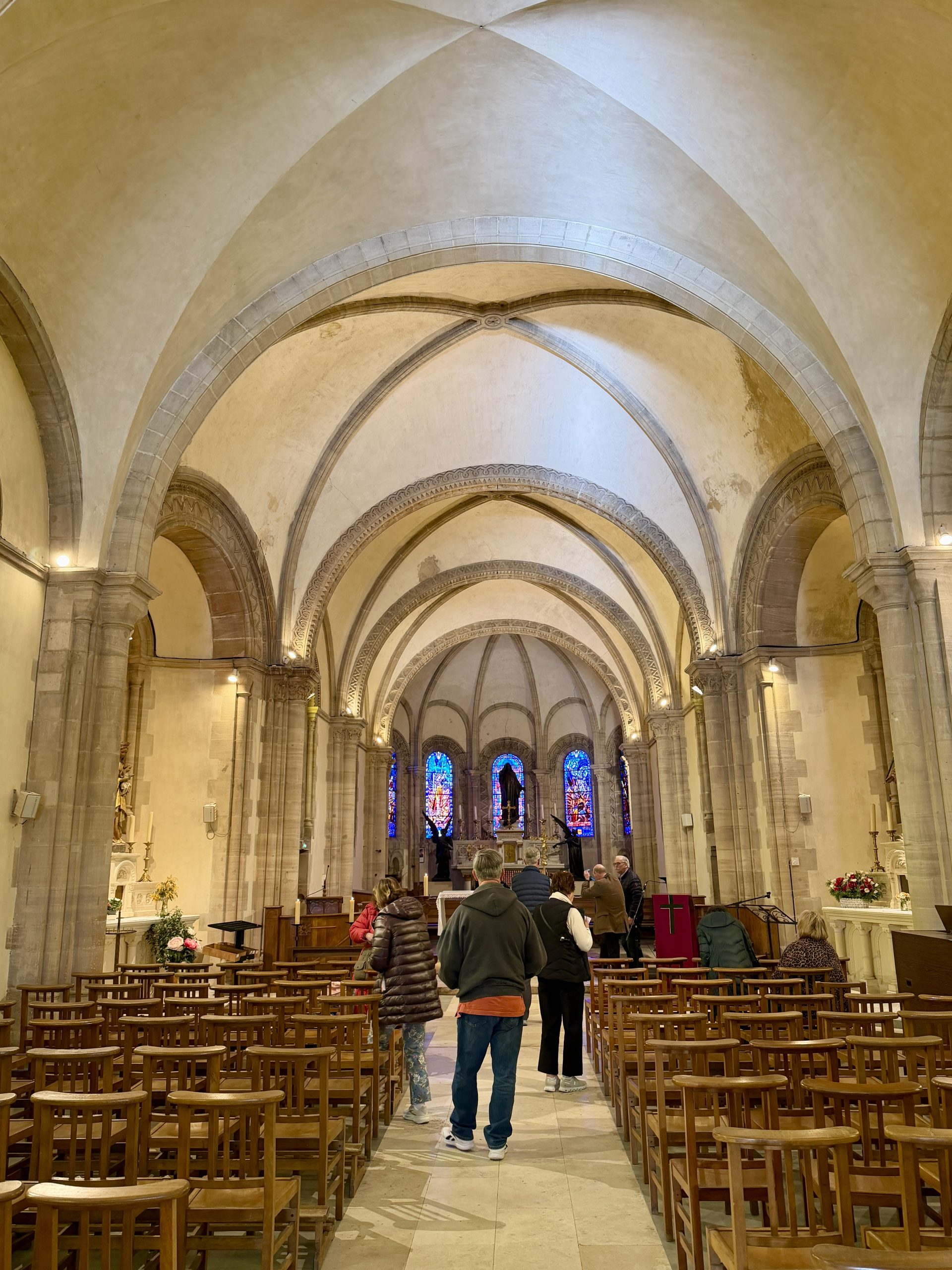
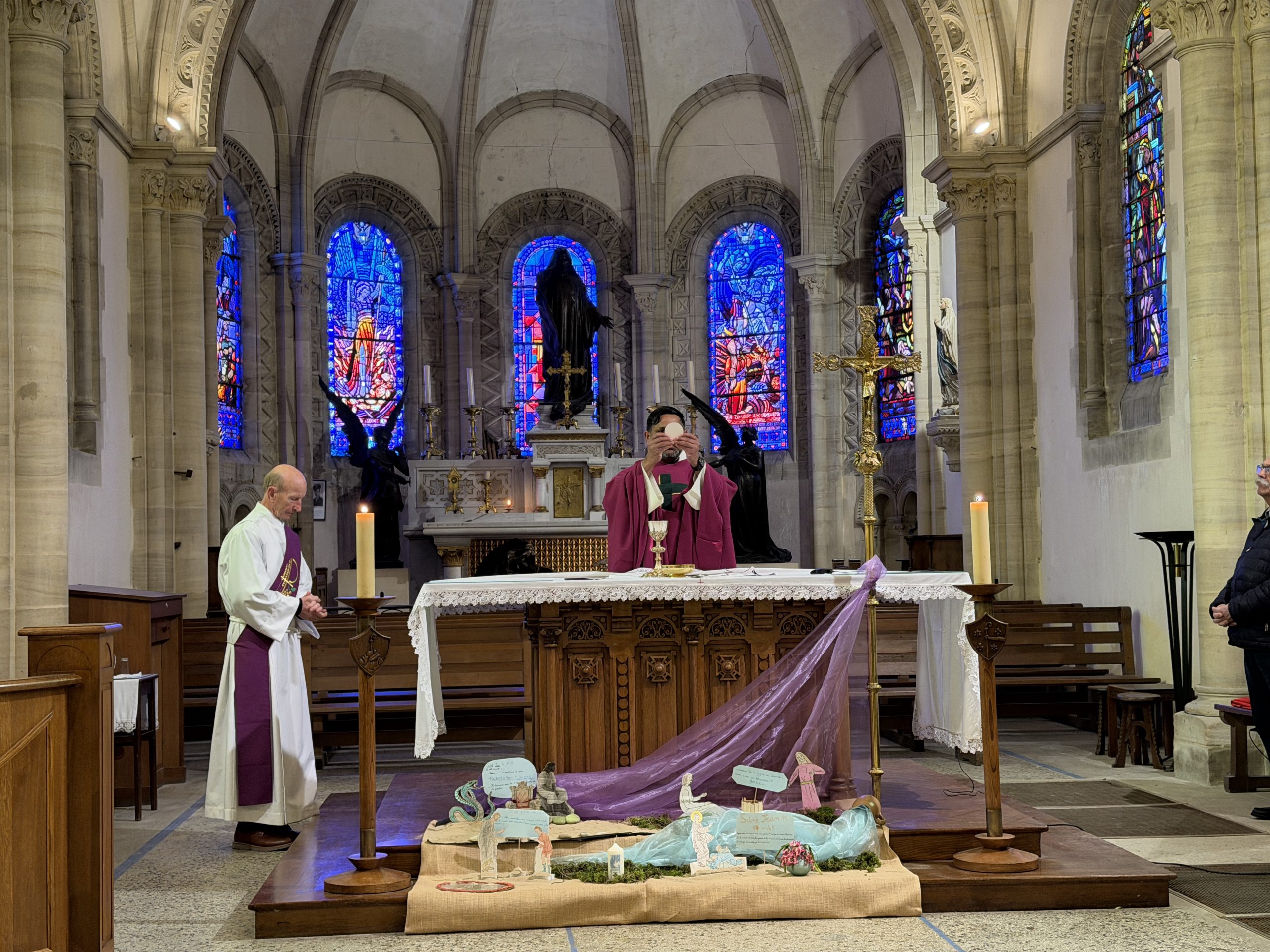
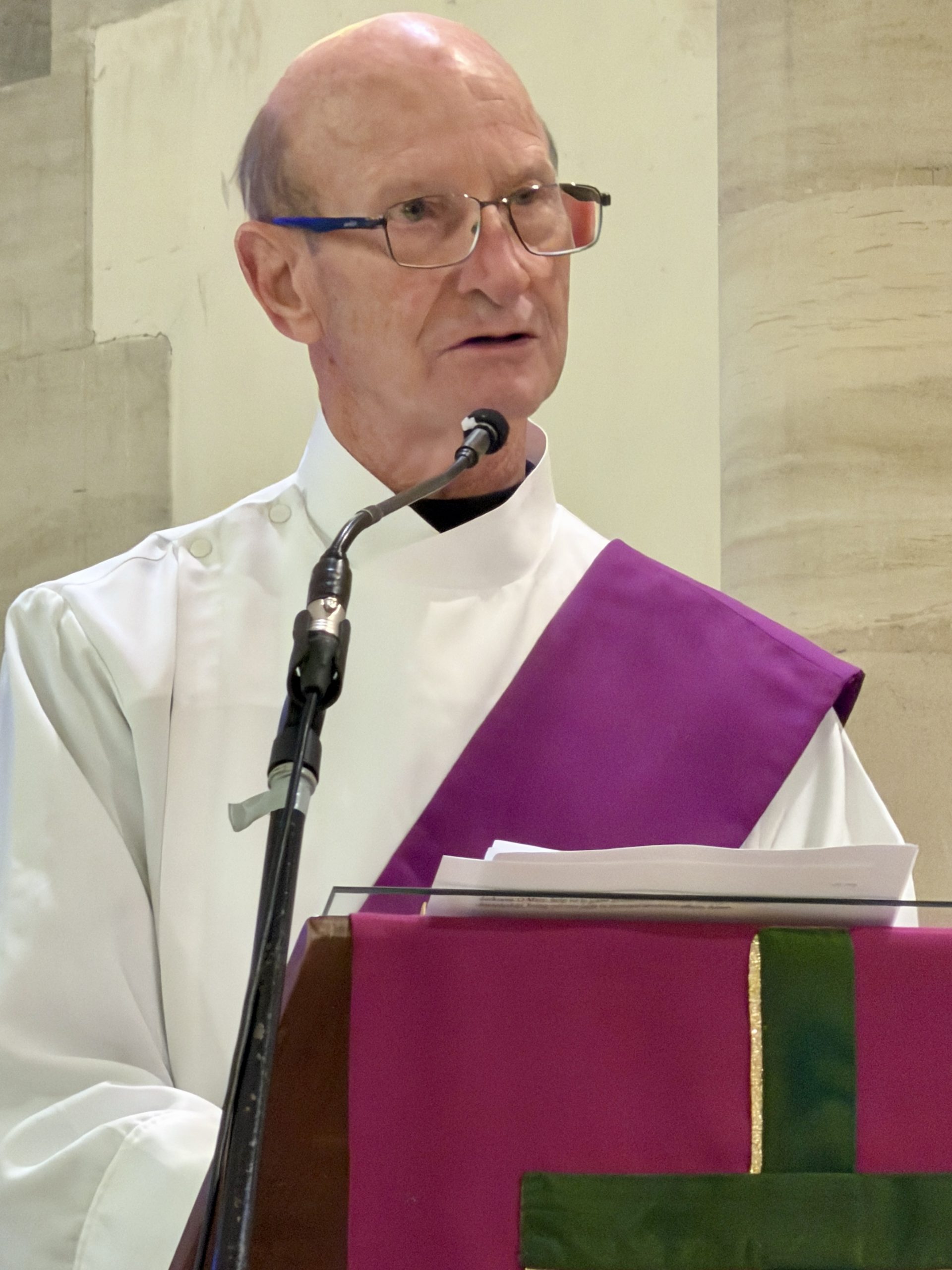
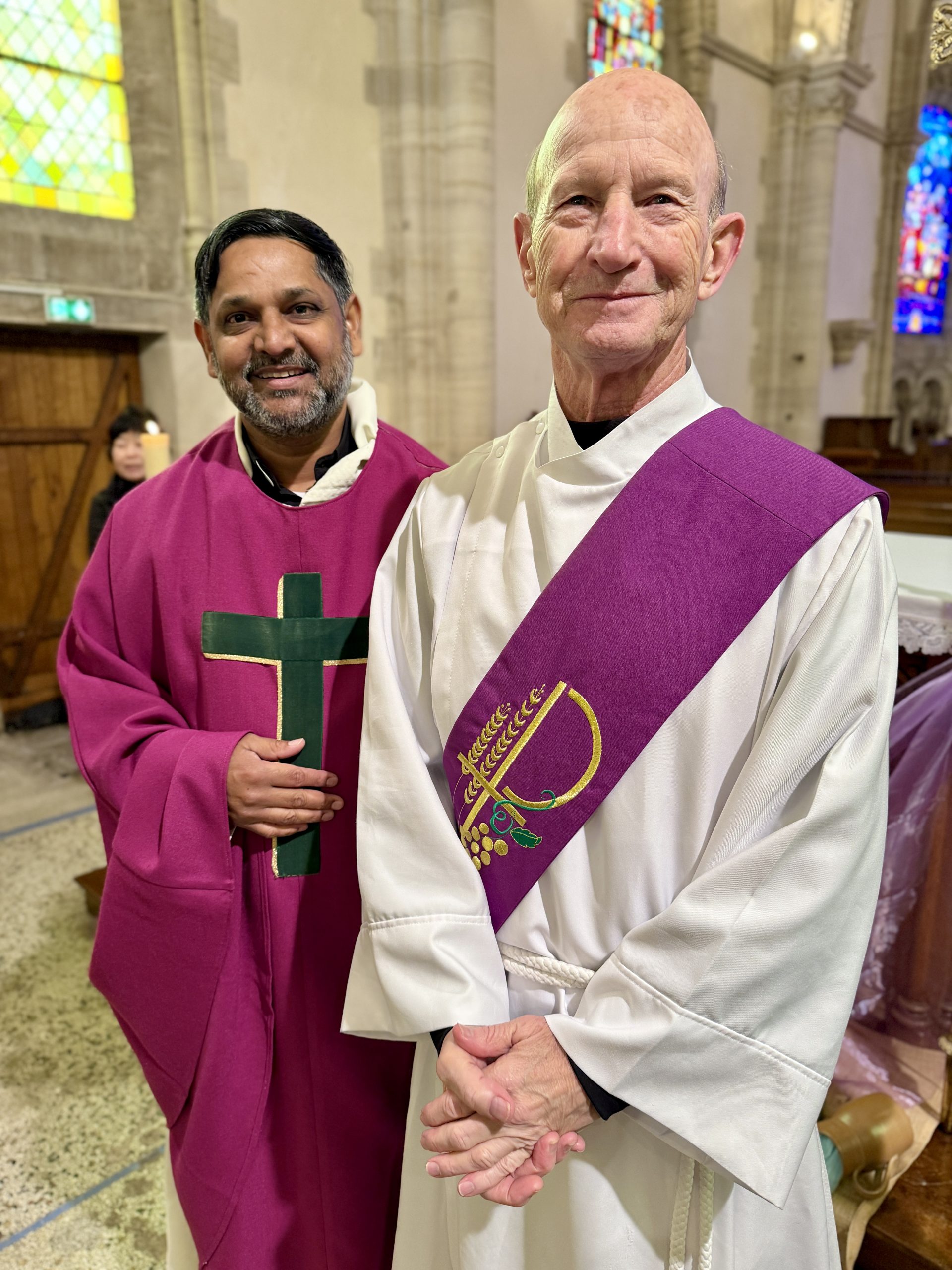
Deacon Howard Schuyler, from Salt Lake City, preached about the Father, the Son, and Dwight Eisenhower, who it turns out had a few spiritual thoughts to share about D-Day and military leadership. Our priest — my pastor Father Mathew Joseph from my parish in Apopka, Florida — was delighted to visit a part of the world he’s never seen before. He also seemed delighted to have six deacons to assist him with preaching across 10 days.
After Mass, we headed to the American Cemetery near Omaha Beach at Normandy.
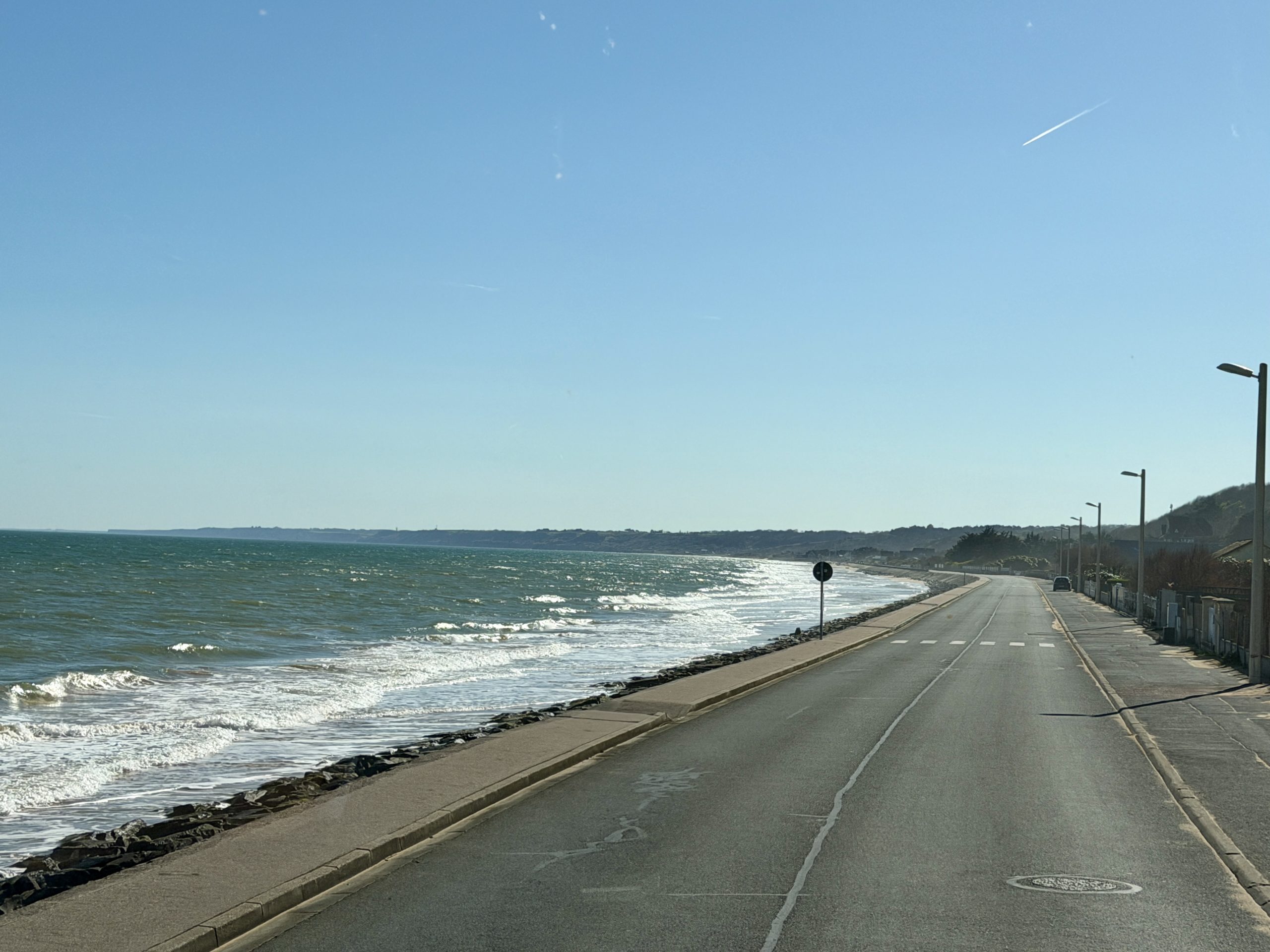
We drove along the road, with the Atlantic to our left, and the vast historic beach stretching before us. In a few minutes, we were there.
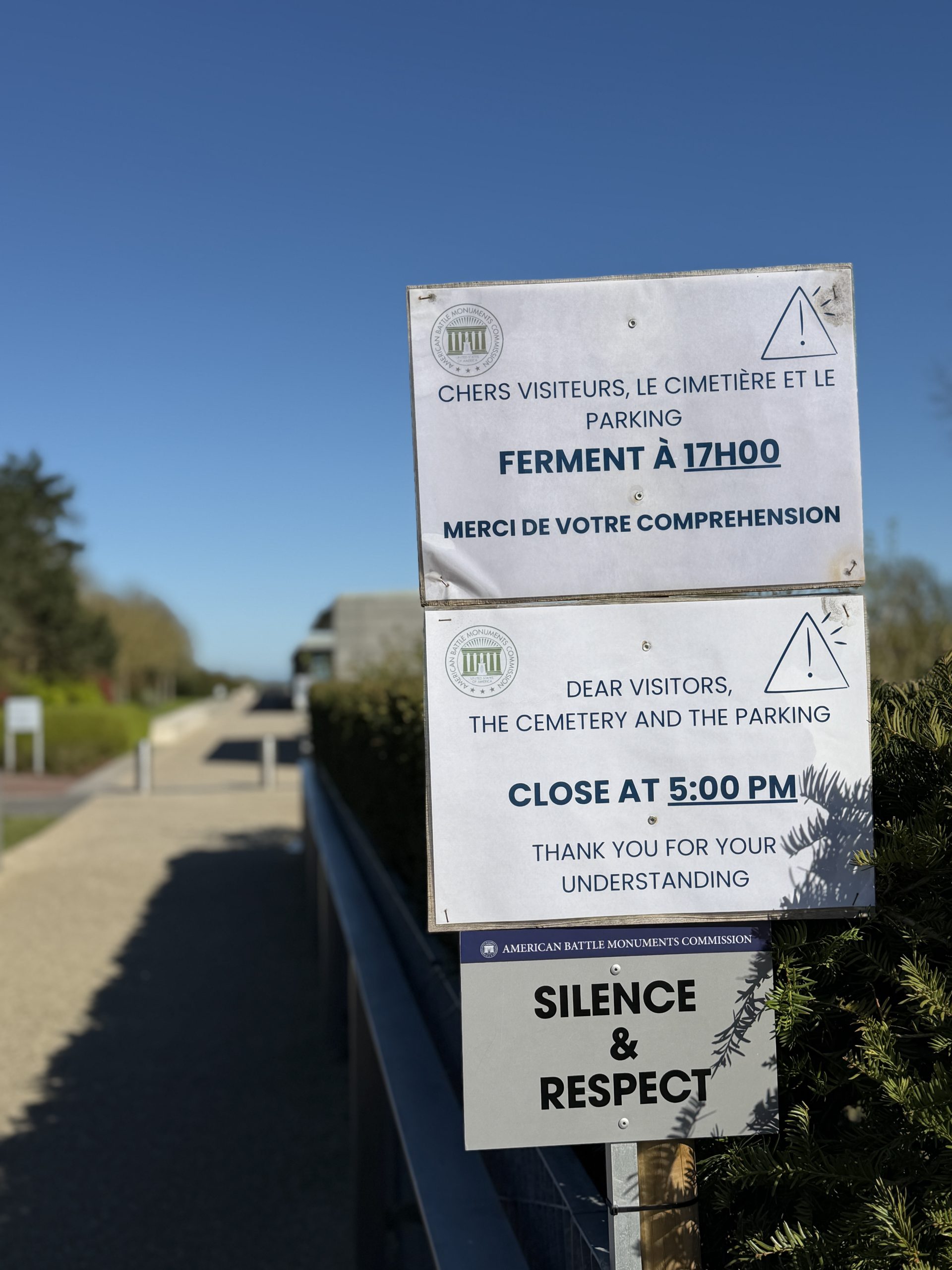
The experience here defies description. A few other places come close — the 9/11 Museum in New York, or the Holocaust Museum in Washington — but this corner of Normandy is so serene, so peaceful, you can’t quite imagine what happened here (unless you’ve seen “Saving Private Ryan,” which, with its intensity and graphic scenes of sudden violence and death, is probably as close to D-Day as you can get without being there.) A short film in the visitor center brings the emotions vividly to life.
And then you walk down the road and round the bend and you see the crosses and the stars and, without quite expecting it, the enormity of what happened here hits you.
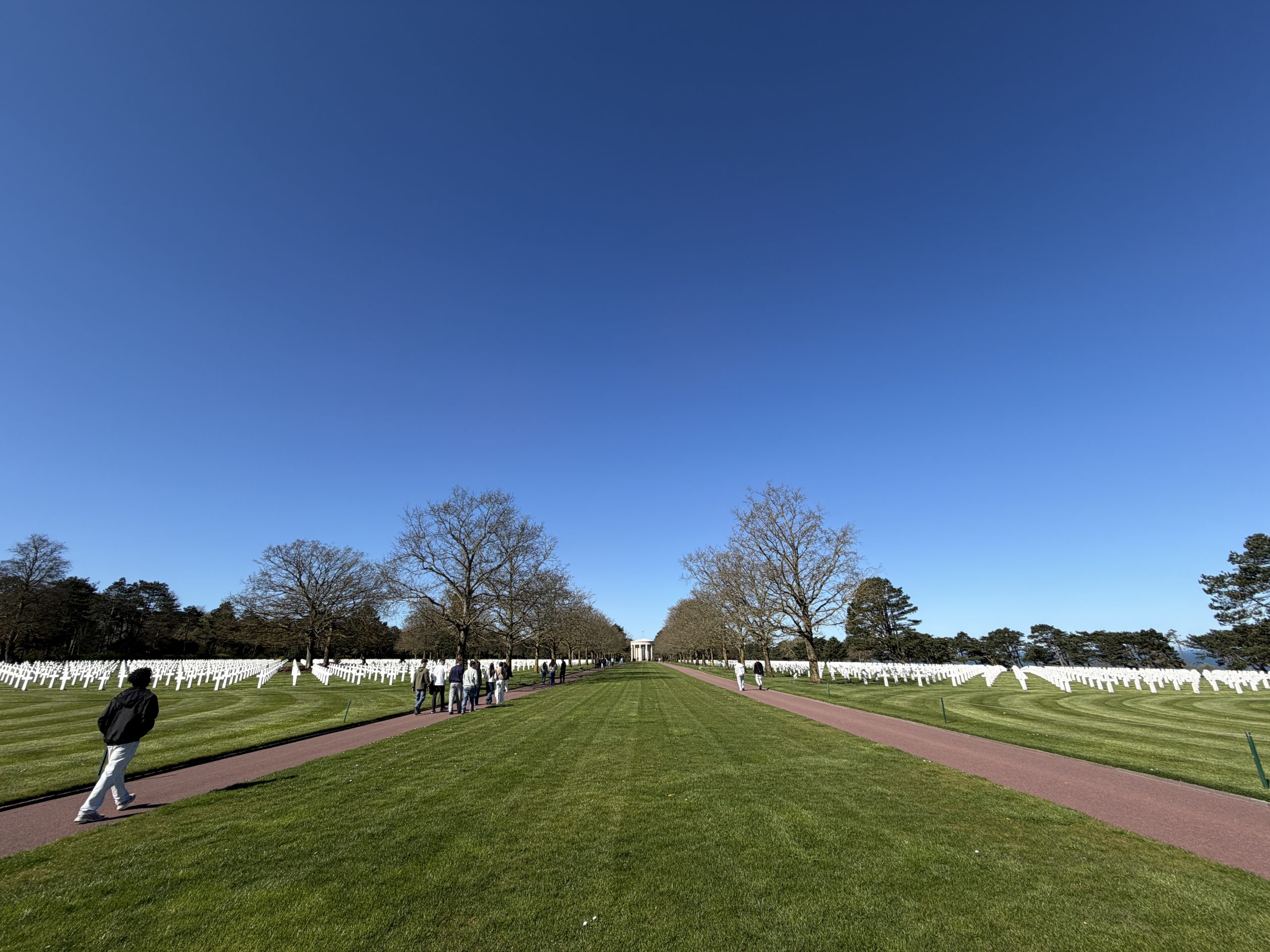
The dead seem to go on forever.
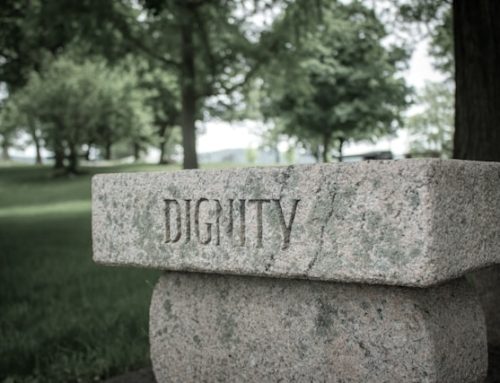
Some 9,000 Americans are buried here. It is a shrine — and it is a reminder. This is a moment in history we cannot forget. Ever.
After a quick lunch, we headed back to Lisieux, praying a rosary for peace along the way. We wanted to spend some quality time with one of the world’s most beloved saints, Therese of Lisieux, the Little Flower.
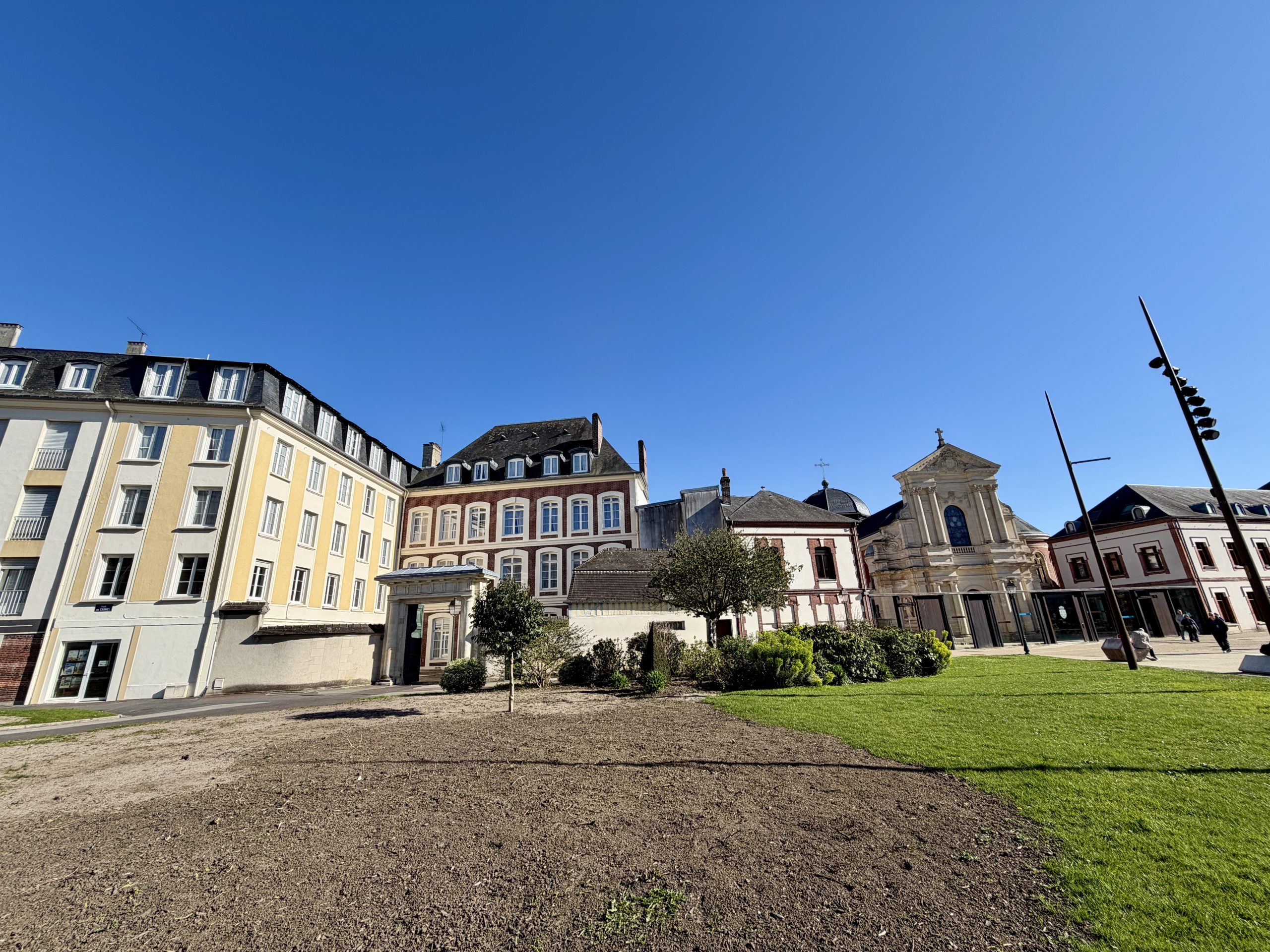
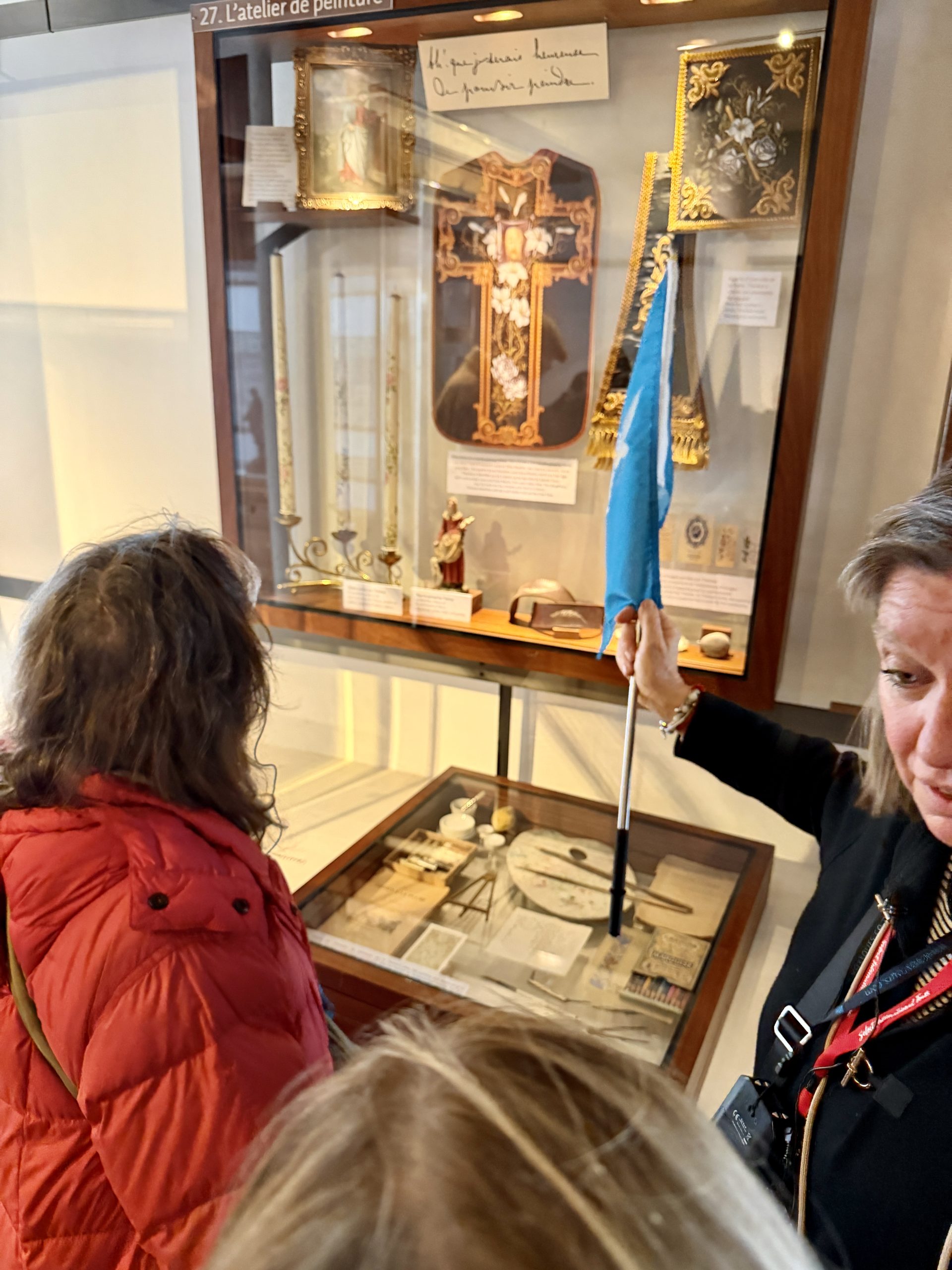
We began with a visit to Carmel, the cloister where she spent the last years of her short life. A museum there has lovingly preserved the doorway to her convent cell — you can actually walk through it — along with writings, photographs and other surprising details that defined her days. (Did you know she designed and painted a miniature chasuble, in tribute to her family?)
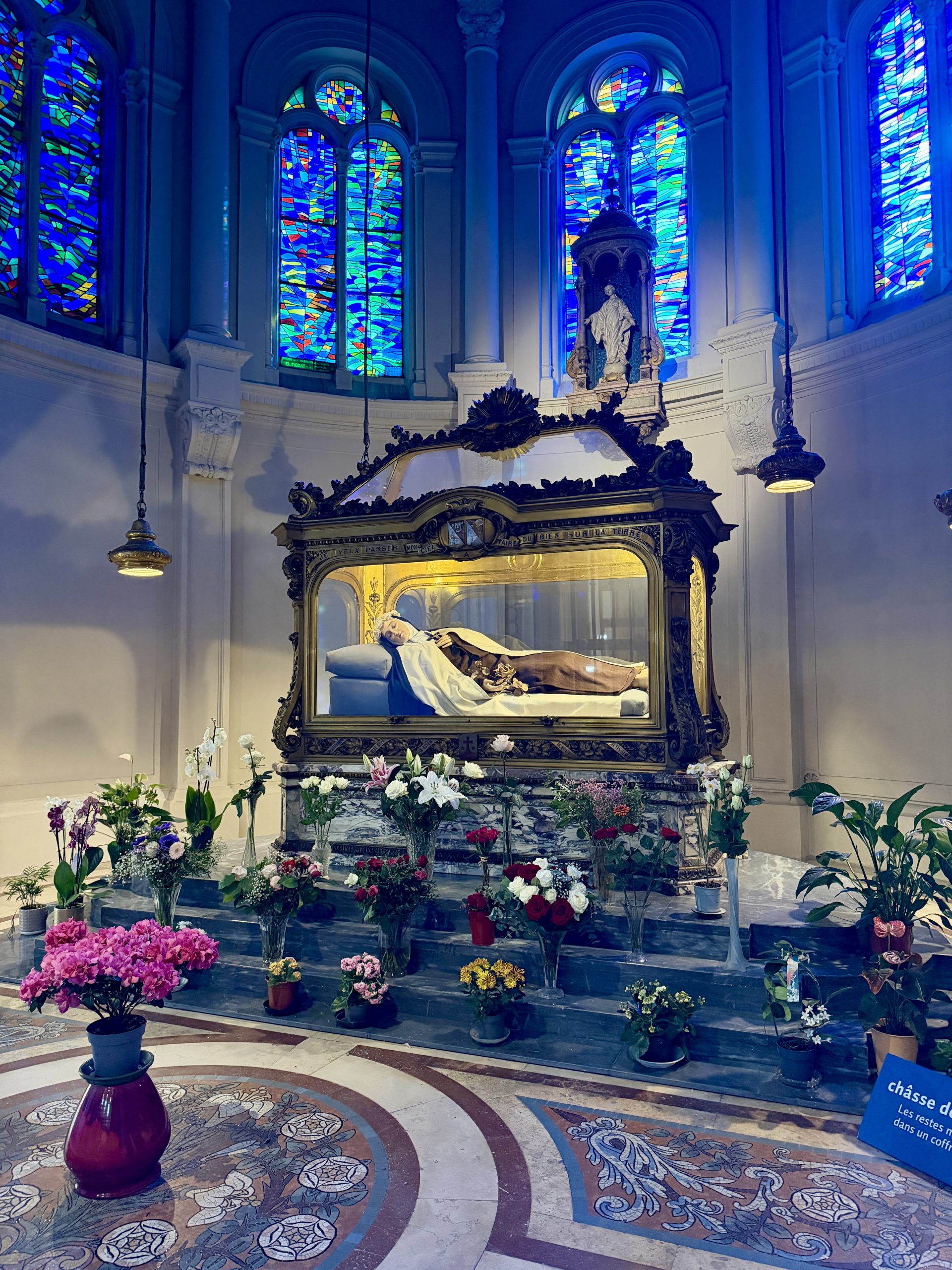
The tour continued with a visit to the part of Carmel where St. Therese is entombed. Her body is not incorrupt. She rests beneath a statue depicting her in eternal sleep.
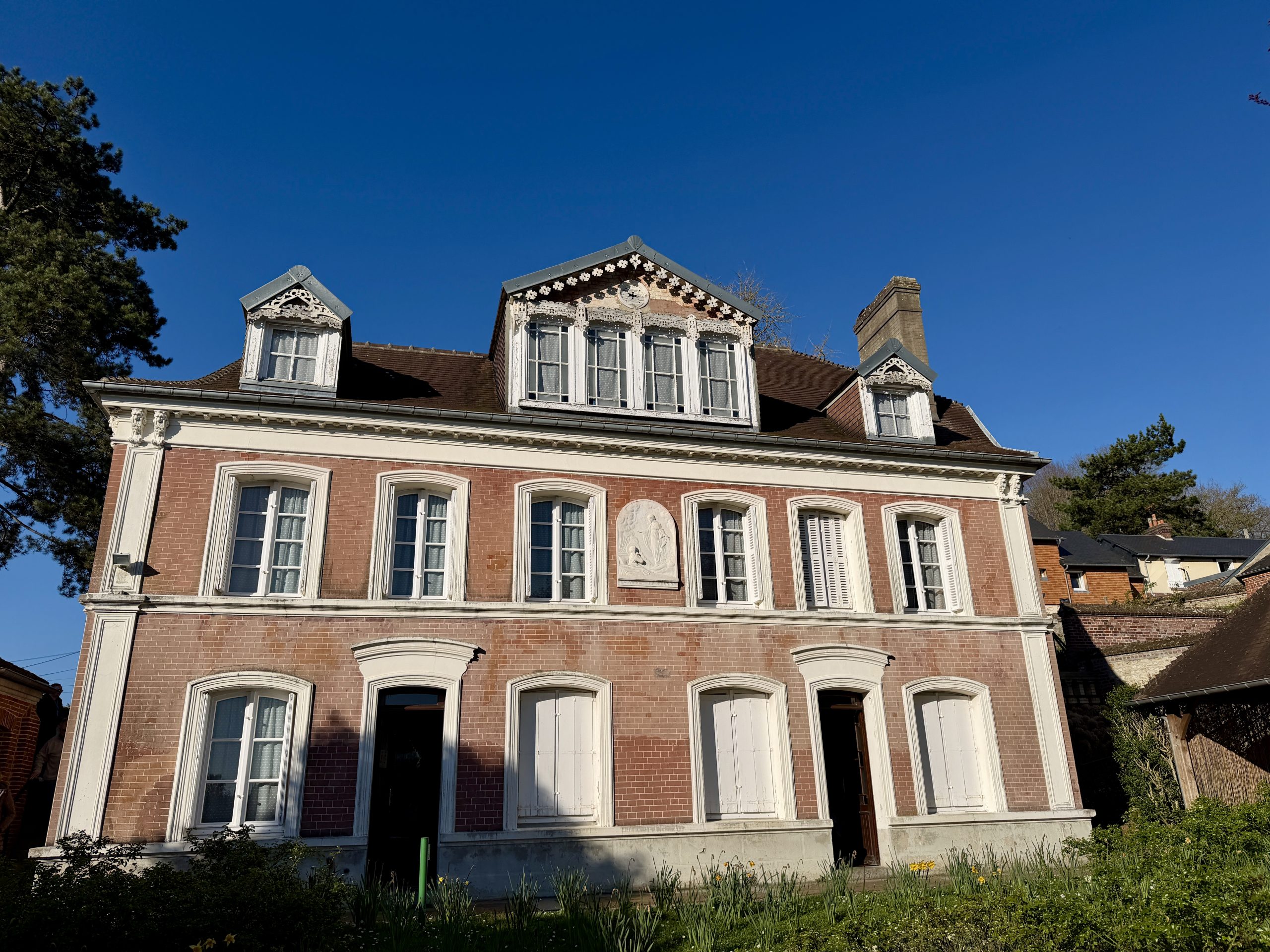
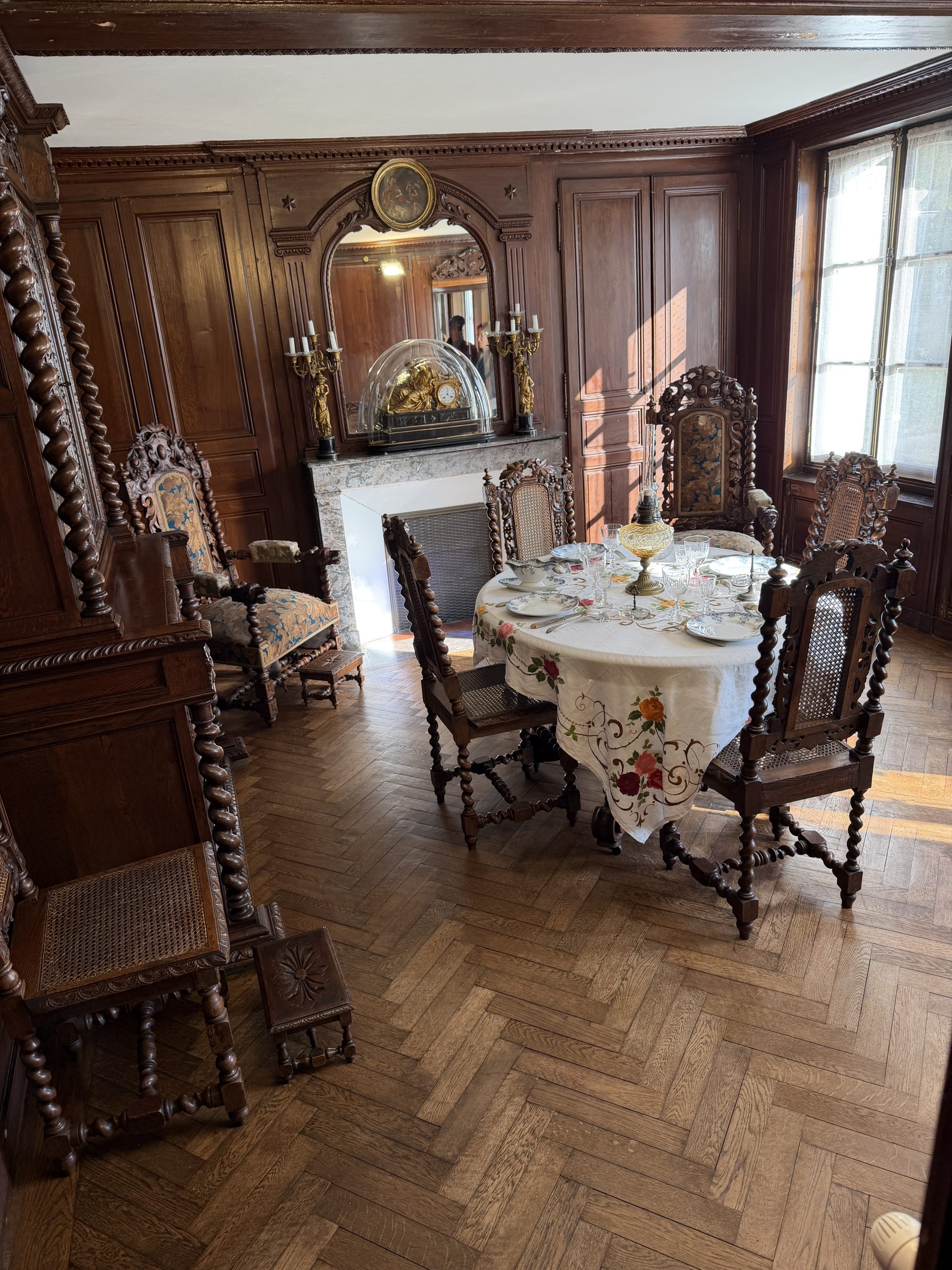
Next stop: the private home of the Martin family, where Therese spent most of her life — and which has been beautifully maintained with some original furniture and artwork.
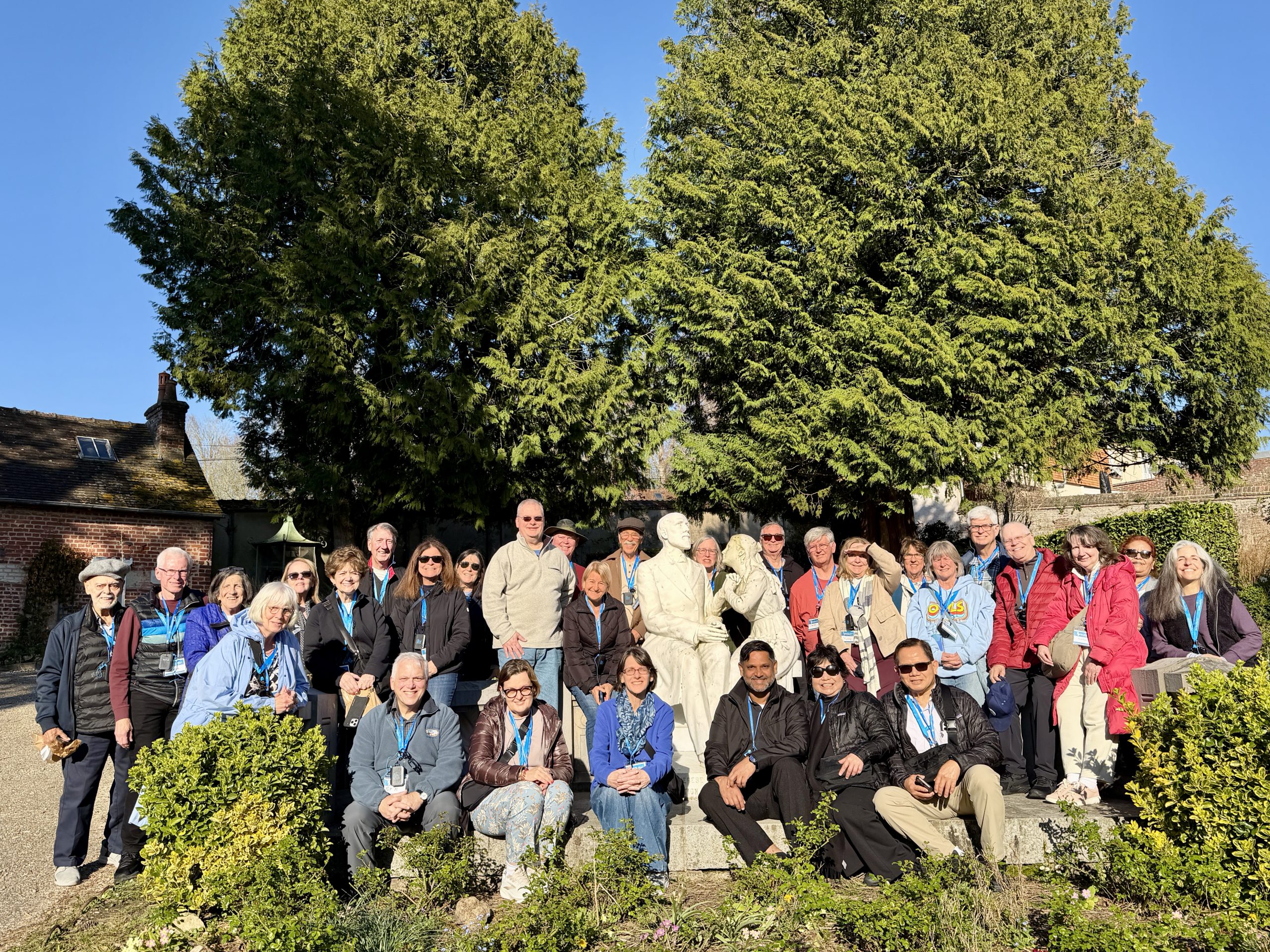
We concluded our tour outside, with our first group photo of the trip, surrounding a statue depicting a young Therese pleading with her father to permit her to enter Carmel at the tender age of 15.
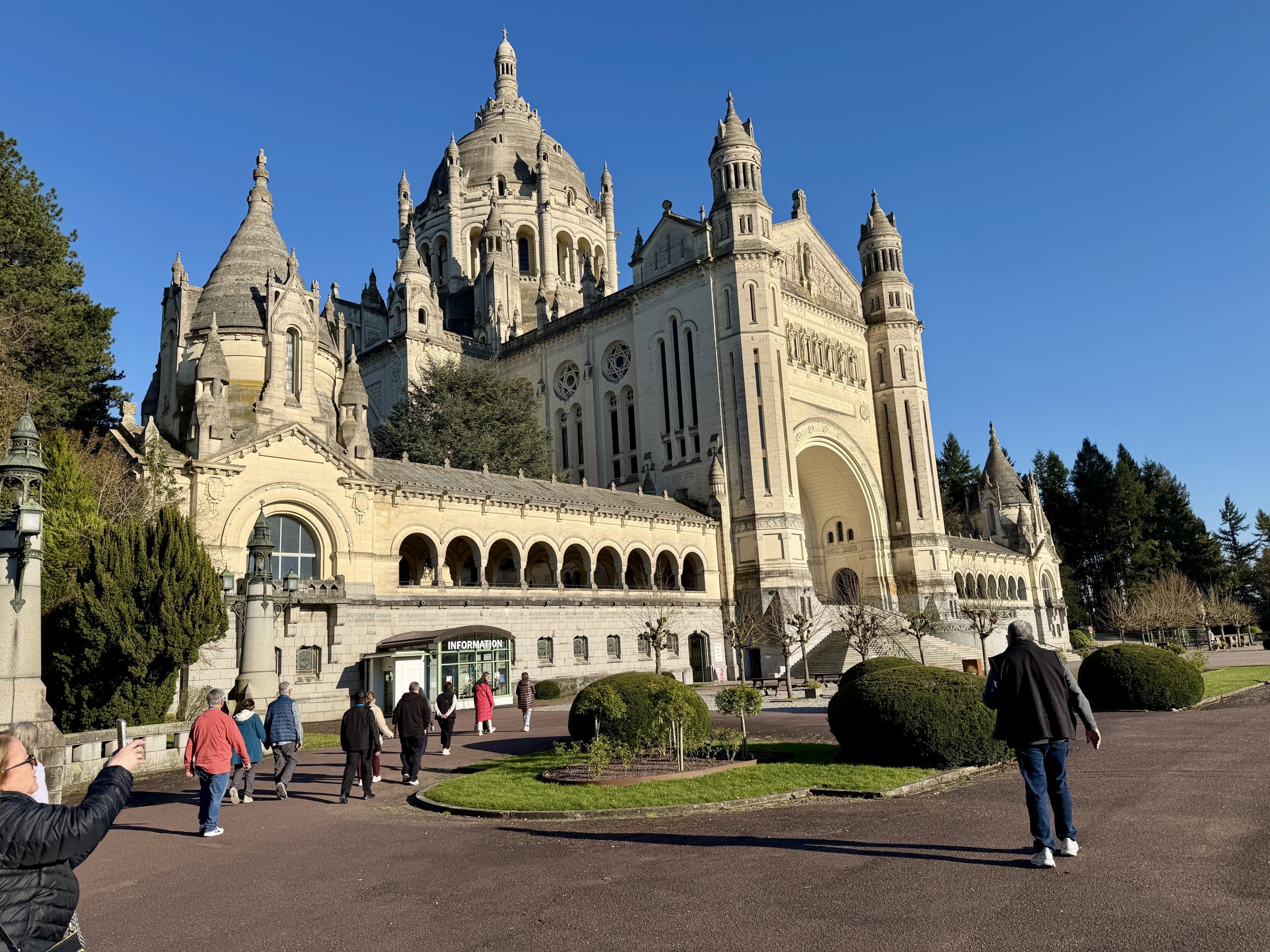
Next, it was on to the Basilica of St. Therese
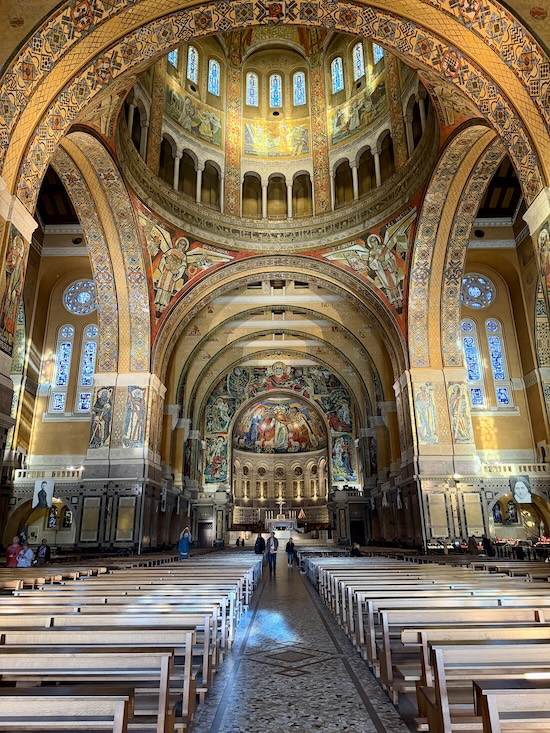
This was an incredible piece of church architecture — with interior and exterior details that can take hours to absorb. Completed in 1954, it has a very modern flavor. We didn’t have a lot of time, but spent about a half hour soaking it all in.
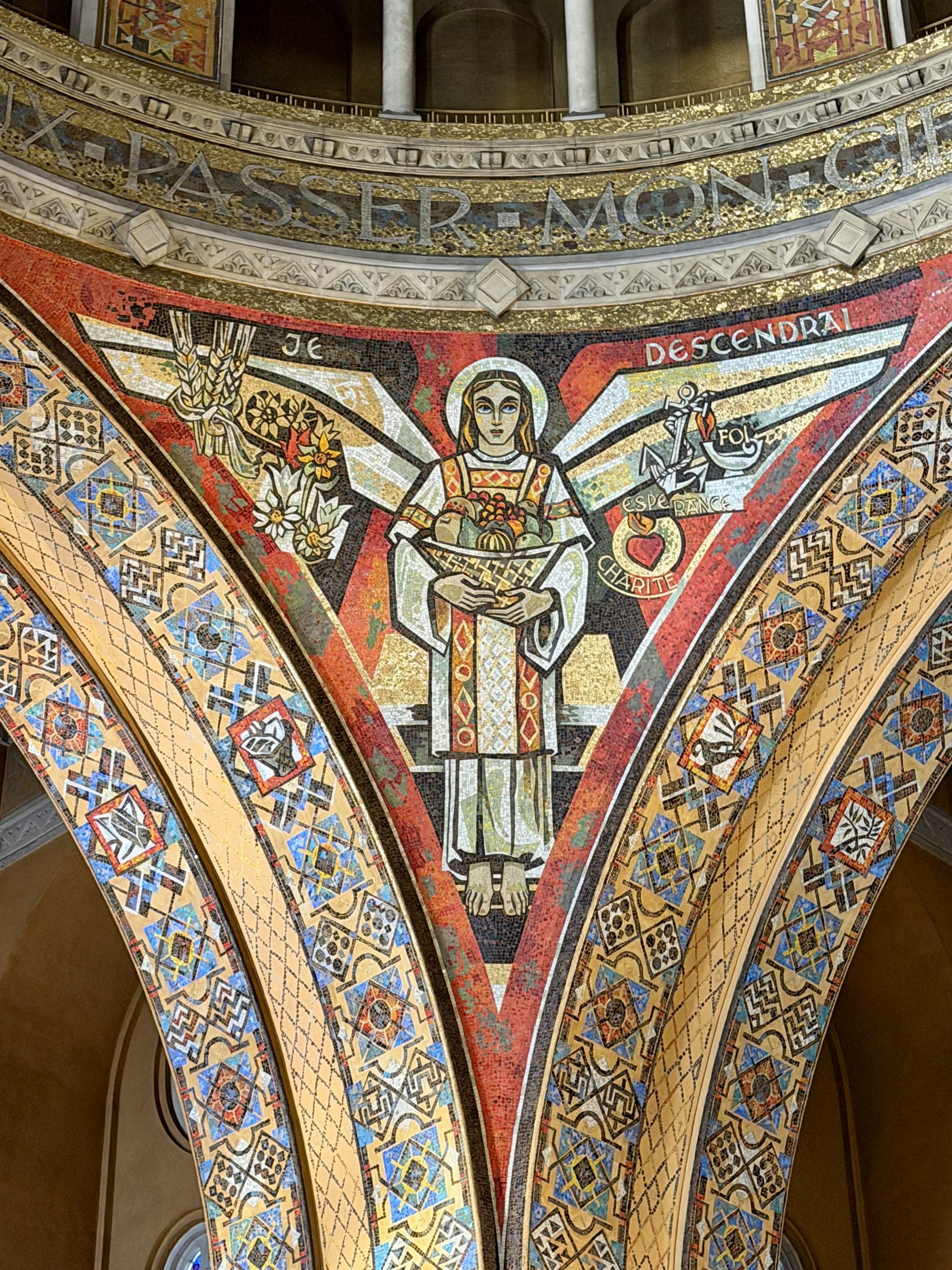
I spotted one corner of the church that depicted a deacon-as-angel, representing charity.
After some time in the basilica, we returned to the hotel, where one of our pilgrims was celebrating his 75th birthday. A cake seemed in order.
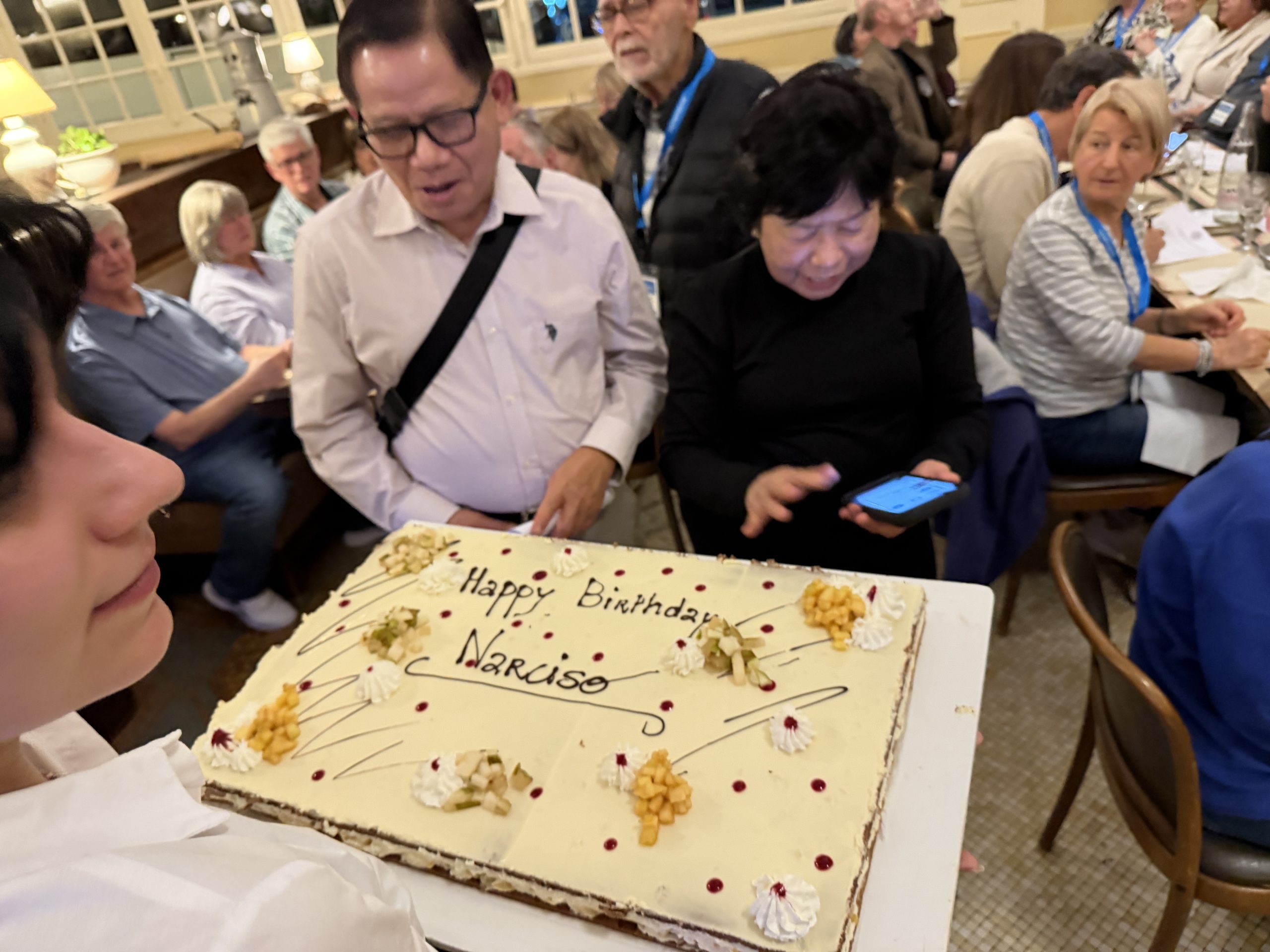
It was a festive (and filling!) end to a long and emotionally draining day.
What a way to begin our journey through France, Spain and Portugal!
At evening’s end, our fantastic tour guide, Teresa Torres, asked the management of the hotel if they had any interesting history of the place to share. As a matter of fact, they do. They pulled off the wall this stunning picture: The Grand Hotel, destroyed by bombings during World War II.
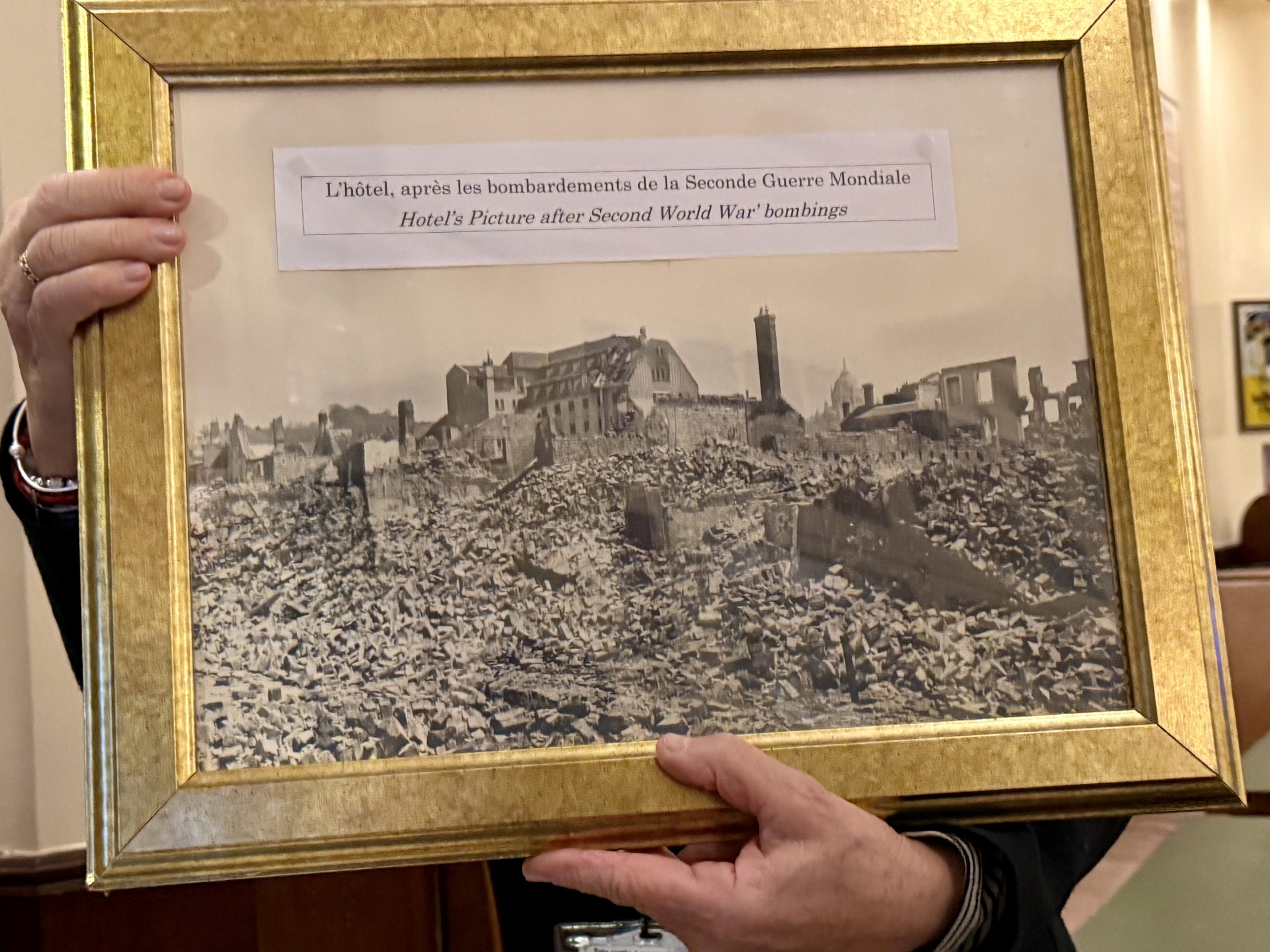
What a comeback.
Tomorrow, we depart Lisieux and head to Paris and Rouen.
À bientôt!