
We’ve heard this passage so often.
“Today, this scripture is fulfilled in your hearing.”
But do we really hear what Jesus is telling us?
This episode comes early in Luke’s Gospel, as Jesus returns to his hometown of Nazareth near the beginning of his public ministry. It is a moment rich with meaning and drama, beginning with where it takes place.
The setting is Nazareth, and it is no accident. Not only is it the place where Christ’s earthly life began, but it is the scene for one of the greatest encounters in all of scripture, the Annunciation.
With that in mind, I would like to propose something: that this episode in the synagogue amounts to nothing less than another Annunciation in Nazareth.
But instead of an angel, the herald this time is Christ himself.
What he has to say matters not only to the people in that synagogue in a corner of Galilee.
It matters to us here and now.
So what, exactly, is Jesus announcing?
First, he is announcing history. He is declaring that a vital and prophetic passage from scripture is being fulfilled. Something momentous is happening.
This reading ends before Luke can tell the rest of the story. But the gospel goes on to explain that the people in the synagogue were so offended by what Jesus said, they tried to kill him.
Contrast that with the other Annunciation, when Mary heard something unexpected and, frankly, incredible. And in response, she said, “Yes.” May it be done unto me according to your Word. She believed the unbelievable and trusted God.
And the rest is history.
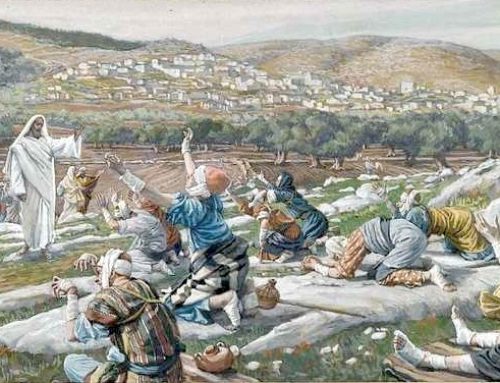
Secondly, in the synagogue Jesus is announcing healing – the restoration of sight to the blind. Like the other Annunciation, this is miraculous.
But what Christ announces is more than the promise of 20/20 vision. He brings clarity. Understanding. Illumination. Jesus is the light of the world. He helps us to see what we have been missing.
Thirdly, and most importantly, Jesus announces hope.
There is abundant Good News here. The possibility of a better life. Liberty. Freedom from whatever has been keeping us in chains. A new beginning.
We’re reminded of the words of the angel to Mary. “He will rule over the house of Jacob forever and his kingdom will have no end. Nothing will be impossible for God.”
History, healing, hope.
That is what Jesus is announcing — displaying with both courage and conviction the humbling power of God’s Word.
Which is precisely why we are hearing it this weekend.
This Sunday is “Word of God Sunday,” established by Pope Francis a few years ago to celebrate the importance of scripture. It’s a good opportunity to reflect on the gift we have been given this year, as we hear over the coming weeks and months the Gospel According to St. Luke.
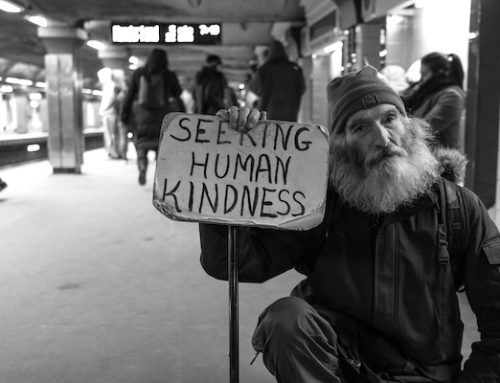
It’s a Gospel with a message for all time, and for our time – and it brings Good News for a particular audience: the forgotten, the neglected, the outcast, the poor.
Luke is the only evangelist who was not Jewish and much of his beautiful gospel is about people who were, like him, outsiders.
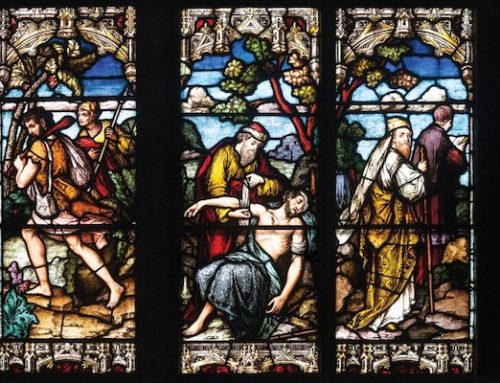
So it is Luke who records the story of a Samaritan who is good, who helps a stranger by the side of the road and who brings us the answer to the question, “Who is my neighbor?”
It is Luke who shares the parable of the rich man who stepped over Lazarus, ignored his poverty, and paid the ultimate price.
And as we heard just a few weeks ago, it is Luke who points out that the Messiah was born in a stable, because the world had no room for him.
The cumulative effect is powerful and it is provocative. It should be.
Pope Francis said:
“The word of God changes us. It penetrates our soul like a sword. It shakes us up. It urges us to act, to combine worship of God and care for man…to make us go forth and encounter others, drawing near to their wounds.”
Those wounds are deep. If you want to see them, you don’t have to look far.
We see it in the apocalyptic hellscape in California.
In the brutal destruction of Gaza, now reduced to rubble.
We see it in the ongoing battlefield that is Ukraine.
We see it and hear it in the raging debates about what is happening in Washington, and in the anxieties from so many people about what the future will bring.
Closer to home, we see them in those we love, who may be worried about a job, about health, about addiction or just how to make it through another day.
As in Jesus’s time, we live in a broken, troubled, anxious world.
A world facing a pivotal moment of history.
A world that needs healing.
A world that cries out for hope.
As this encounter in the synagogue reminds us: Christ is that hope. He is the one we sang about, calling on him to ransom us from captivity as we “mourn in lonely exile here.” Emmanuel. God with us.
The Holy Father once put it this way:
“The Word that became flesh wishes to become flesh in us. His word…plunges us into life, into everyday life, into listening to the sufferings of others and the cry of the poor, into the violence and injustice that wound society and our world. It challenges us, as Christians, not to be indifferent, but active, creative Christians, prophetic Christians.”
It challenges us to change ‑ to be involved, to convert our hearts, and to set about converting the world by how we live and how we love.
And it challenges us, also, to accept this overwhelming truth:
Annunciations don’t happen only in Nazareth.
They are all around us. Listen for them. Look! Be aware of all the Annunciations that God makes in our lives, all the times he makes himself known. It may be at work. At home. Around the dinner table. At the airport. With friends. Among strangers.
All the times he calls us to conversion and compassion.
All the times he pricks our conscience and cries out for justice.
All the times he asks us to surrender, to love, to trust.
The times he challenges us to be merciful. To be generous. To be humble.
All the times he asks us to continue what Christ began.
The Annunciations continue! God announces himself to us in ways large and small — through the power of his Word, and his presence in our everyday lives.
Are we paying attention?
Let us we pray to be open to God’s presence in our world — so that, in doing that, God can work through us to change the world.