
Photo by Tim Foster on Unsplash
When Americans are asked to check a box indicating their religious affiliation, 28% now check ‘none.’
A new study from Pew Research finds that the religiously unaffiliated – a group comprised of atheists, agnostic and those who say their religion is “nothing in particular” – is now the largest cohort in the U.S. They’re more prevalent among American adults than Catholics (23%) or evangelical Protestants (24%).
Back in 2007, Nones made up just 16% of Americans, but Pew’s new survey of more than 3,300 U.S. adults shows that number has now risen dramatically.
Researchers refer to this group as the “Nones.”
But dig deeper, and there are some significant nuances to this group:
In our latest data, 17% of “nones” identify as atheist, 20% say they are agnostic and 63% choose “nothing in particular.”
When asked directly why they are not religious, two-thirds of “nones” say they question a lot of religious teachings or don’t believe in God.
Many also bring up criticisms of religious institutions or people, including 47% who say that one extremely or very important reason why they are not religious is that they dislike religious organizations. And 30% say bad experiences they’ve had with religious people help explain why they are nonreligious.
Most “nones” say they were raised in a religion, usually Christianity. Yet today, they tend to be disconnected from religious institutions. Not only have they shaken off religious labels, they also have largely shaken off involvement in churches, synagogues, mosques and other religious organizations.
For example, fully 90% of religious “nones” say they seldom or never go to religious services…
…The vast majority of “nones” say it is possible to be moral and have good values without believing in God. Most religiously affiliated people agree, though by a smaller margin.
When asked how they decide between right and wrong, 83% of “nones” say the desire to avoid hurting other people is a key factor. And 82% of “nones” say logic and reason are extremely or very important when they decide between right and wrong.
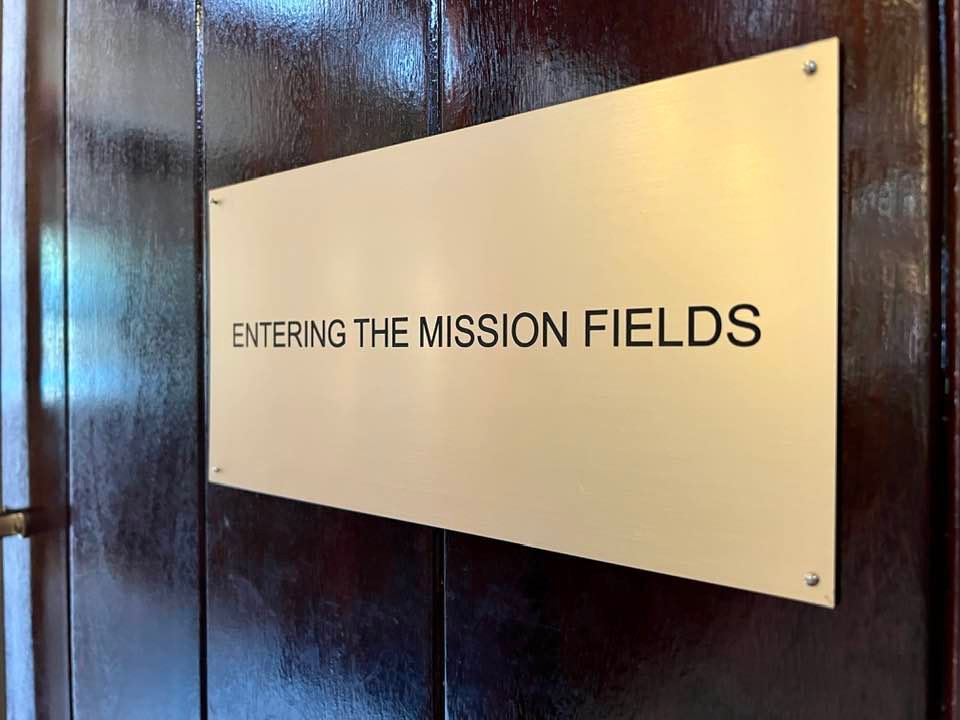
I’m reminded of this sign I saw hanging on the inside door of a Catholic church in St. Augustine, Florida — a reminder that there is work to do outside the walls of the church!