
From NCR:
Nearly four years since Pope Francis changed canon law to allow women to be installed as lectors and acolytes, some dioceses are now moving ahead with ceremonies to formally recognize women in those instituted lay ministries.
“I waited long enough to get any direction from the USCCB,” Bishop John Stowe said, referring to the U.S. Conference of Catholic Bishops, which has yet to promulgate new guidelines and norms on the expanded lay ministries.
Stowe installed three women as acolytes during Mass on Nov. 24 at the Cathedral of Christ the King in his Diocese of Lexington, Kentucky. Following his homily, Stowe imparted a blessing onto the acolytes, who typically assist priests in distributing Communion and preparing the altar during Mass.
“It was a nice day to recognize the ministry that these women have already accomplished,” Stowe told National Catholic Reporter. “I would have liked to have done it sooner.”
Diane Zekind, one of the acolytes blessed by the bishop, said it was fulfilling to be recognized for a ministry that she has been performing at her parish, St. Clare Church in Berea, Kentucky, for 14 years.
“It was an awesome moment,” Zekind told NCR. “I think it was a great way to set an example for others to be involved with liturgical ministries, that women can serve in a number of areas, and how others should be involved with it.”
At least one other diocese has installed women as lectors and acolytes in the absence of guidance from the U.S. bishops.
On Aug. 27, the San Antonio Archdiocese held a special Mass at Our Lady’s Chapel in Assumption Seminary to install five women in those ministries. The women had completed formation training through the archdiocese’s Lay Ministry Institute.
“Your role is crucial in helping the community encounter Christ,” San Antonio Archbishop Gustavo García-Siller said during his homily in which he emphasized the importance of those ministerial roles in the life of the local church.
“Through your proclamation of the Scriptures and your service at the altar, you will make the presence of Christ known, inviting the faithful to a deeper communion with Him,” the archbishop said.
Though the pope allowed for women to be formally installed as acolytes and lectors with his motu proprio letter Spiritus Domini in January 2021, most dioceses have been waiting for the U.S. bishops’ conference to update its norms to reflect the changes in canon law.
So what, exactly, does the acolyte do? From the General Instruction of the Roman Missal (GIRM):
187. The duties that the acolyte may carry out are of various kinds and several may coincide. Hence, it is desirable that these duties be suitably distributed among several acolytes. If, however, only one acolyte is present, he should perform the more important duties while the rest are to be distributed among several ministers.
The Introductory Rites
188. In the procession to the altar, the acolyte may carry the cross, walking between two ministers with lighted candles. Upon reaching the altar, the acolyte places the cross upright near the altar so that it may serve as the altar cross; otherwise, he puts it in a worthy place. Then he takes his place in the sanctuary.
189. Through the entire celebration, the acolyte is to approach the priest or the deacon, whenever necessary, in order to present the book to them and to assist them in any other way required. Thus it is appropriate, insofar as possible, that the acolyte occupy a place from which he can conveniently carry out his ministry either at the chair or at the altar.
The Liturgy of the Eucharist
190. If no deacon is present, after the Prayer of the Faithful is concluded and while the priest remains at the chair, the acolyte places the corporal, the purificator, the chalice, the pall, and the Missal on the altar. Then, if necessary, the acolyte assists the priest in receiving the gifts of the people and, if appropriate, brings the bread and wine to the altar and hands them to the priest. If incense is used, the acolyte presents the thurible to the priest and assists him while he incenses the gifts, the cross, and the altar. Then the acolyte incenses the priest and the people.
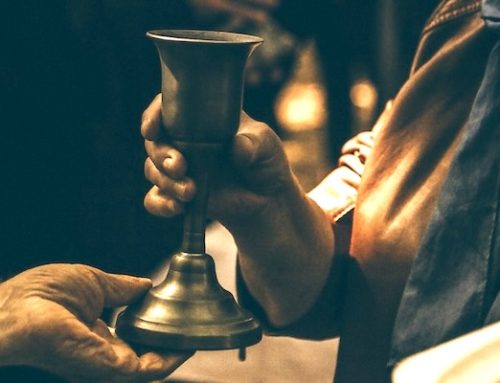
191. A duly instituted acolyte, as an extraordinary minister, may, if necessary, assist the priest in giving Communion to the people. If Communion is given under both kinds, when no deacon is present, the acolyte administers the chalice to the communicants or holds the chalice if Communion is given by intinction.
192. Likewise, when the distribution of Communion is completed, a duly instituted acolyte helps the priest or deacon to purify and arrange the sacred vessels. When no deacon is present, a duly instituted acolyte carries the sacred vessels to the credence table and there purifies, wipes, and arranges them in the usual way.
193. After the celebration of Mass, the acolyte and other ministers return in procession to the sacristy, together with the deacon and the priest in the same way and order in which they entered.
Also worth noting: for exposition of the Blessed Sacrament, the acolyte may remove the host from the tabernacle and place it in the monstrance, and then return it to the tabernacle after Benediction.