And just like that, we were in the bus waving goodbye to Fatima.
Teresa passed out tissues as we bid farewell to this little slice of heaven-on-earth and repeated a familiar Portugese song of praise and love for Our Lady.
Our next stop: Lisbon and the site of a Eucharistic miracle, the church of St. Stephen.
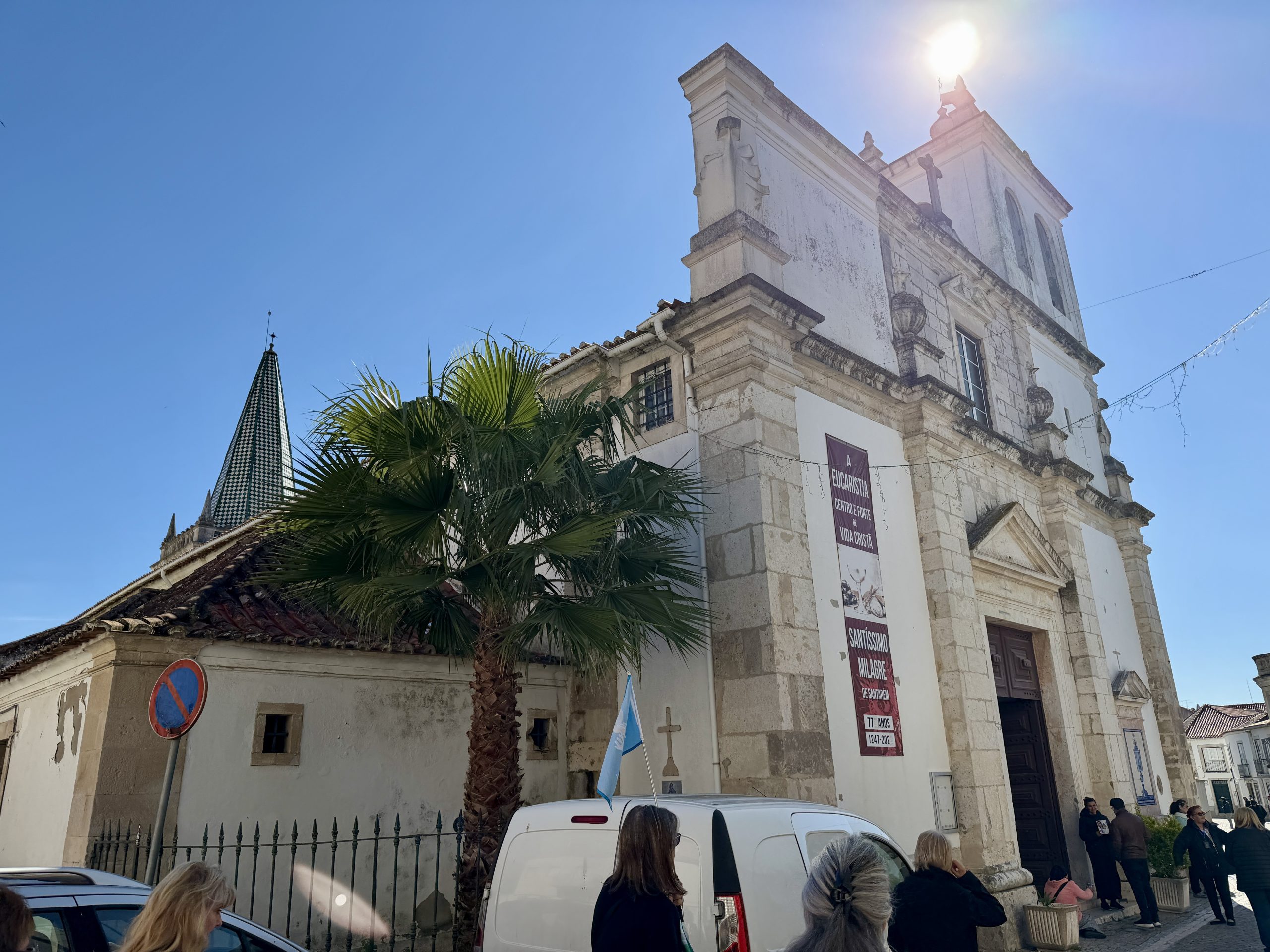
It was the year 1226 (or 1247, according to some chroniclers) when, in Santarém, there lived a poor woman, whom her husband mistreated a lot, going astray with another woman. Tired of suffering, she went to ask a witch who, with her spells, could put an end to her sad fate. She promised her this effective remedy, but she would need a consecrated host.
After hesitating, the poor woman went to the Church of Saint Stephen, confessed and, having received the Sacred Particle, with great caution she took it out of her mouth, wrapping it in the veil. She quickly left the church, heading towards the witch’s house. But then, without her noticing, blood began to flow from the veil, which, seen by several people, led them to ask the unfortunate woman what injuries she had. Extremely confused, she ran home and enclosed the Miraculous Host in a chest. The day passed, however, and in the afternoon her husband returned. In the middle of the night, they both woke up and saw the whole house shining. From the ark came mysterious rays of light. Once the man was informed of the woman’s sinful act, they knelt down and spent the rest of the night in worship.
As soon as day broke, the parish priest was informed of the supernatural prodigy. Once the news spread, half the population of Santarém rushed to contemplate the Miracle. The Sacred Particle was then taken, processionally, to the Church of Saint Stephen, where it was preserved inside a kind of ostensory made of wax. But, after a few years (in 1340), when the tabernacle was opened to expose the worship of the faithful, as was customary, the wax was found torn into pieces and, with astonishment, it was discovered that the Sacred Particle was enclosed in a crystal ambula, miraculously appeared. This small ambula was placed in a silver-gilt monstrance, where it is still located today.
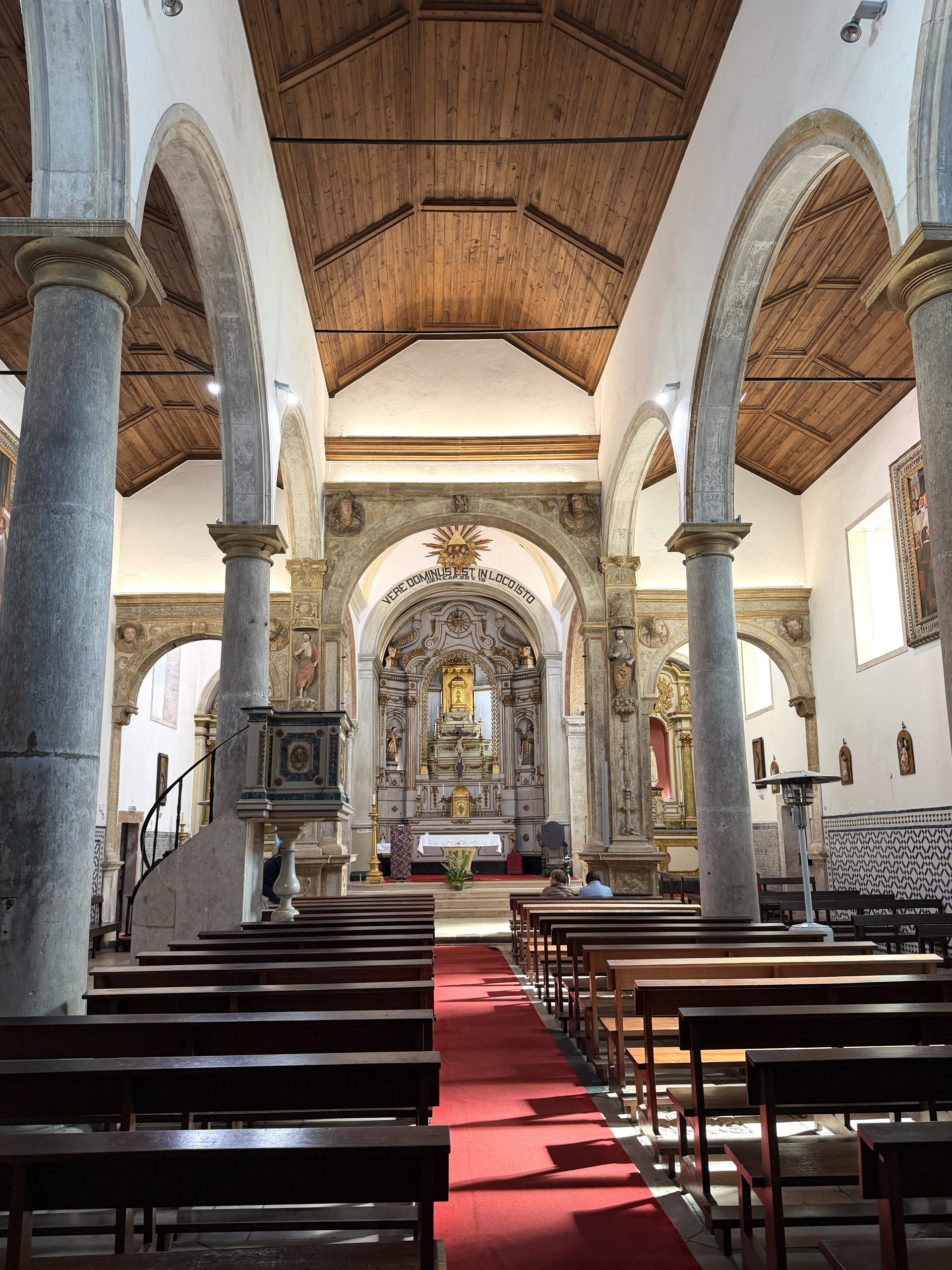
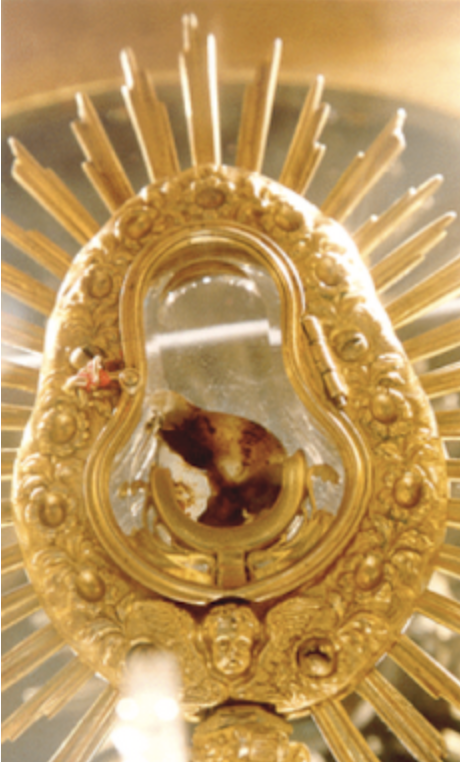
You can see the tabernacle where the host is contained — high above the main altar — and can climb a ladder to get a better look.
This shot is from a website devoted to Eucharistic miracles.
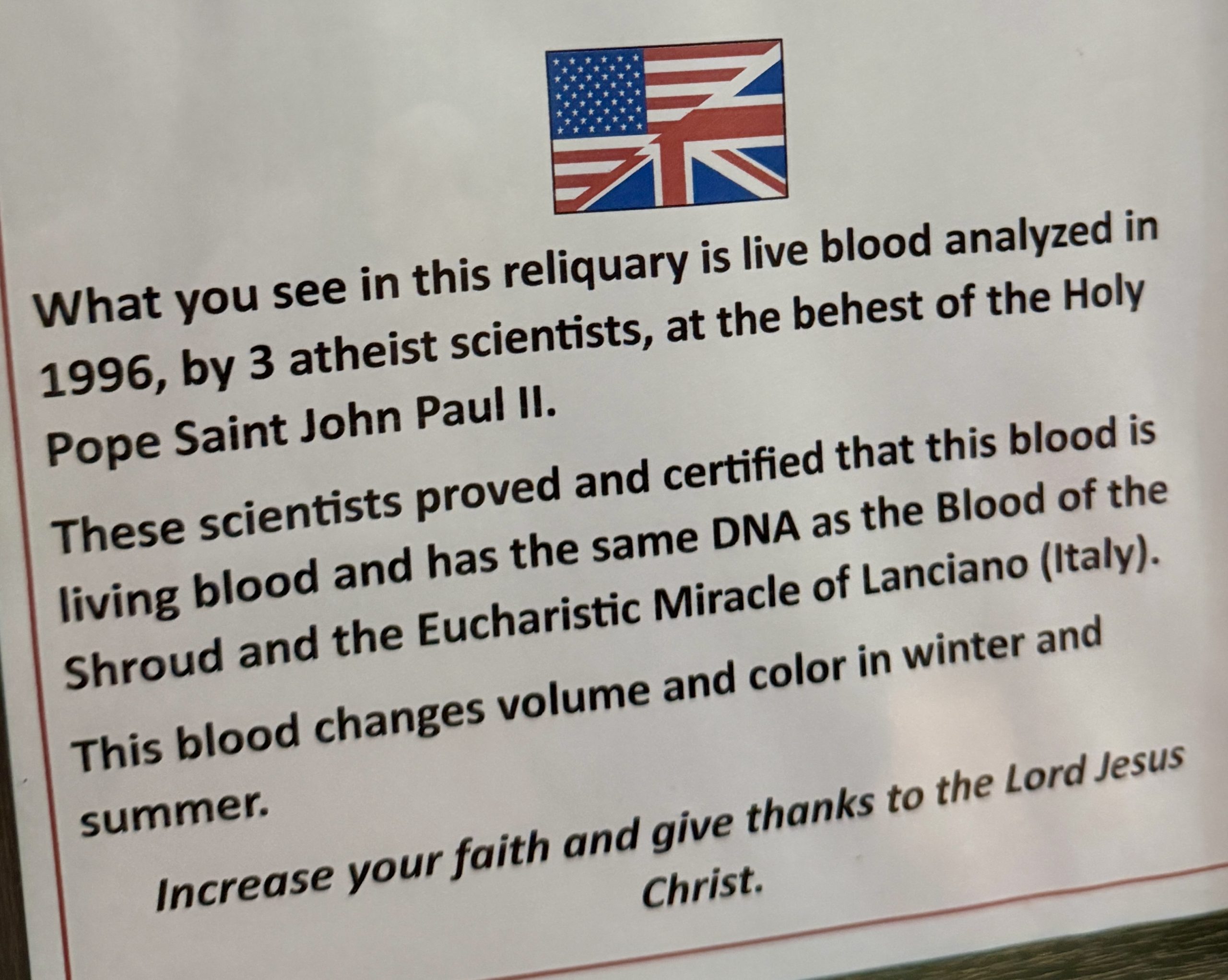
This plaque was positioned beside the tabernacle:
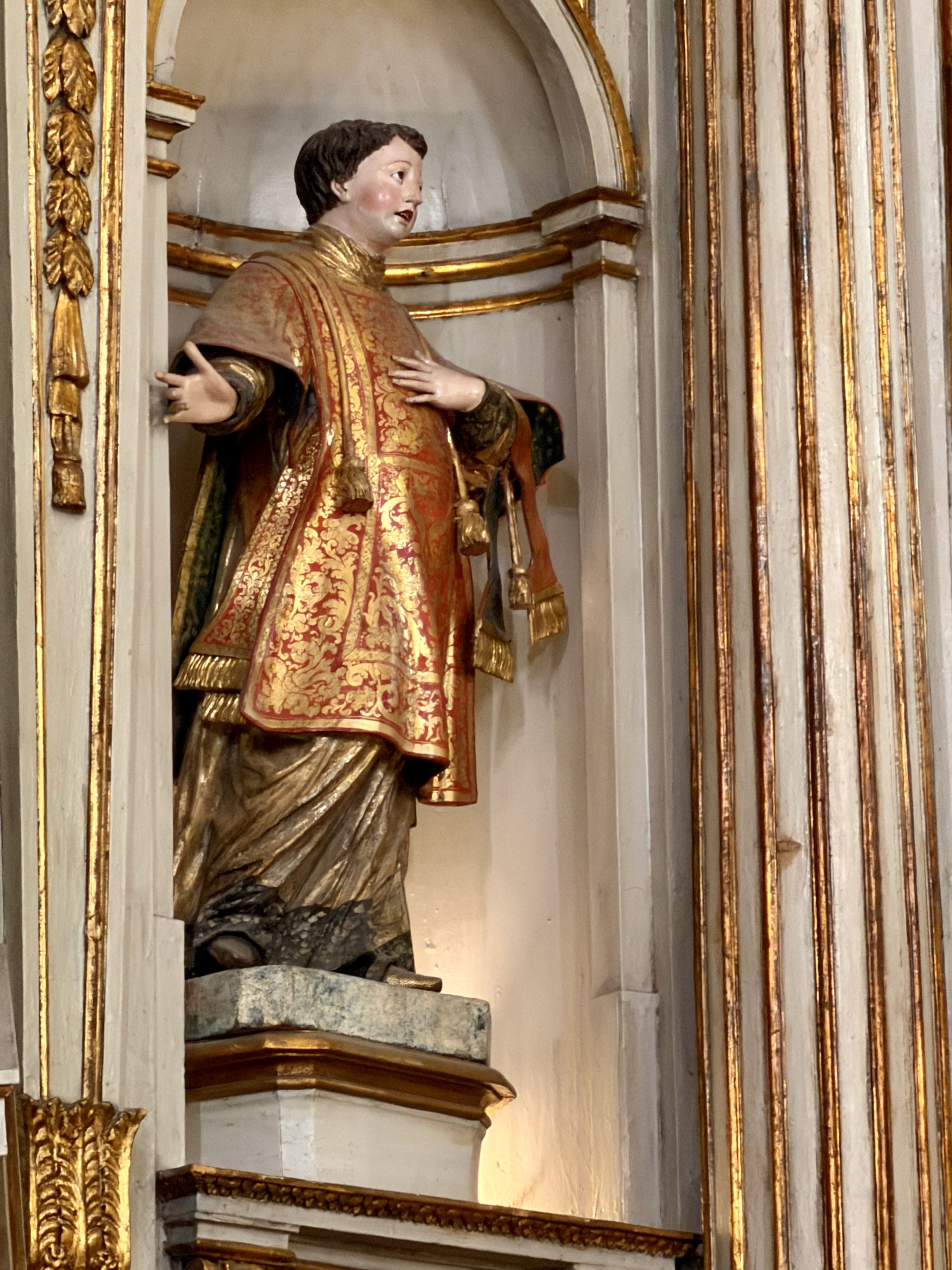
Since the church is dedicated to St. Stephen, there’s a prominent statue of the deacon-saint in the sanctuary.
Also, there was a relic behind the altar that contains what is claimed to be a small piece of bone of the saint.
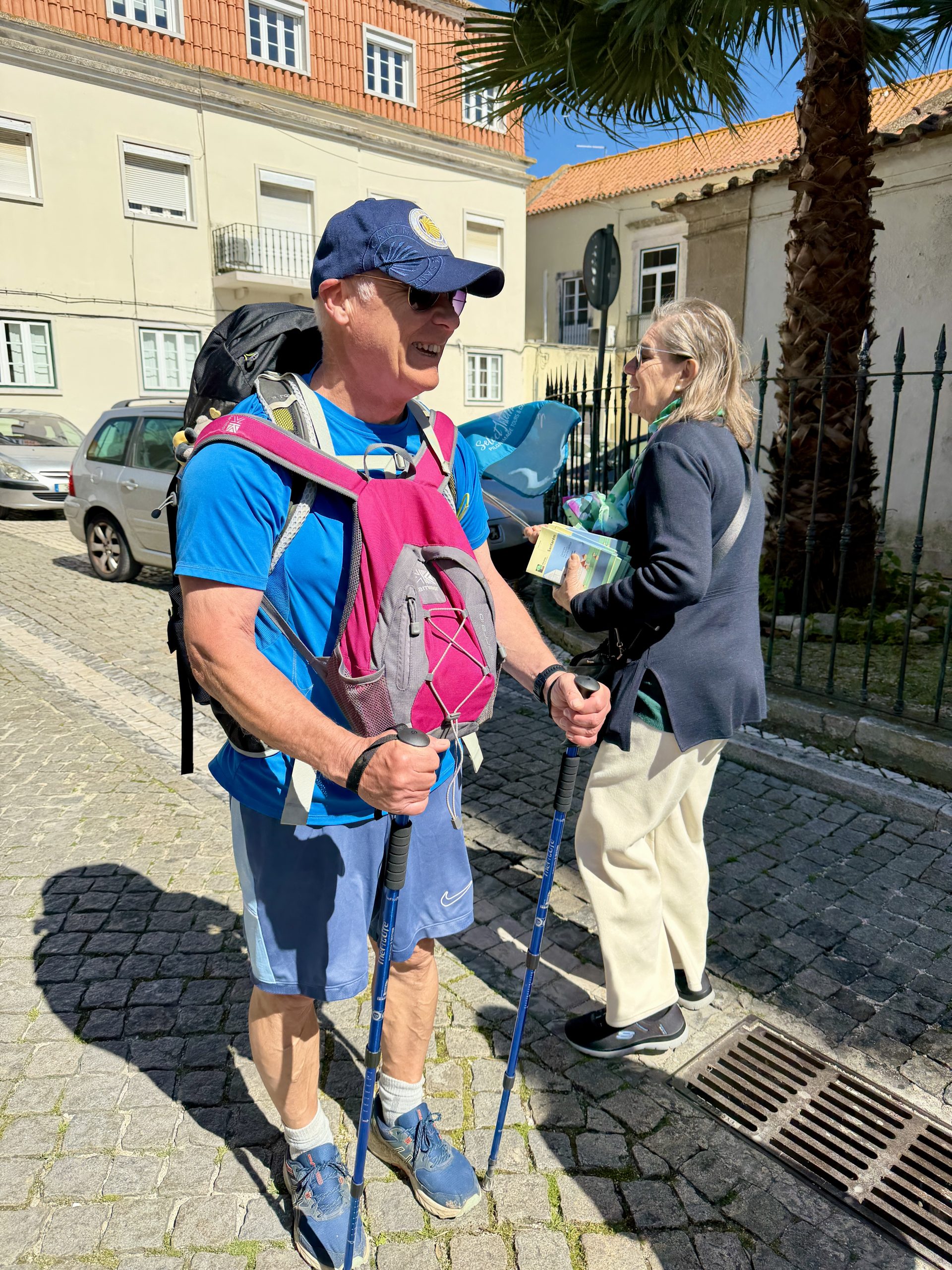
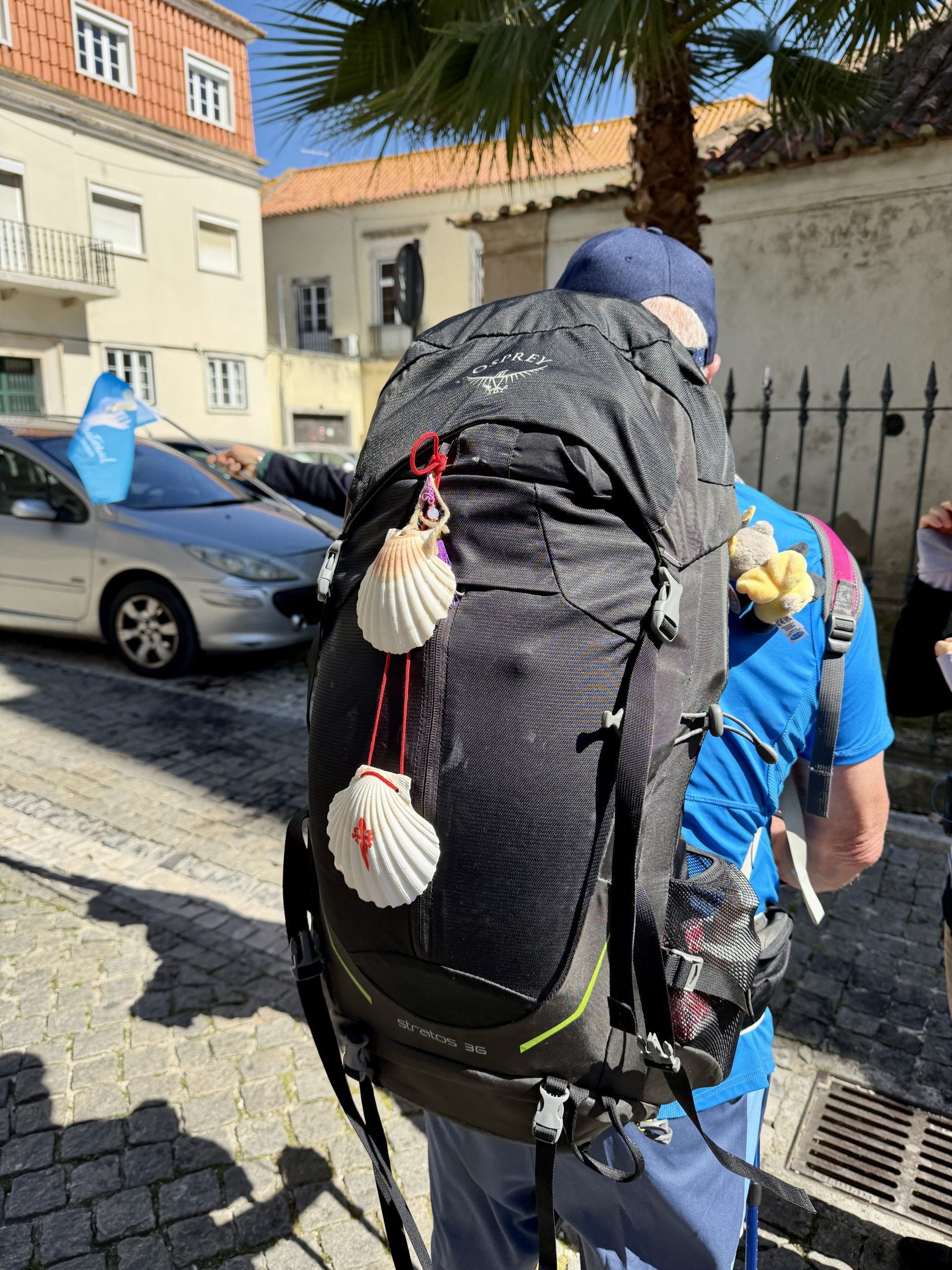
We headed out the church to return to our bus. But along the way, we ran into another pilgrim — a man walking the famous Camino de Santiago and headed toward the tomb of St. James. He paused to ask Teresa if he was going the right way. He was worried he’d followed the wrong signs. No worries, she said, you’re on the right path. Indeed!
Now that’s a real pilgrim.
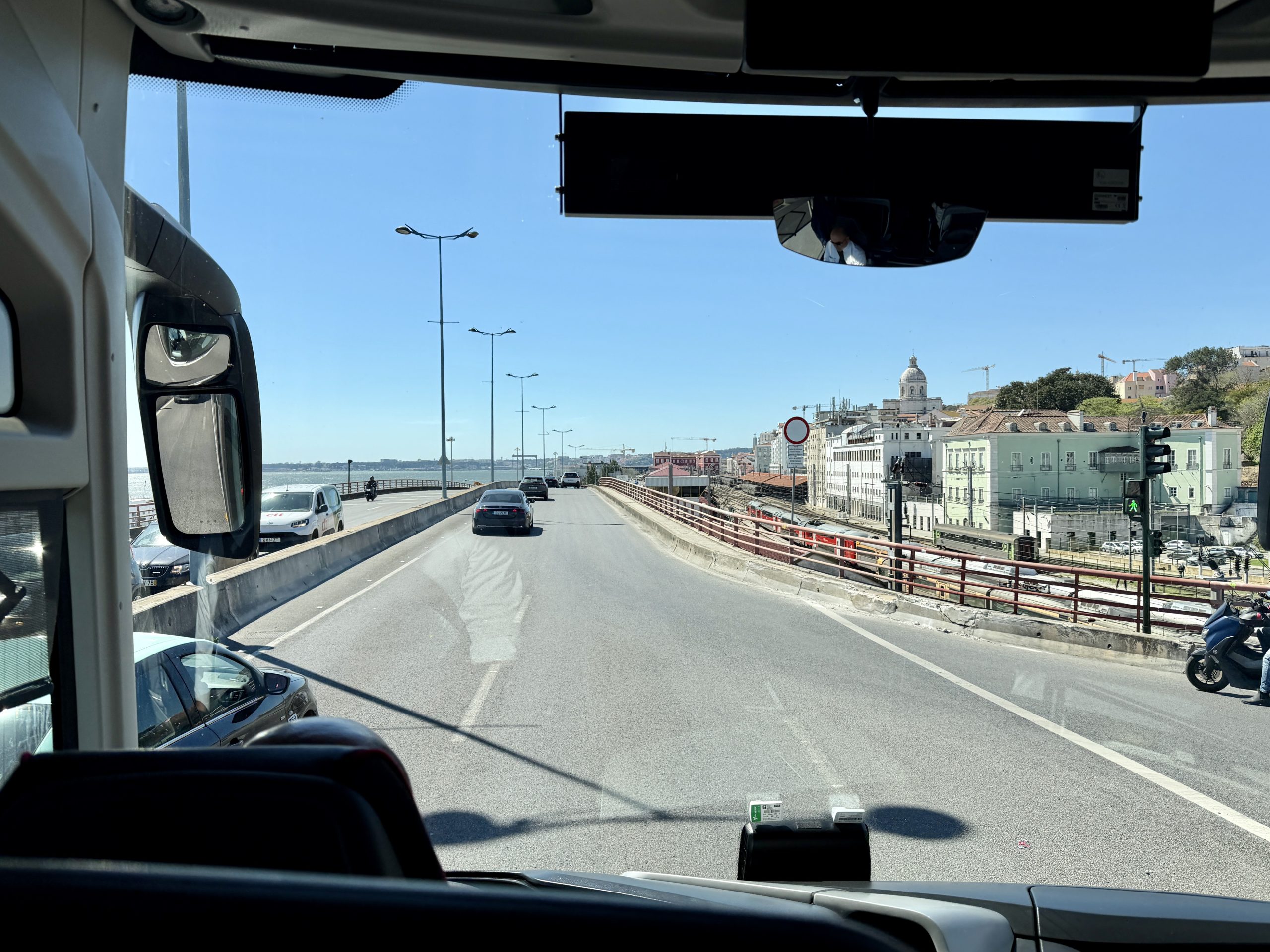
The bus took us into downtown Lisbon for lunch, not far from the waterfront.
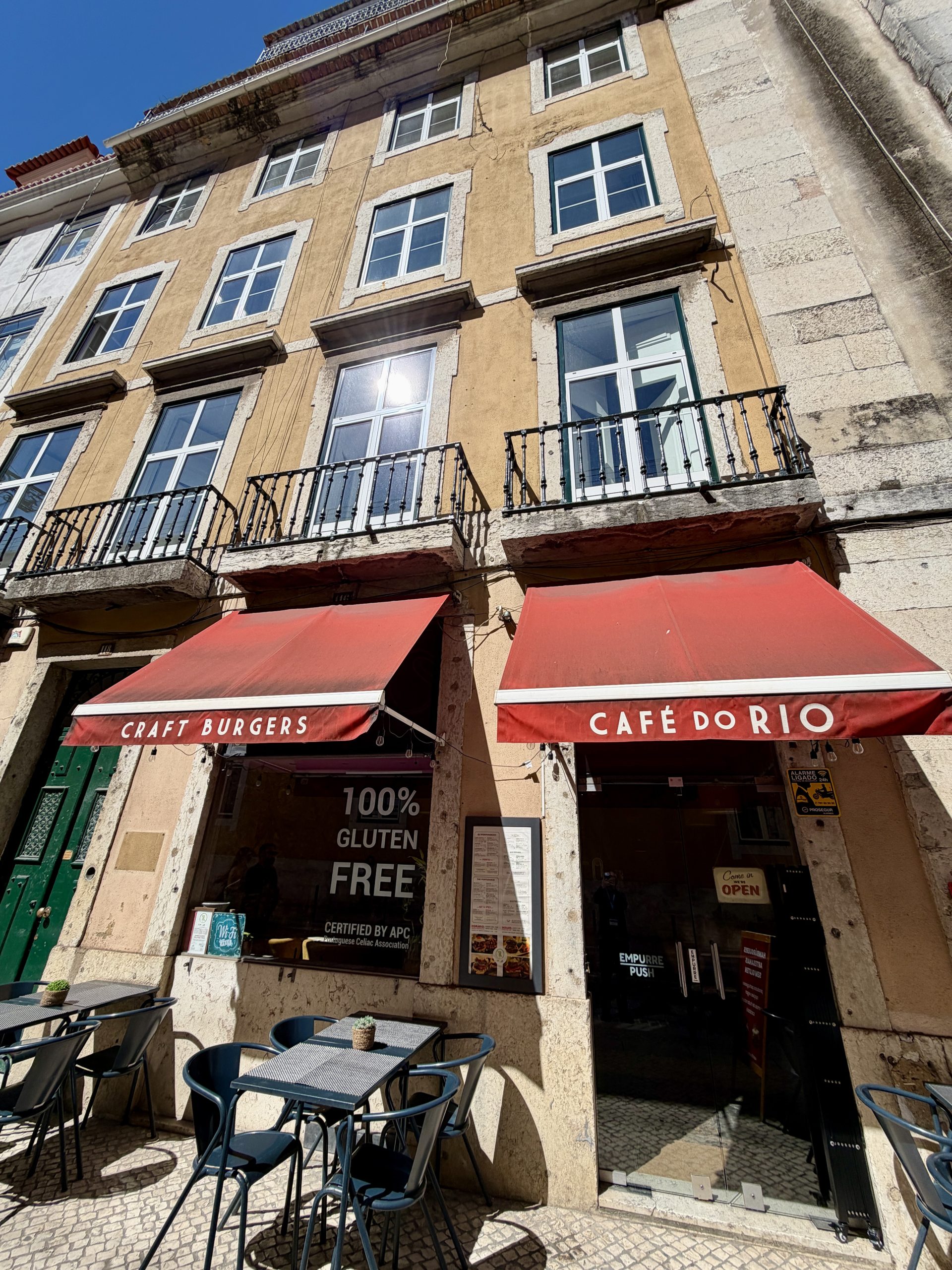
Teresa recommended several spots for us, including one she said at the best burgers in Portugal. How could I resist?
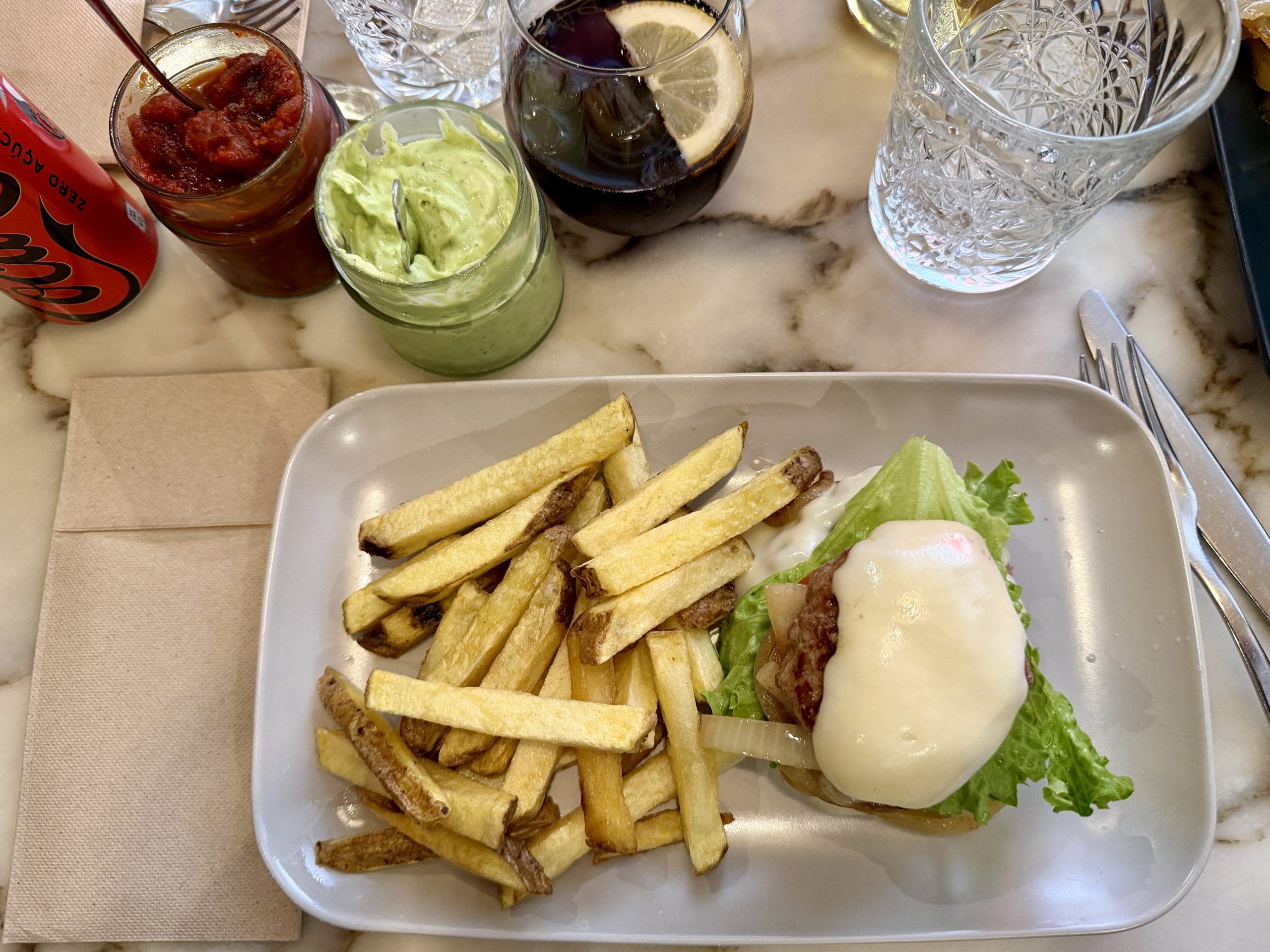
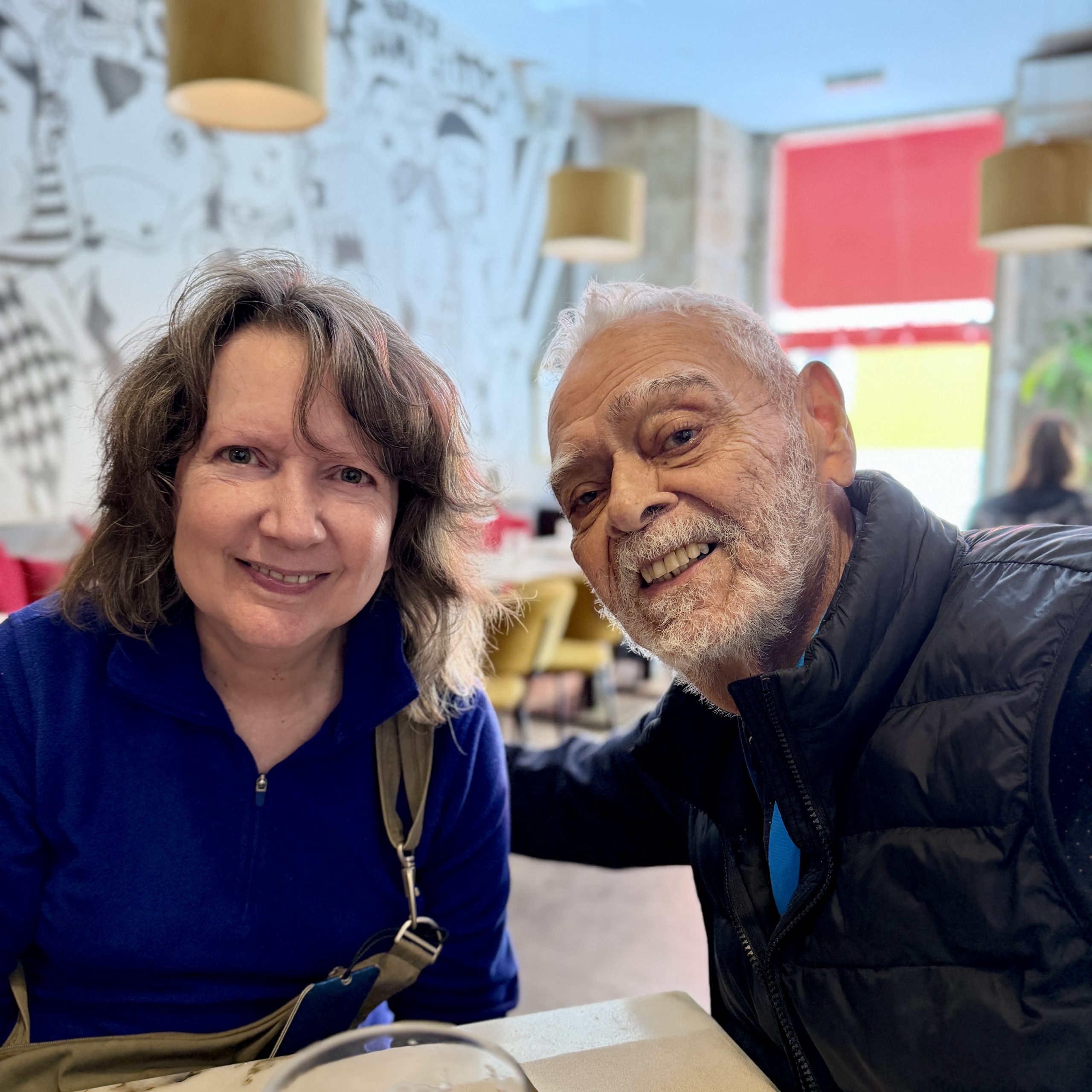
It was a delicious burger (two patties, no bun, with a hearty cheese melted on top) and we enjoyed the company of our oldest pilgrim companion, Jose.
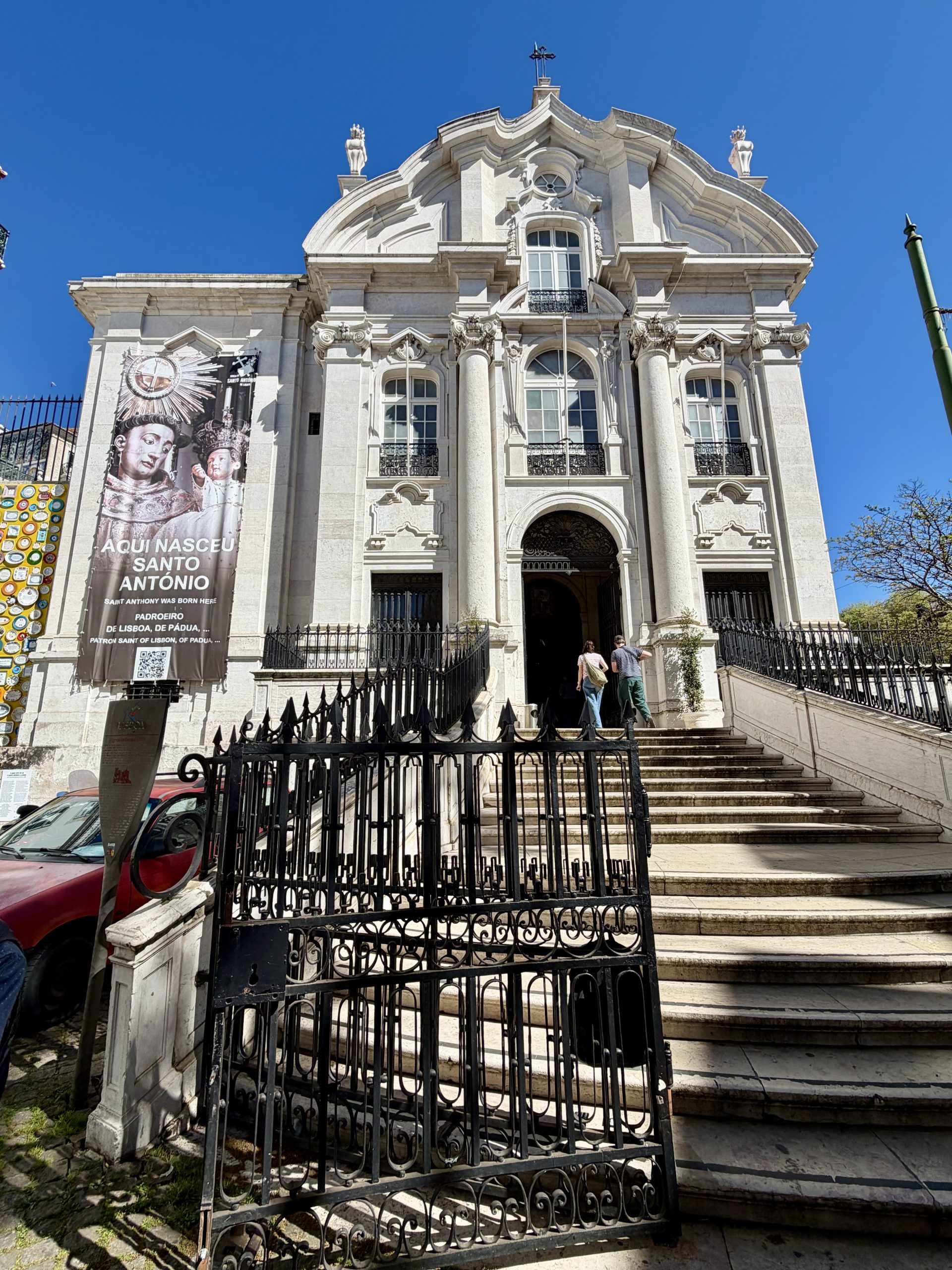
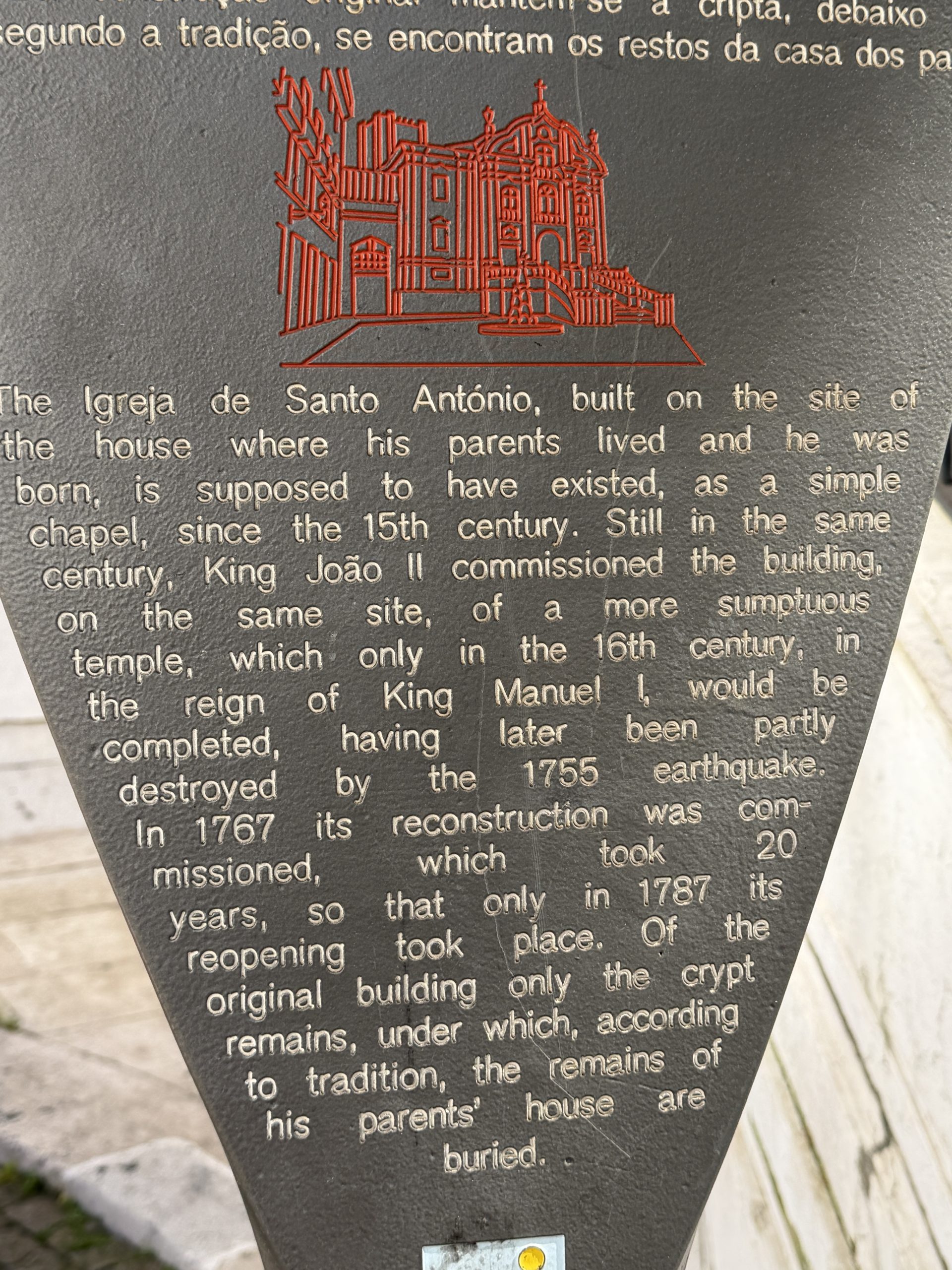
After lunch, we visited a church for our final Mass of the trip: the Church of St. Anthony, built on the site where the great saint was born.
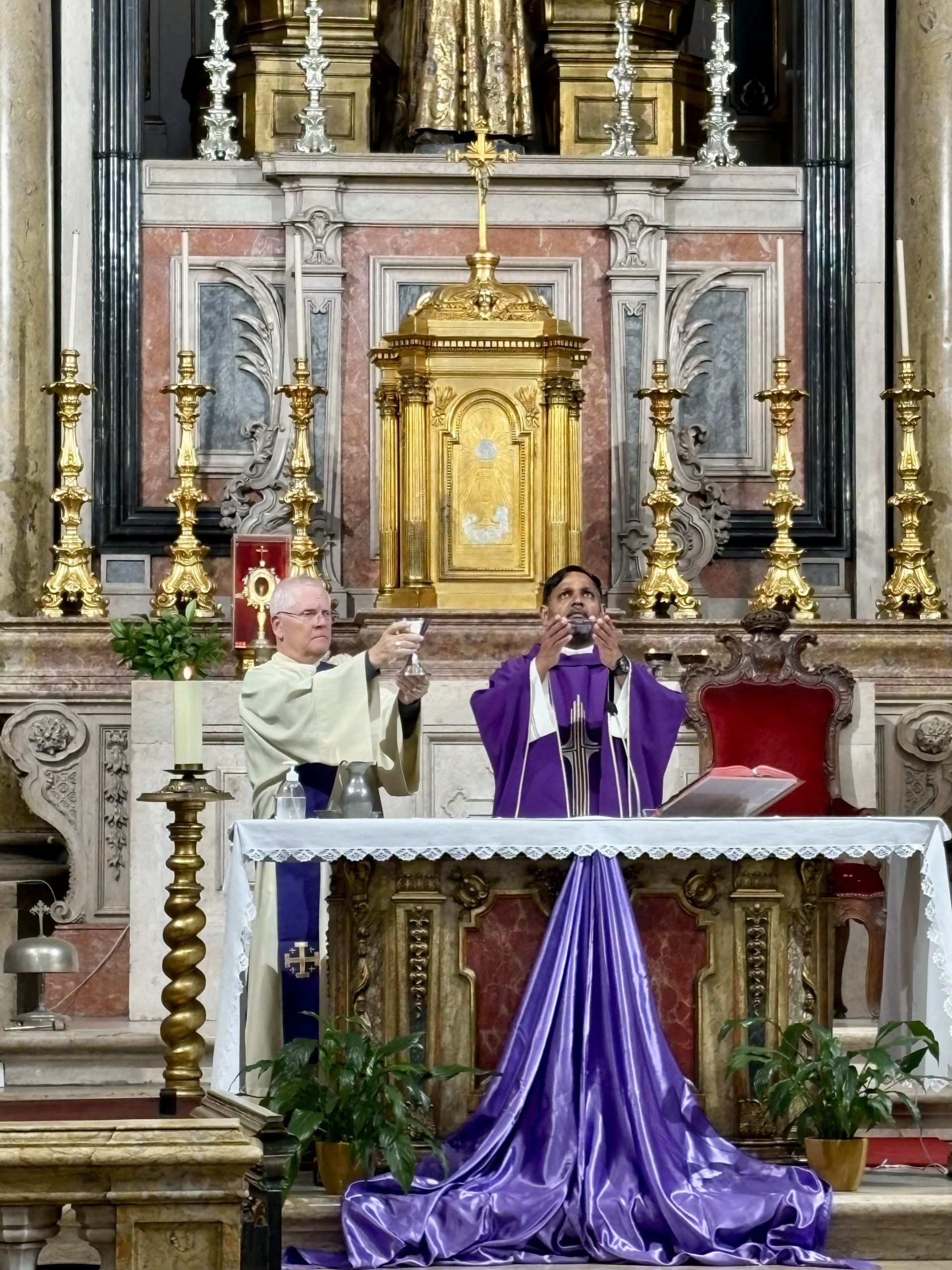
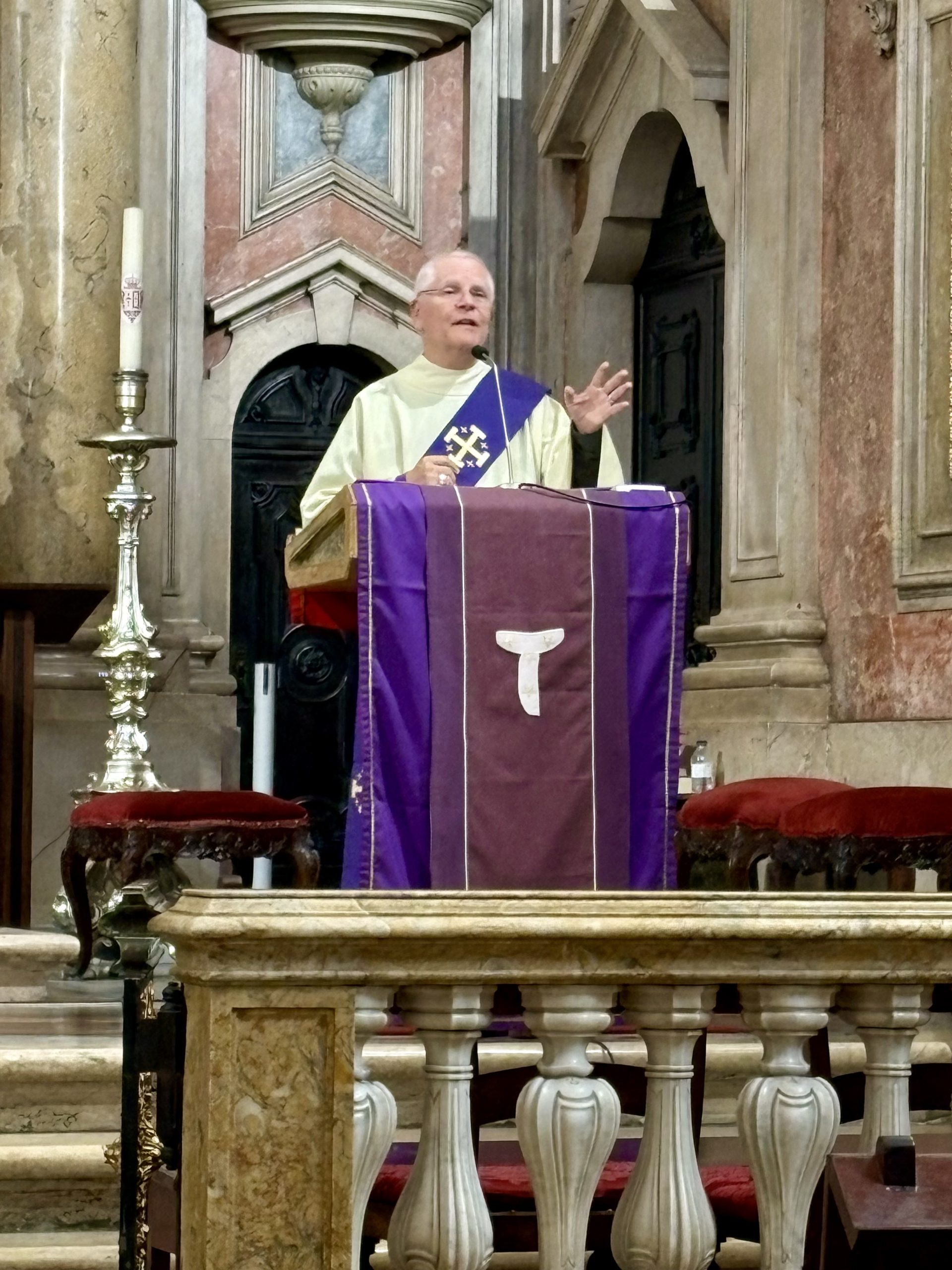
Here, I served Mass and preached some final thoughts on pilgrimage:
Oh, we’ll all have lots to say when we get home. This pilgrimage will become part of our history, a long paragraph in this year’s Christmas letter or a great conversation-starter at Thanksgiving. There are the missing passports and long bus rides and incredible meals. I, for one, will be telling a lot of people about how I dined for the first time on rooster.
But the story of a pilgrimage is so much more than that.
It’s not just about incredible cathedrals and stunning relics. It’s not about the bones of saints or the visions of children.
No.
It is a love story. This pilgrimage is a love story.
It’s the story of God’s love for our broken world. It’s about the poor being uplifted, of marginalized children becoming saints and doubters learning to believe.
It’s the story of a teenager willing to die for a cause, a girl brave enough to see beyond the flames, to gaze only at Christ nailed to the cross.
It’s the story of a shepherd girl walking out the front door of a one-room cell on a February morning – and making history with faith, and trust, and the courage to believe.
It’s the story a bold woman ahead of her time, learning to read and write and teaching the world not to be afraid.
It’s a love story. It’s the story of how God loved us so much, he used the humble and the small to remake the world.
And, importantly: It’s the story of each of us across 10 days…laughing together, weeping together, wondering together, praying together, growing together in love.
Teresa said to me last night, a pilgrimage is really about the people. What we learn. What we share. How we grow.
That is our story.
Keep telling that story.
And remember this: it’s a story we tell not just with words, but with our lives. We heard the psalm a few moments ago: “If today you hear his voice, harden not your hearts.” It’s a recurring message for Lent, as we turn our eyes toward Calvary. But this Lent, I think it’s safe to say we’ve all felt our hearts soften during the last 10 days. That’s the miracle of grace.
But so much of it, also, is the grace of being on pilgrimage. The pilgrim experience challenges each of us to leave our comfort zones.
And what a beautiful thing that can be.
As we enter Holy Week, just three days from now, look back on where we’ve been, what we’ve seen, what we’ve done. How have these days touched us? What have they taught us?
How can we take this pilgrim experience out into the world and continue our pilgrimage, which is the Christian life itself?
As we prepare to receive Christ in the Eucharist, let’s pray to live out what we have seen and heard here … to remember Joan and Bernadette, Catherine and Theresa, Jacinta and Lucia and Francesco. Remember what they sought to do with their lives, to make the love and hope of Christ known to a doubting, hurting world.
It’s a world, we all know, still wounded, still suffering, still looking for hope.
So, let’s not tuck this trip away in a photo album, to be buried in an attic or forgotten about next year.
Let’s keep remembering. Keep witnessing. Keep following in the footsteps of saints.
Because what we’ve been able to see and hear and touch these days is part of a great love story.
I leave you with those four words.
Keep telling the story.
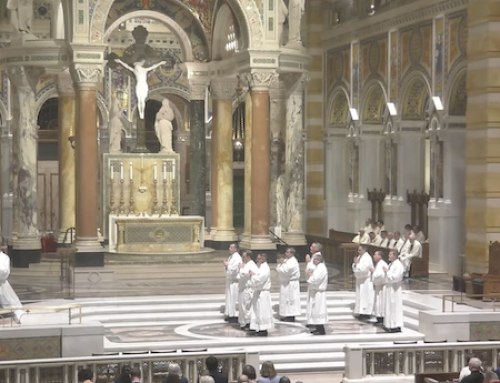
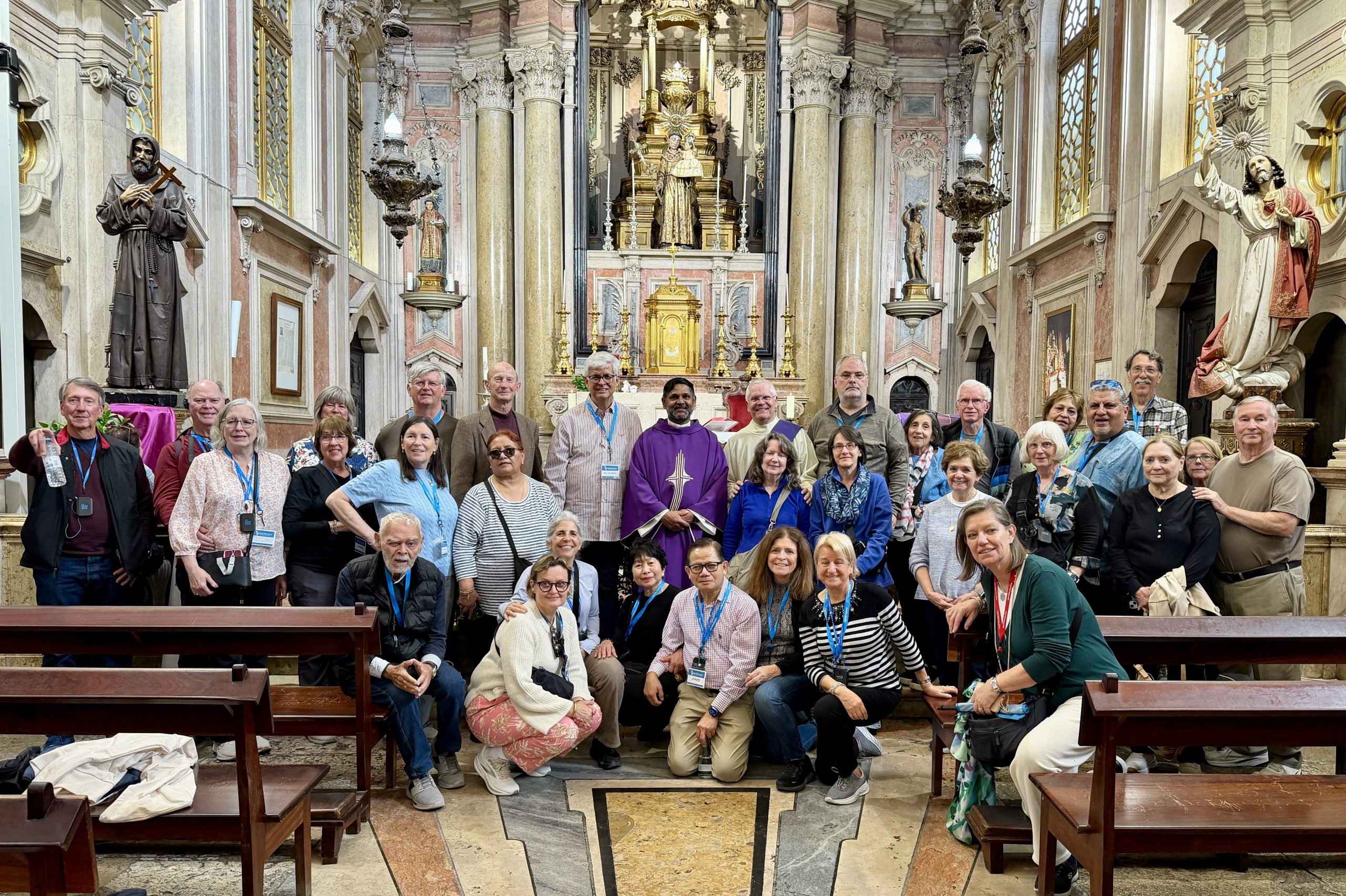
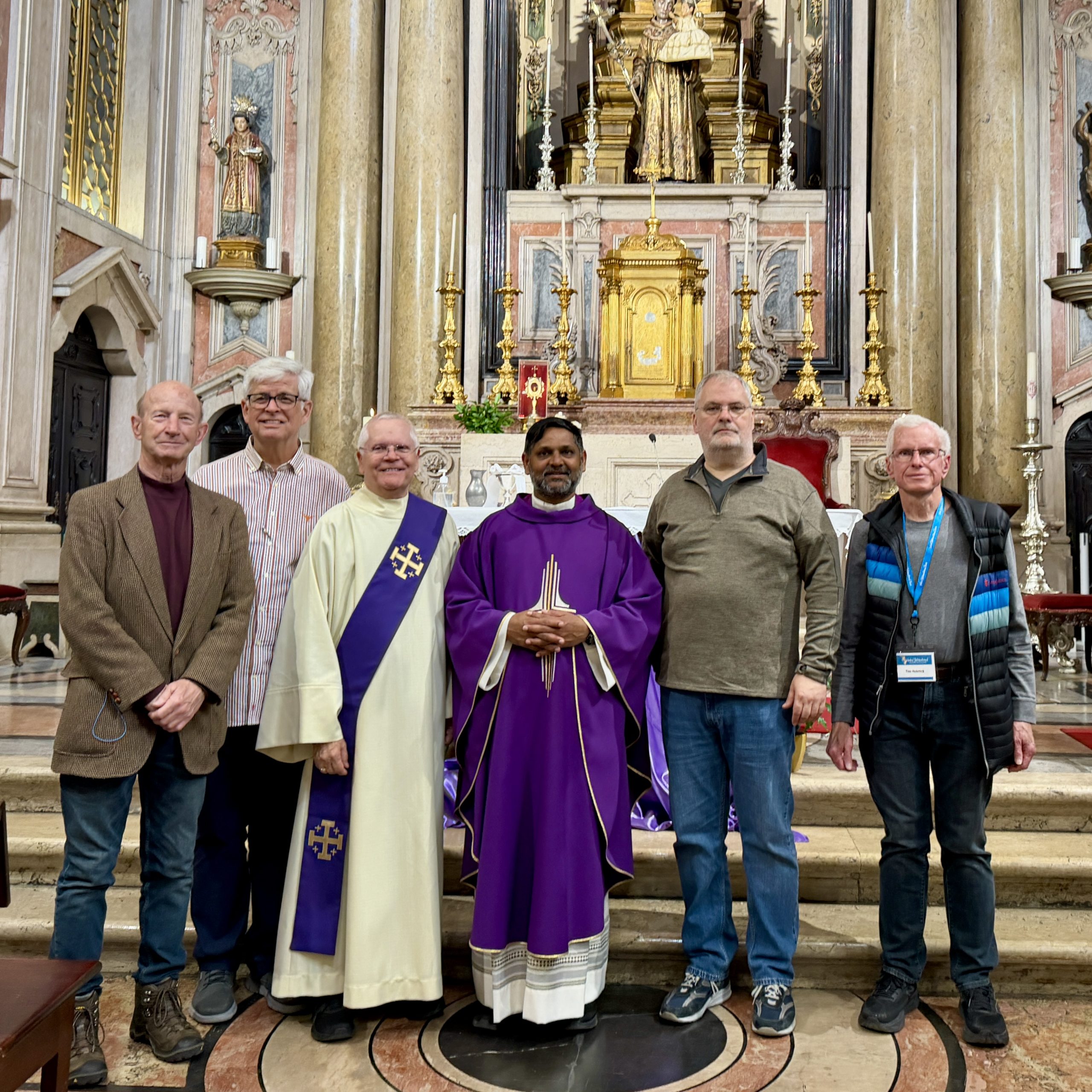
The deacons who had served and assisted at Mass during the pilgrimage gathered for a group portrait.
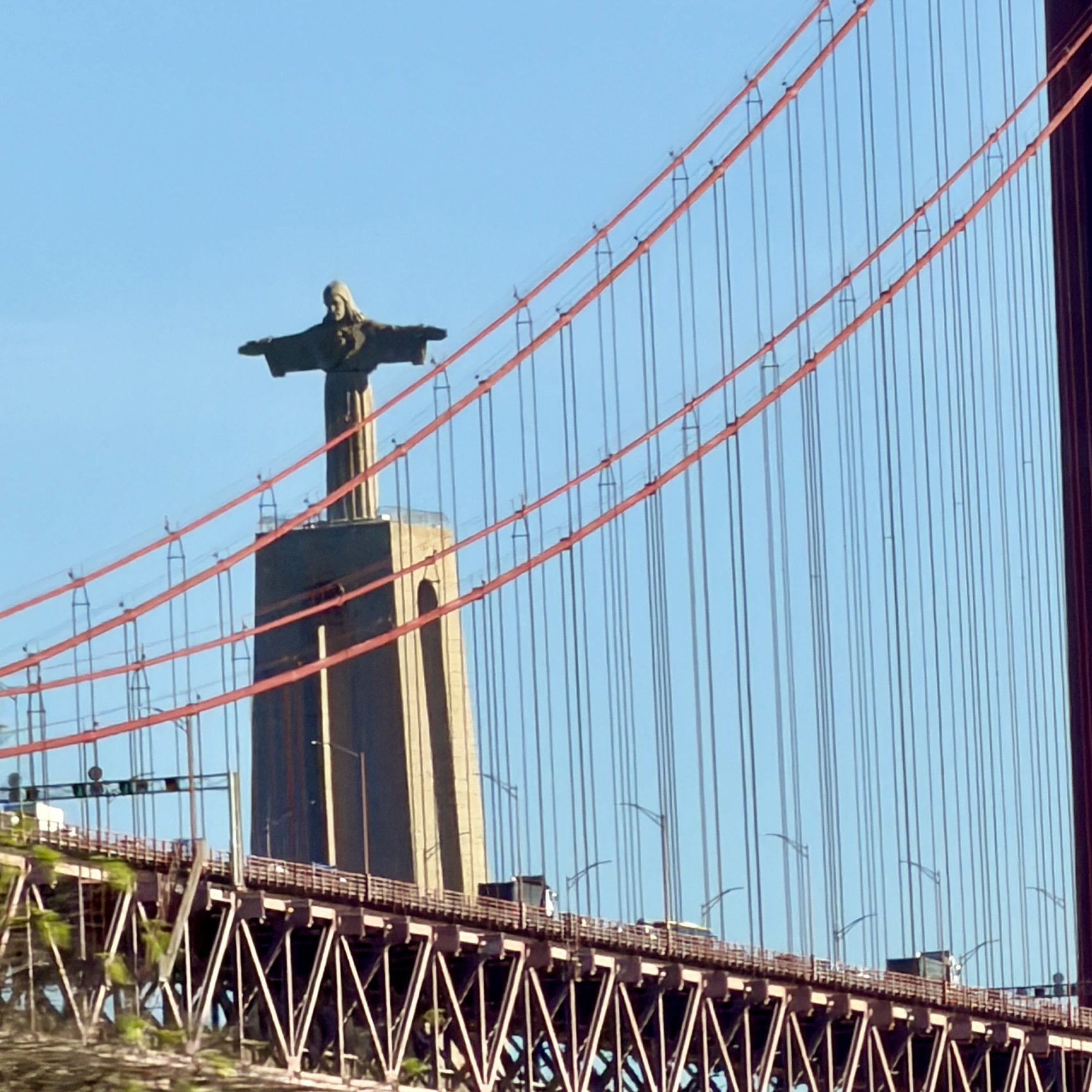
We departed for our last hotel, and our last night on pilgrimage, taking a whirldwind tour of Lisbon. This was our final stop, the stunning Hotel Vile Gale Opera, just steps away from a massive suspension bridge which takes you, on the far end, to a piece of land containing a massive statue of Christ.

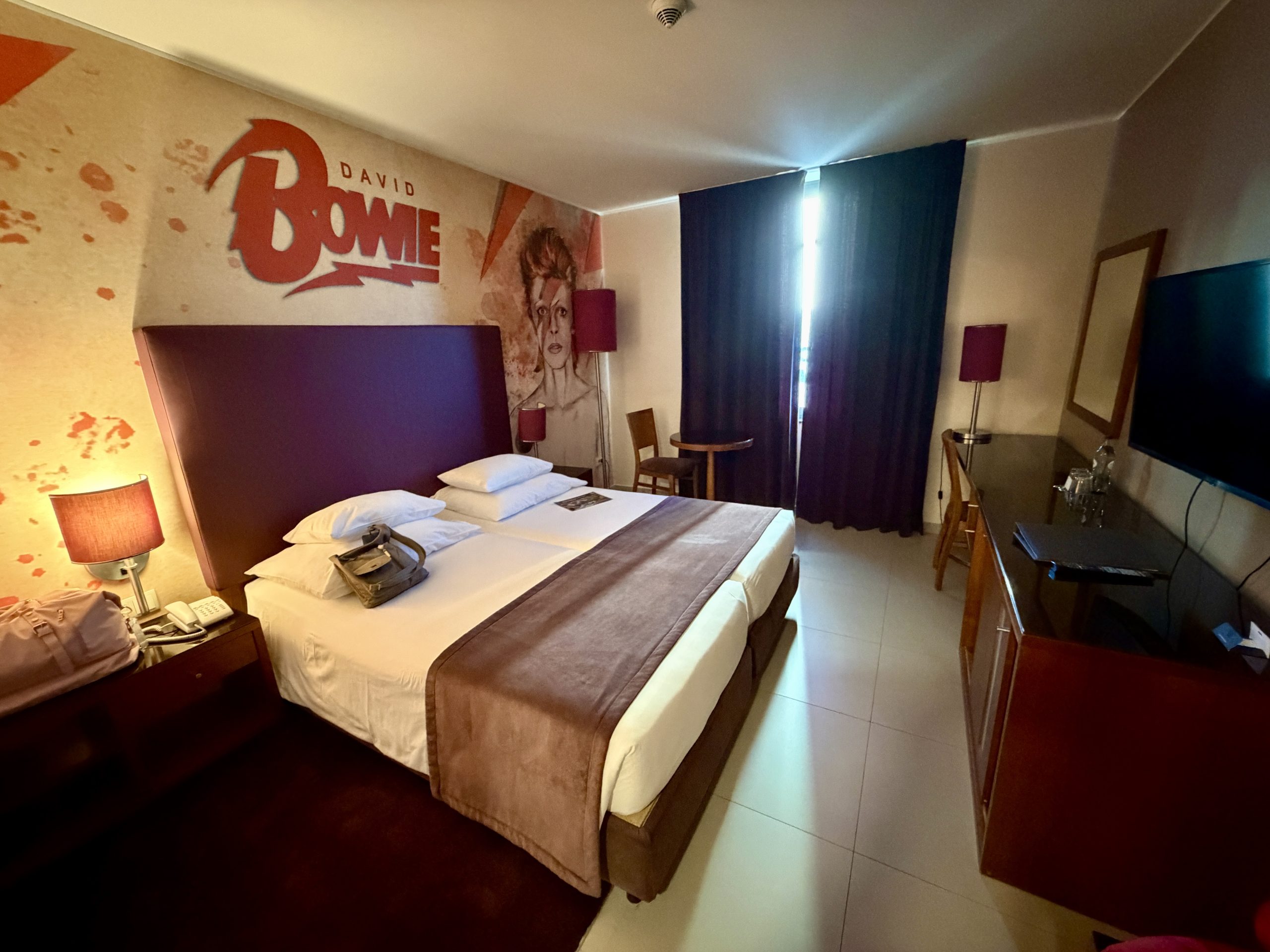
The hotel was pretty amazing, and we all regretted that we were only staying there a few hours.
I can’t say just where that pilgrim walking The Way was going to be staying that night, but I’m pretty ssure it wasn’t like this.

The dinner buffet was quite a spread.
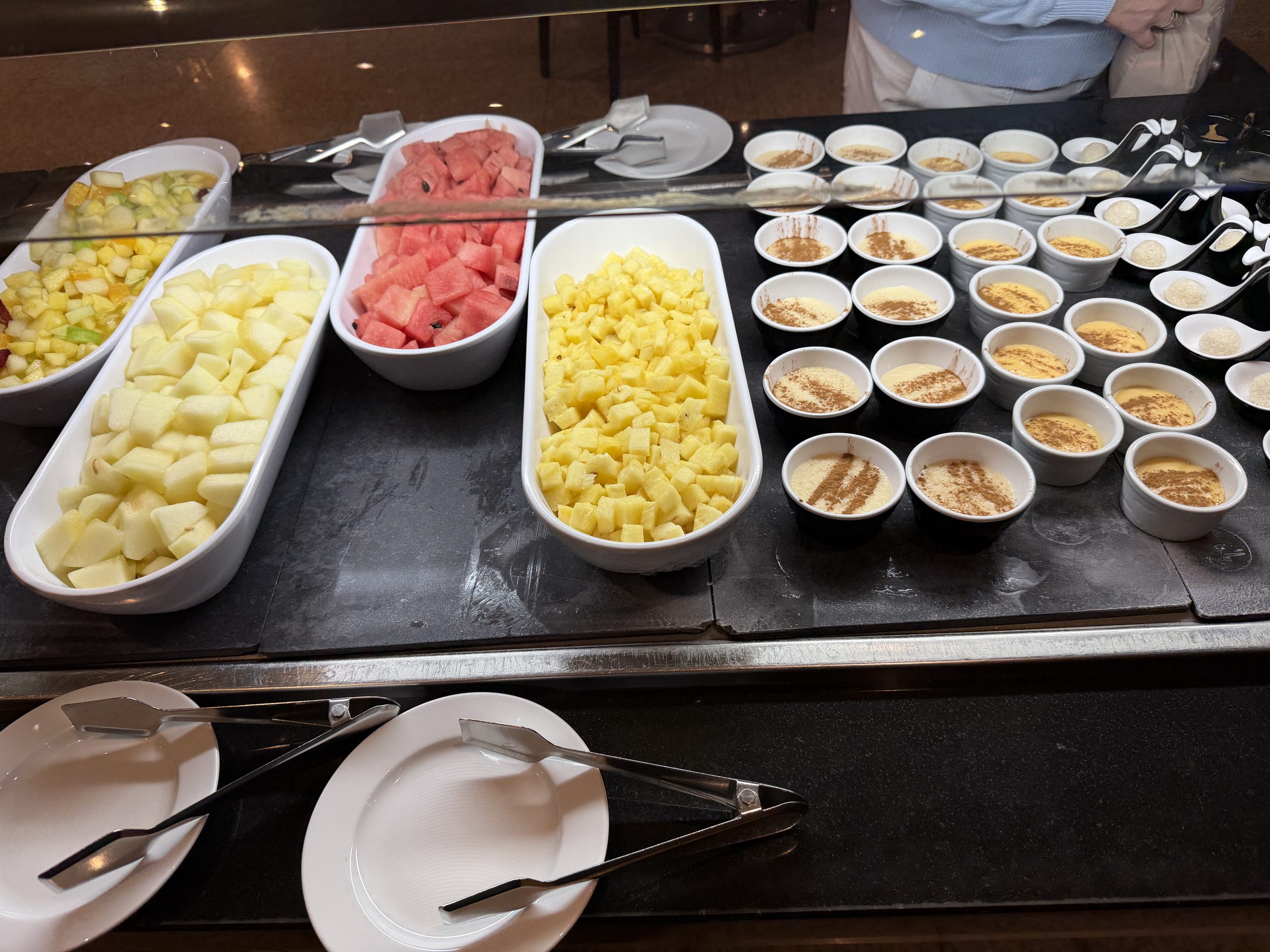
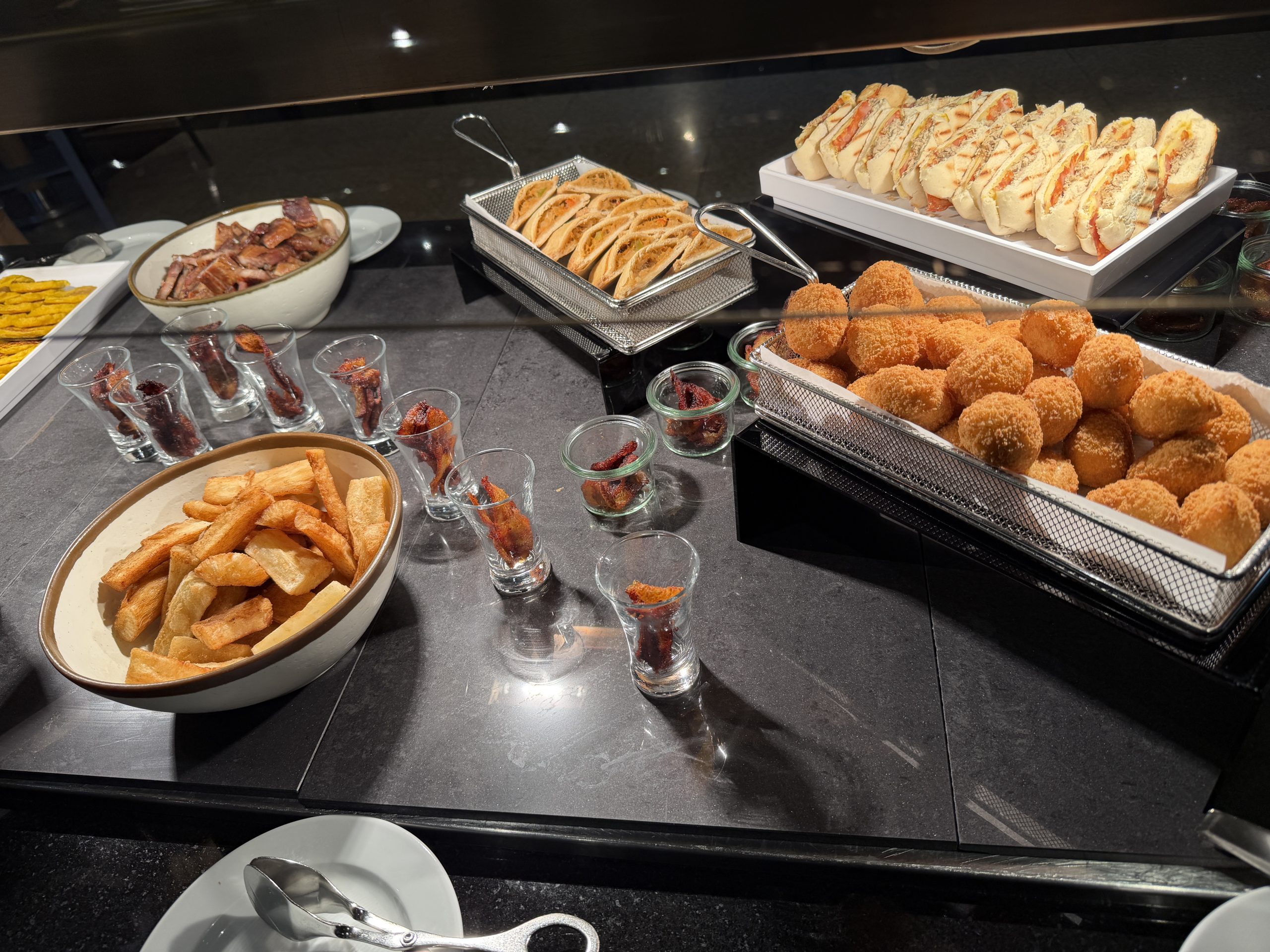

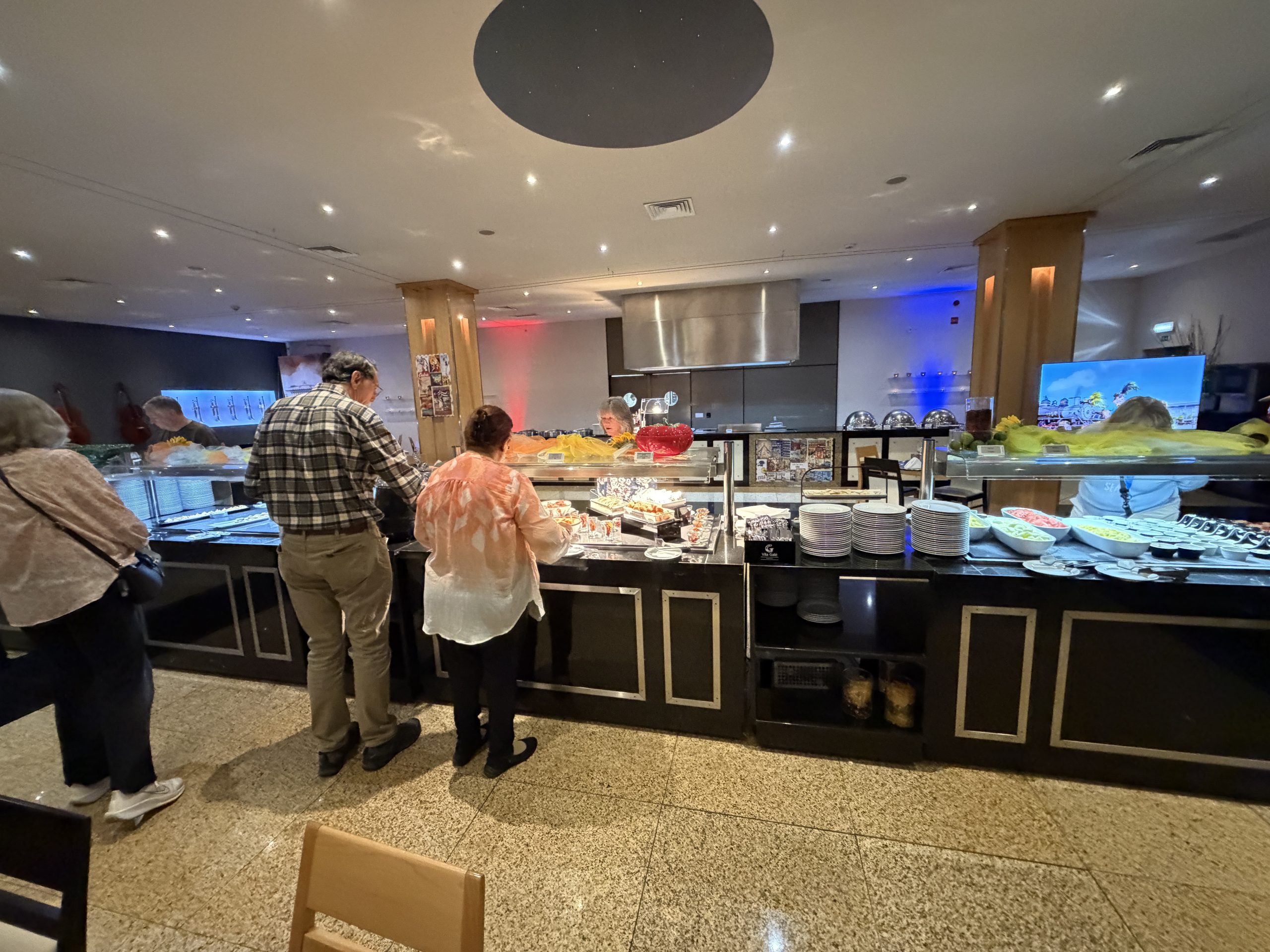
There was also a grill where a chef prepared small portions of something billed as “rump fillet.” Tasted like steak to me.
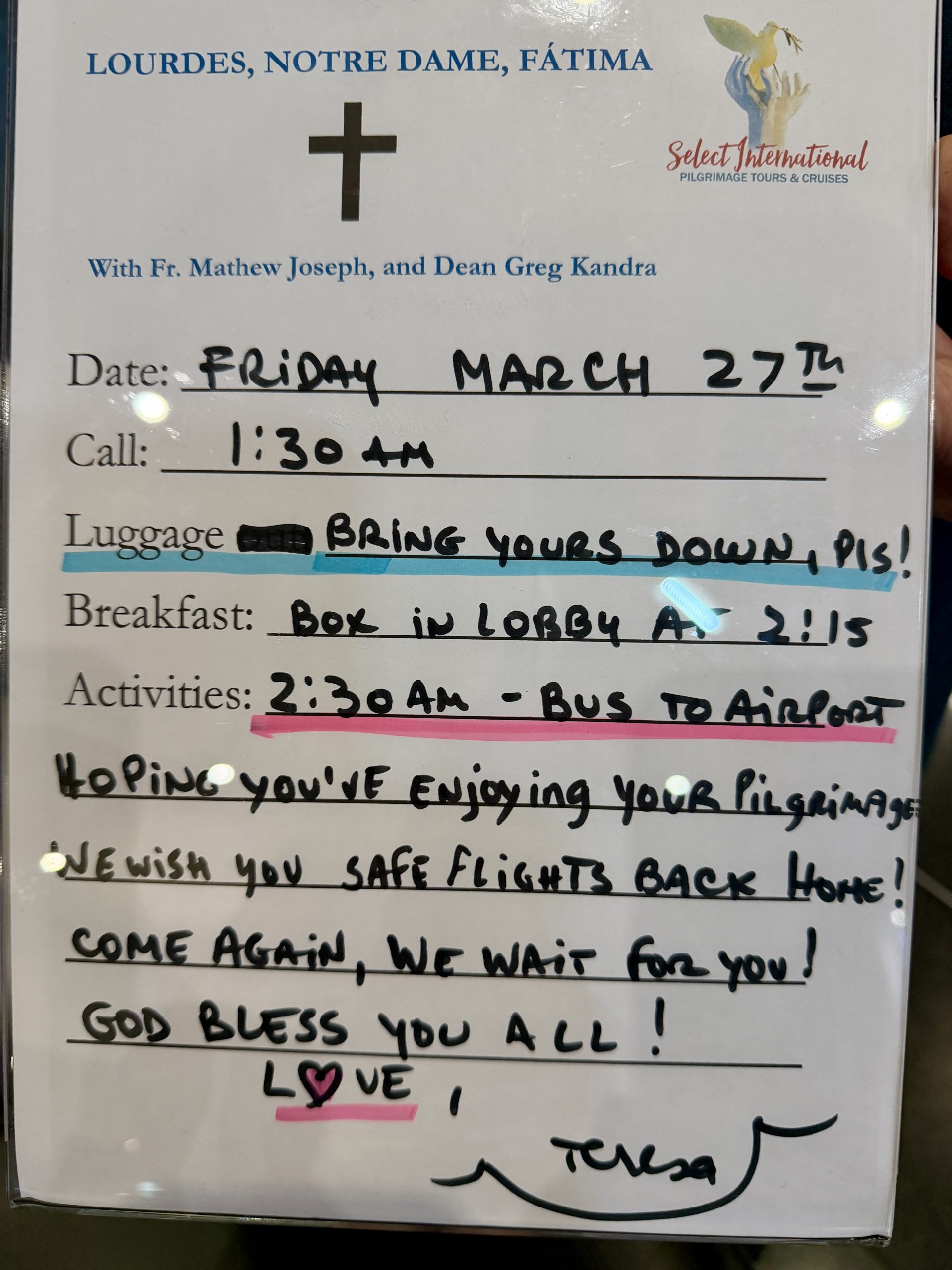
We staggered back to our room around 8:30 pm — to unpack and prepare to quickly repack, since we were going to get a 1:30 am wakeup call. We had to get an early start to get to the Lisbon airport, flying to Paris for connecting flights that would take us back home.
G’night!